- Feb 06, 2026
- Viren S Doshi
Featured Articles
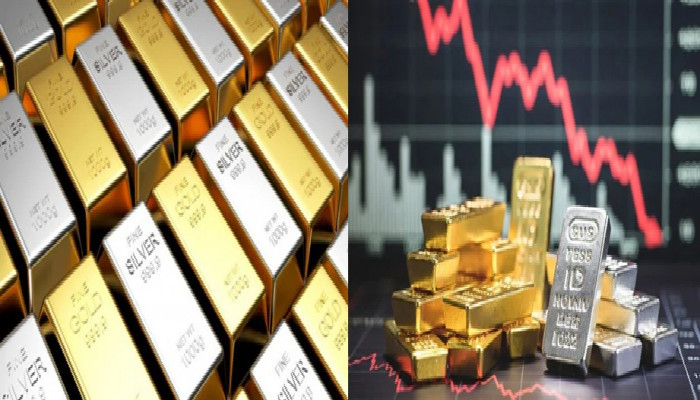
The Bullion Battle: All that glitters is not Gold
Overview The adage "all that glitters is not gold" reminds us that appearances can deceive, but in today's bullion markets—markets for precious metals such as gold and silver bars, coins, and futures—fast-moving prices reflect a geopolitically mandated deeper, bitter, and “bloody” economic battle. Precious metals have experienced extreme volatility in early 2026, with sharp rallies followed by historic sell-offs. This unprecedented turbulence highlights a clear divide: Chinese Communist Party (CCP) occupied China's regulated opaque markets often sustain higher prices, driven by strong physical demand and strategic hoarding in a vicious attempt to decimate the US Dollar; while free world bullion markets like Tokyo, Singapore, Zurich, New York, London and GIFT CITY operate as free markets open to downward pressures directly or indirectly defending the U.S. Dollar's (USD) status as the world's primary reserve currency. Extreme Volatility Defines Early 2026 Markets Precious metals’ prices soared in late 2025 and early 2026, resulting in sharp corrections and profit bookings. Gold reached highs above $5,500 per ounce in late January 2026, while silver climbed to extraordinary levels (spot prices briefly exceeded $116–$121 per ounce in late January). However, late January and early February brought dramatic reversals: silver plunged as much as 26–35% in single days around January 30 to this date —the most extreme intraday volatility on record for the metal—while gold dropped over 15% from peaks to around $4,400 before partial recoveries. As of February 5, 2026: Gold spot price hovered around $4,846 per troy ounce, down approximately 2.4% that day. COMEX (Commodity Exchange, part of CME Group in New York) February 2026 gold futures settled near $4,845 per ounce, reflecting a 1.53% decline. Silver spot fell sharply to $74.06 (and further low) per ounce, down 16% on the day after earlier highs around $91. This volatility in these free open markets stems from factors pivoted in geopolitical reasons, and their economic fallouts are apparently based on interest rate expectations, shifting investor sentiment, and positive regulatory margin hikes on futures exchanges. Thus, market-specific persistent differences reveal a dangerous structural divide and a “gory” battle. The Shanghai “Premium”: Higher Rates in CCP-Occupied China The Shanghai Gold Exchange (SGE) frequently trades at a premium over Free World benchmarks, reflecting public and domestic demand amid the imposition of import export constraints in CCP-occupied China. The London Bullion Market Association (LBMA) sets the global benchmark price through twice-daily auctions, while COMEX handles major futures trading in New York, both operating as free open markets. Recent data illustrates the gap: Shanghai Gold (USD) futures on CME (tracking SGE prices) quoted February 2026 contracts around $5,108 per ounce. This represents a roughly 5.4% premium over COMEX/LBMA-equivalent prices near $4,845. Silver shows even sharper disparities at times. Shanghai silver has traded at premiums of up to 29% ($22 per ounce higher) over COMEX after Free World sell-offs, with recent examples around 4% ($93 vs. $90 per ounce). These premiums in Shanghai Exchange recur due to physical hoarding, restricted imports (for gold) and exports (for silver), and capital controls in CCP-occupied China, which limit arbitrage and sustain higher local rates despite global downturns. Let us decode this. CCP-Occupied China's Strategic Bullish Bullion Stance The People's Bank of China (PBOC), the central bank of CCP-occupied China, has aggressively accumulated gold to bolster reserves and reduce reliance on the USD. By the end of 2025, PBOC gold reserves reached 2,306.30 tonnes, with continued monthly purchases throughout the year (e.g., 27 tonnes added in December 2025) and further additions into 2026. Globally, due to the uncertainty related to manipulative leftist narratives, central banks purchased 863 tonnes of gold in 2025—the fourth-highest annual total on record—much of it driven by diversification from the USD by emerging markets. Clarifying the Apparent Contradiction on Import Restrictions and Simultaneous Hoarding by CCP-OCCUPIED China An often-noted puzzle is how CCP-occupied China can restrict bullion imports while simultaneously accumulating (or enabling hoarding of) vast quantities. The key lies in differentiated controls: For gold, imports are managed through quotas and permits allocated primarily to commercial banks and state-approved entities. These have been adjusted over time—tightened to curb capital outflows or excessive yuan pressure, but eased in late 2025 (via draft rules expanding multi-use permits, extending validity, and authorising more ports) to allow inflows amid surging domestic demand and high prices. The PBOC accumulates official reserves through direct international purchases or preferentially allocated channels, separate from private/commercial imports. This selective approach prevents uncontrolled outflows, maintains the Shanghai premium by limiting arbitrage, and enables strategic state hoarding while private investors drive physical demand through bars, coins, and jewellery. For silver, the focus is on export licensing (effective January 1, 2026, restricting outflows to approved companies) to prioritise domestic industrial consumption, speculation, and stockpiling—mirroring rare earth strategies—rather than import curbs. This sustains local premiums and supply tightness. Overall, these mechanisms allow CCP-occupied China to pursue state-level accumulation while controlling private flows for economic stability and market leverage. This aligns with broader de-dollarisation efforts: CCP-occupied China is reducing U.S. Treasury holdings, expanding RMB (renminbi) use in trade, and promoting alternatives like gold-backed systems to challenge USD dominance in global finance. De-Dollarisation Strategy: Bolstering the RMB Through Gold, Digital Innovation, and Global Initiatives CCP-occupied China's multi-pronged approach aims to gradually erode USD hegemony and elevate the RMB as an alternative reserve currency. Gold Accumulation as Foundation: By steadily building reserves (over publicly stated 2,300 tonnes by late 2025, with ongoing purchases and probably other covert stocks), the PBOC enhances RMB stability and international confidence. Gold serves as a hedge against dollar fluctuations and a signal of financial strength, supporting RMB internationalisation without a formal gold standard. Digital Yuan (e-CNY): The central bank digital currency (CBDC) is a core tool for de-dollarisation. Pilots have expanded domestically and cross-border, enabling efficient, low-cost transactions that bypass USD-dominated systems like SWIFT. From January 1, 2026, commercial banks began paying interest on digital yuan wallet balances to incentivise adoption. The 15th Five-Year Plan (2026–2030) emphasises secure digital financial infrastructure, with a focus on international applications to facilitate trade settlements in RMB and reduce reliance on the dollar. Global and BRICS Initiatives: CCP-occupied China promotes RMB in bilateral trade agreements, while BRICS nations explore interoperable CBDC-linked payment systems as an alternative to Free World infrastructure. Discussions on a potential "Unit" of account (sometimes speculated to include 40 per cent commodity/gold backing) remain largely conceptual, but the push is toward multipolar finance. While no official plans exist for a fully gold-backed yuan or digital currency, these efforts—combining physical reserves, digital innovation, and diplomatic outreach—position the RMB to gain share in global reserves and trade, challenging the USD's status. Silver's Dual Role: Industrial Criticality and Geopolitical Battleground While gold primarily serves monetary and safe-haven functions, silver has a significant dual role—roughly 50-60% of global demand is industrial, akin to rare earth elements (REEs) in terms of supply chain vulnerabilities and strategic importance. Silver is essential for photovoltaics (solar panels), electric vehicles (EVs), electronics, batteries, medical applications, and more. Its use in solar panels (typically 12-25 grams per panel) and EVs (higher silver content in components like contactors and circuit boards compared to traditional vehicles) ties it directly to the global energy transition. Similar to CCP-occupied China's near-monopoly in rare earth processing (around 90% of global refined supply), CCP-occupied China dominates silver refining and processing, and is the world's largest industrial consumer, particularly for solar manufacturing. Intense domestic demand, fuelled by speculation, retail purchases of bars and coins, and industrial needs, has driven premiums in Shanghai. Adding to this, effective January 1, 2026, CCP-occupied China implemented new export licensing controls on silver (naming specific companies allowed to export), citing resource protection. This move, while not a full ban, restricts outflows, prioritises domestic use, and exacerbates global supply tightness—mirroring strategies used for rare earths to maintain leverage in critical materials. Reports highlight CCP-occupied China's effective hoarding through these controls, combined with speculative and industrial buying, contributing to price surges and distortions like smuggling inflows during high-price periods. India's response In response, India—facing negligible domestic silver production (less than 100 tonnes annually, mostly as a byproduct)—imports more than 6,000 tonnes annually (2025 estimates, valued at around $9.2 billion) through its GIFT CITY bullion and other channels to secure supply for its retail needs, industrial requirements and energy goals. This demand, representing about 25% of global consumption, is driven by jewellery and investment but increasingly by renewables: solar additions require 700-900 tonnes yearly, with EVs adding further pressure. India's aggressive push toward 500 GW of renewable capacity by 2030 heightens the need to protect these interests amid import dependency and geopolitical risks in sourcing (primarily from Peru, Poland, and Mexico). Government incentives like Production-Linked Schemes for solar manufacturing aim to reduce reliance on solar energy-related imports, large-scale imports of silver help buffer against disruptions in solar and other concerned products supply chains. This dynamic in silver amplifies bullish pressures at the behest of CCP-occupied China while underscoring vulnerabilities in Western and emerging Free World markets. Vulnerable Short Positions in Western Banks and Strategic Shifts - A Glaring Front in the Battle The bullion battleground extends into futures markets, where "paper" silver (futures contracts on COMEX) often diverges from physical reality. Reports indicate lingering extreme short positions in COMEX silver by some leading Western institutions, particularly foreign bullion banks (e.g., HSBC, UBS, Barclays, Société Générale, Standard Chartered), with U.S. banks like Citigroup and Goldman Sachs also cited for notable short exposures in early 2026 data. These positions—historically used for hedging or market-making—have become vulnerable amid physical shortages due to export curbs from CCP-occupied China, and massive industrial/retail demand from Asia. Extreme volatility, including sharp margin hikes by CME Group and systems’ glitches at exchanges like the London Metal Exchange, has triggered margin calls and forced liquidations, contributing to the historic sell-offs in late January–early February 2026. Adding to the evidence, recent analyses and Commodity Futures Trading Commission (CFTC) data highlight substantial short positions attributed to Bank of America (BofA) and Citigroup (Citi), though exact figures are anonymised and often inferred from concentration in reports. As of late 2025, U.S. banks collectively flipped to a net long position in silver futures for the first time on record, but lingering shorts persist among key players. Office of the Comptroller of the Currency (OCC) data for Q3 2025 shows BofA holding about 7% and Citi 29% of total precious metals derivatives among major U.S. banks, which can include short exposures. Viral reports have exaggerated these to extreme levels (e.g., BofA short 1 billion ounces, Citi 3.4 billion), but official CFTC Commitments of Traders (COT) reports as of January 27, 2026, show commercial traders (including banks) net short approximately 44,056 contracts—or about 220 million ounces—more than double the registered deliverable supply on COMEX. This discrepancy fuels squeeze risks, with Citi specifically noted for maintaining short positions amid the rally, potentially facing pressures as prices move upwards or recover. A striking development is JP Morgan Chase reportedly flipping from a massive net short (around 200 million ounces in paper positions earlier) to a significant net long position in 2025–2026, accumulating over 750 million ounces in physical silver—the largest reported stockpile globally. This shift, occurring between mid-2025 and early 2026, allowed the bank to profit from the rally rather than face squeezes, while U.S. banks overall flipped to net long in COMEX silver futures for the first time on record by late 2025. Adding to the strategic repositioning, JP Morgan has expanded operations into India's Gujarat International Finance Tec-City (GIFT City), opening a branch in January 2026 for trading equities and derivatives, and establishing a derivatives development unit. GIFT City's India International Bullion Exchange (IIBX) supports bullion trading (including silver futures launched in 2025), providing access to Asian physical demand and import channels. This move enables Western institutions to engage more closely with high-demand regions like India, potentially hedging against Western paper market pressures. These dynamics provide glaring evidence of the clash: physical hoarding and supply controls in CCP-occupied China create shortages that squeeze Western short positions, forcing adaptations like JP Morgan's pivot to long and geographic diversification. Such shifts highlight how the "free world" institutions are increasingly reacting to—rather than dictating—bullish forces unleashed by CCP-occupied China. What more reactions have come up in the West? Let us enlist further. The Free World's Defence of USD The United States and Western markets emphasise USD strength through high interest rates, deep financial markets, and institutional tools. The USD Index (DXY), measuring the dollar against major currencies, stood at approximately 97.67 on February 5, 2026—down slightly (0.91% over the past month) but still reflecting resilience amid volatility. Western futures markets (COMEX) allow hedging and short-selling with appropriate margins that can exert downward pressure during risk-off periods, contrasting with SGE's physical focus. While not a direct policy, lower bullion prices support the USD as the premier reserve currency (held by central banks worldwide for trade and stability). Gold and Silver as Safe Haven Alternatives With geopolitical uncertainties and currency tensions, gold and silver have evolved beyond industrial uses into fallback assets. Investors view them as hedges against inflation, currency devaluation, and fiat instability. The inverse relationship with the USD often holds: when dollar confidence wanes, bullion rallies. Despite recent corrections, 2025-2026 gains remain massive (gold up significantly from prior levels), underscoring their role as alternatives amid USD and crypto challenges. Summary In summary, the bullion markets expose a fundamental clash. CCP-occupied China's physical demand, reserve-building, and controls on silver sustain bullish pressures in Shanghai, while Western markets reflect efforts to stabilise or temper rallies that could undermine the USD. Volatility persists, but the divide in pricing, industrial strategies, supply chain tactics, and institutional position shifts suggests this battle is far from over. Investors should monitor premiums, central bank flows, export policies, Commodity Futures Trading Commission (CFTC) reports, and USD metrics for signals ahead. Who Will Win the Bullion Battle? Speculative Outlook Predicting a clear "winner" in this geopolitical-economic contest is inherently speculative, as it involves complex, interdependent factors like global trade dynamics, technological shifts, and unforeseen events. CCP-occupied China's strategy to elevate bullion as an alternative to the USD aligns with its de-dollarisation push, leveraging its dominance in silver processing and rare earths to control supply chains. However, the U.S., with its financial market depth and alliances, remains formidable in defending the dollar's reserve status. Could the U.S. and India together "stop" CCP-occupied China? It's possible but unlikely in a zero-sum sense. A U.S.-India partnership—bolstered by India's massive silver imports (5,500-6,000 tonnes annually) and strategic initiatives like the Quad alliance—could diversify supply chains, boost alternative production (e.g., through incentives for mining in allied nations), and reduce dependency on Chinese exports. India's GIFT City and renewable ambitions position it as a counterweight in Asia, potentially drawing Western banks like JP Morgan to hedge against Chinese dominance. Yet, CCP-occupied China's entrenched advantages in refining (90% of global rare earths, significant silver) and its ability to hoard via controls make outright containment challenging. A more realistic outcome is a multipolar equilibrium, where tensions drive innovation but no side achieves total dominance. If U.S.-India collaboration effectively counters Chinese influence—say, by stabilising supply and tempering bullion rallies—the USD as well as INR with a sound economy at its back could strengthen further as a safe haven, regaining ground in global reserves (currently ~58%). The Indian Rupee (INR) might appreciate modestly through enhanced trade ties and reduced import vulnerabilities, though it remains tied to emerging market volatility. Cryptocurrencies, as decentralised alternatives, could see increased adoption amid fiat uncertainties but face regulatory headwinds in a stabilised USD environment, leading to short-term dips before long-term growth. Bullion prices might moderate, with gold settling around $4,000-$5,000 per ounce and silver $50-$80, as physical shortages ease and speculative fervour cools. Ultimately, this "battle" may evolve into coexistence, with bullion's role as a hedge persisting regardless of the victor, just as Indian wisdom of the ancient period used to dictate in the millennial past. Gold glitters well when God (with Godly values) is at its- Feb 05, 2026
- Harsh Sinha & Dr. A. Adityanjee