




US, Argentina sign reciprocal trade and investment agreement
- In Reports
- 06:18 PM, Feb 06, 2026
- Myind Staff
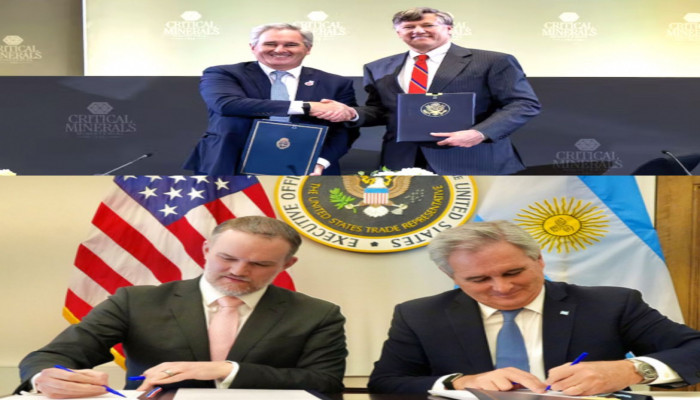
The United States and Argentina have signed a significant trade agreement that opens up Argentine markets to American agricultural products, machinery and other industrial goods, strengthening bilateral economic ties. United States Trade Representative Jamieson Greer and Argentina’s Minister of Foreign Affairs, International Trade, and Worship Pablo Quirno formalised the U.S.-Argentina Agreement on Reciprocal Trade and Investment on Thursday in Washington DC.
The agreement covers a wide range of items, from medicines and motor vehicles to machinery and agricultural goods, and is aimed at expanding market access for U.S. exports. According to the report, the pact is crafted to cut or eliminate tariff and non-tariff barriers, make trade in goods and services easier, modernize customs procedures, and encourage investment in strategic sectors such as energy, critical minerals, infrastructure and technology.
In a post on social media platform X, the U.S. Trade Representative’s office highlighted the importance of the deal and shared remarks from Ambassador Greer. “Ambassador Greer joined Argentina’s Minister of Foreign Affairs, International Trade, and Worship Pablo Quirno in signing the U.S.-Argentina Agreement on Reciprocal Trade and Investment, deepening our economic partnership while removing red tape for American farmers and ranchers,” the post said.
Another message from the same U.S. Trade Representative post emphasised the expected benefits for American exports: “From medicines and motor vehicles to machinery and agricultural goods, the U.S.-brokered deal with Argentina secures significant market access for U.S. agricultural and industrial exports,” it added.
According to Argentina’s Office of the President, the agreement builds on a framework trade agreement first reached on November 13, 2025, and seeks to modernise trade between the two nations. It will facilitate trade in goods and services while encouraging reciprocal investment.
Under the terms of the deal, Argentina has also agreed to accept U.S. safety and regulatory standards for imported goods, including standards for automobiles and medical devices. Additionally, Argentina will recognise U.S. Department of Agriculture (USDA) food safety standards for meat and poultry imports, simplifying regulatory procedures for agricultural exports entering the country.
The agreement includes provisions related to digital trade as well. It bars Argentina from imposing customs duties on cross-border data transmissions and contains a commitment not to introduce a digital services tax aimed at U.S. technology companies, according to the USTR.
In the agricultural sector, the pact includes a commitment from Argentina to open its market to U.S. poultry and poultry products within a year and to simplify regulatory requirements for U.S. exporters of beef and pork products. These measures are expected to help reduce bureaucratic hurdles for American producers.
The agreement also addresses product naming conventions. Argentina agreed not to restrict U.S. exporters’ use of certain cheese names — including asiago, feta and camembert — which the European Union labels geographic indications available only to their own producing regions. This clause is intended to benefit U.S. dairy exporters entering the Argentine market.
The reciprocal trade accord aims to provide significant market access for U.S. agricultural and industrial exports while facilitating smoother movement of goods across borders. It reflects both countries’ efforts to deepen their economic partnership and reduce trade barriers that have existed in the past.
The signing of this agreement marks a major step in U.S.-Argentina economic cooperation, with officials from both sides expressing optimism about the future of bilateral trade. Greer’s remarks on removing red tape for American exporters and the expanded market access secured under the agreement underline the potential benefits for businesses in both countries



 Loading...please wait
Comments