




Zelenskyy unveils FREYJA Missile Shield, proposes Carpathian Initiative to deepen regional cooperation
- In Reports
- 07:28 PM, Aug 04, 2026
- Myind Staff
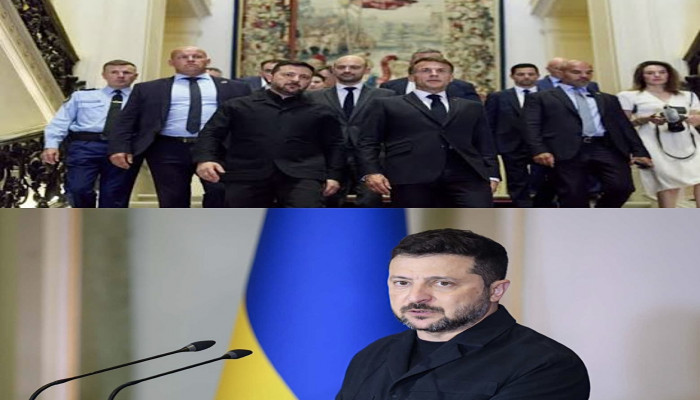
Ukrainian President Volodymyr Zelenskyy on Monday announced major defence and diplomatic initiatives during his address to Ukraine's ambassadors, placing the proposed FREYJA anti-ballistic missile defence system at the centre of the country's long-term security strategy. Sharing excerpts from his speech on X, Zelenskyy said Ukraine is expanding its Anti-Ballistic Coalition to complete FREYJA, a Ukrainian-led project aimed at building a joint European missile defence shield. Alongside the defence proposal, he also introduced the Carpathian Initiative, a new regional cooperation framework focused on economic development, security, logistics, culture, tourism, and post-war recovery.
Zelenskyy described strengthening Ukraine's air defence as the country's top operational priority. He said Ukraine already has the missiles and mobile launchers needed for the FREYJA system. However, it still requires several key components from European partners and financial support to make the project operational. He stressed that the initiative is designed as a shared European security effort and invited partner countries to participate in its development.
"The first track within the Anti-Ballistic Coalition is FREYJA. It should be our anti-ballistic system, open to the European partners who have helped us throughout this war and through all the challenges we have faced. We have the missiles and the launcher, but we're missing some components. We have brought together partner countries that have the specific elements we need. We are open to partners. We will need both crucial components for this system and funding. Countries that do not have the relevant production capabilities but currently have Patriot missiles - and provide them, investing those missiles in our ability to defend our skies - are very welcome to join this Anti-Ballistic Coalition," he wrote.
The Ukrainian President also spoke about the growing military technology market in Europe. He urged defence companies and partner nations to work together instead of competing with one another. Zelenskyy warned that Russia would attempt to weaken efforts aimed at strengthening Europe's collective defence capabilities. He said closer cooperation among governments and defence industries would help create a stronger security system for the continent.
"We understand that we are creating not only protection for Europe, but also a competition. There is Saab in Sweden, German companies, Lockheed Martin and Raytheon in the United States, and Leonardo, a very strong Italian company. We do not need competitors; we need those who will strengthen us and bring us closer together. When we speak about "systemic steps," politics is extremely important here," he added.
Apart from military cooperation, Zelenskyy announced that Ukraine will launch the Carpathian Initiative in the autumn. The new diplomatic platform is intended for neighbouring European countries that are not prepared to support Ukraine through military assistance but are willing to cooperate in other important areas. The initiative will focus on logistics, regional security, economic cooperation, culture, tourism, and rebuilding Ukraine after the war.
According to Zelenskyy, the framework will bring together eight countries connected by geography and shared regional interests. These include Ukraine, Poland, Romania, Austria, Slovakia, Czechia, Hungary, and Serbia. He said the leadership of the European Council and the European Commission has already supported the initiative. He also confirmed that dedicated European Union funding programmes are expected to support the project.
"Why did this idea emerge? Because not all countries are ready to strengthen us with weapons, but they do want to stand with us on the humanitarian and security tracks and in the economic sphere. They are thinking about Ukraine's recovery," he said.
"The Carpathian Initiative brings together countries connected not only geopolitically and as neighbours. These are countries with shared economic and security interests, united by the beautiful Carpathian Mountains. It is about logistics, the economy, and security. We also saw culture and future tourism as part of it. We will launch this format in the fall. We are now discussing the dates. This initiative is something around which all of us can unite. We need it," he added.
Zelenskyy also spoke about Ukraine's role in protecting the independence of countries that were once part of the Soviet Union. He argued that Ukraine's resistance has made it more difficult for Russia to expand its influence across the region. He referred to recent diplomatic efforts, including stronger ties with Azerbaijan, a landmark bilateral visit to Armenia after years of limited engagement, and his planned participation in Moldova's Independence Day celebrations.
He said these diplomatic efforts are part of a broader strategy to strengthen regional partnerships and support the sovereignty of neighbouring countries. Zelenskyy argued that an independent and stable group of post-Soviet nations would make it harder for Moscow to achieve its geopolitical goals.
"Putin's puzzle is to put back together what has already fallen apart. The stronger and more independent the countries of the former Soviet Union are, the harder it will be for him. Ukraine is the key piece in this puzzle," Zelenskyy affirmed.
"He wants to break us. If he succeeded, dealing with the other countries of the post-Soviet time and space would be easier for him - with full respect for all the countries. Everyone understands this and deeply appreciates Ukraine's contribution - paid for at such a high price, with the lives of our people - to the independence of other states," he added.



 Loading...please wait
Comments