



‘You won’t be able to eliminate Iran’: Khamenei warns Trump as nuclear talks resume in Geneva
- In Reports
- 08:21 PM, Feb 17, 2026
- Myind Staff
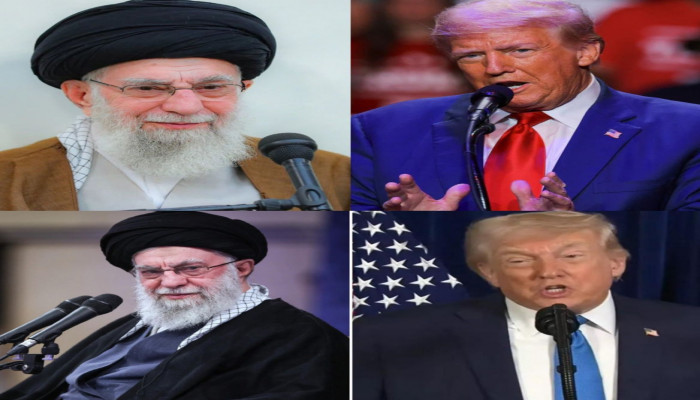
As crucial nuclear negotiations restarted in Geneva on Tuesday, Iran’s Supreme Leader Ayatollah Ali Khamenei gave a strong warning to US President Donald Trump. His remarks came at a time when representatives from the United States and Iran began “indirect talks” in an effort to address their long-running nuclear dispute.
According to a CNN report, senior US officials are expected to take part in the discussions in Geneva. The American side reportedly includes US envoy Steve Witkoff and Jared Kushner, who is President Trump’s son-in-law. They are scheduled to hold talks with Iranian representatives in Switzerland.
These talks are taking place at the same time as Khamenei delivered a speech in Tehran. Meanwhile, Iran’s Foreign Minister Abbas Araghchi and his team also arrived in Switzerland to represent Iran during the discussions.
The renewed diplomatic activity comes amid high tension between the two countries, with both sides warning each other about the consequences of failure. Although the talks are not direct, they are being seen as an important attempt to reduce conflict and avoid another major escalation in the region.
In a series of posts on X, Khamenei directly addressed Trump’s frequent claims about America’s military strength. He suggested that even the strongest military power can face a serious defeat.
“The US President keeps saying that they have the strongest military force in the world,” Khamenei wrote. “The strongest military force in the world may at times be struck so hard that it cannot get up again.”
With these words, the Iranian leader tried to send a message that the United States is not unbeatable and that Iran is capable of defending itself if attacked.
Khamenei also spoke about the growing American military presence in the Middle East. In recent weeks, the United States has increased its naval deployment in the region, including sending warships close to Iranian waters. The Iranian leader said that while warships may appear threatening, they are still vulnerable.
“The Americans constantly say that they've sent a warship toward Iran,” Khamenei said. “Of course, a warship is a dangerous piece of military hardware. However, more dangerous than that warship is the weapon that can send that warship to the bottom of the sea.”
This statement was widely seen as a direct threat, implying that Iran has the capability to destroy US naval vessels if conflict breaks out.
Khamenei also addressed the long history of tension between the United States and Iran. He rejected the idea that America could ever remove Iran’s Islamic government. Referring to Trump’s own past comments, Khamenei pointed out that the US has failed to weaken Iran despite decades of pressure.
“The US President has said that for 47 years, the United States hasn't been able to eliminate the Islamic Republic,” he said. “That is a good confession. I say, ‘You, too, will not be able to do this.’”
With this, Khamenei made it clear that Iran believes it has survived many challenges and will continue to resist US pressure.
On the other side, President Trump has also taken a tough position. Before the talks began, he warned that Iran would face serious consequences if it refused to agree to a deal.
Speaking to reporters on Monday, Trump confirmed that he would be involved in the negotiations, but only indirectly. He described the discussions as very important and suggested that Iran had no choice but to return to the negotiating table.
Trump admitted that Iran is a difficult country to negotiate with. However, he accused Iran’s leadership of being poor negotiators, saying they missed a chance to avoid military action.
He claimed that the United States could have reached an agreement earlier, but Iran failed to cooperate. Trump said that instead of making a deal, Iran forced the US to take action.
“We could have had a deal instead of sending out B-2s to knock out their nuclear potential,” Trump said.
Trump also referred to a US military operation called “Operation Midnight Hammer.” He said the operation played a major role in pushing Iran back toward diplomacy.
According to the report, on June 21-22, 2025, the United States carried out airstrikes on Iran’s nuclear facilities. The attacks reportedly hit three major locations: Fordow, Natanz, and Isfahan. These sites are considered key parts of Iran’s nuclear infrastructure.
Trump defended the strikes by saying they were necessary to stop Iran from developing nuclear weapons. He claimed that Iran was close to building a bomb.
He stated that without the military operation, Iran “would have had a nuclear weapon within one month.”
Trump also said that he hopes Iran will now behave in a more reasonable manner. He suggested that political and economic pressure are forcing Iran to come back for negotiations.
“They want to make a deal. We have peace in the Middle East,” Trump said.
However, he also admitted that the region is not completely stable. He mentioned that there might still be small conflicts or unrest in certain areas.
He described it as “flames here and there,” but claimed that overall security has been achieved through strength and military power.
The talks in Geneva are taking place after earlier diplomatic efforts failed. Previous rounds of negotiations were held in April 2025 in Muscat and Rome. Those discussions did not produce an agreement, leading to a collapse of the peace process.
After the June 2025 US strikes, Iran strongly criticised Washington. Tehran described the attacks as illegal and said they violated international law. Iran also made it clear that it would not accept threats as a way to force negotiations.
At present, the United States continues to maintain a large military presence across the Middle East. It has deployed several naval and air assets, showing that it is prepared for conflict if diplomacy fails.
Trump has again warned that the consequences of not reaching an agreement would be “very steep.” This warning has added pressure on Iran as the talks resume.
In response, Iran has repeated that it is ready to respond if attacked. Tehran has stated that it will not accept threats and is prepared to launch a counterstrike if necessary.
As the indirect negotiations begin, the situation remains tense. Both leaders have used strong language, showing that the path toward agreement will not be easy. Still, the restart of talks suggests that both sides are at least willing to explore a possible solution to prevent further escalation.



 Loading...please wait
Comments