




Yemen’s Saudi-backed Governor announces ‘peaceful operation’ to reclaim military sites from STC
- In Reports
- 06:20 PM, Jan 02, 2026
- Myind Staff
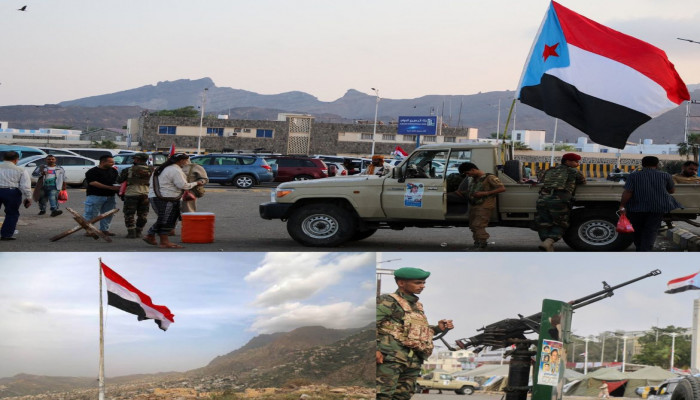
Yemen’s Saudi-backed governor of Hadramout province has announced plans to launch what he described as a “peaceful operation” to reclaim military positions from the UAE-backed Southern Transitional Council (STC), stressing that the move should not be seen as a declaration of war. The announcement marks a fresh escalation in Yemen’s long-running conflict, where tensions between Saudi Arabia and the United Arab Emirates are increasingly playing out through rival local forces.
The governor of Hadramout, Salem Ahmed Saeed al-Khunbashi, made the announcement on Friday, saying the aim was to restore security and prevent instability in the strategically important eastern province. “This is not a declaration of war,” he said in a speech broadcast on Yemen TV. He added that the operation was intended “to prevent the use of camps to threaten security and to protect Hadramout from sliding into chaos.”
The move comes at a time when divisions between Saudi Arabia and the UAE — once close allies and key pillars of regional security — have widened. Although both countries have been involved in Yemen for years, backing forces opposed to the Iran-aligned Houthis, their interests have increasingly diverged. Since December, these differences have become more visible on the ground, particularly in southern and eastern Yemen, where rival groups backed by Riyadh and Abu Dhabi are competing for control.
In a statement released on Friday, Yemen’s Saudi-backed government said it had appointed Governor al-Khunbashi as the overall commander of the “Homeland Shield” forces in Hadramout. The appointment grants him “full military, security and administrative authority,” which the government said was a step aimed at restoring security and order in the province.
The operation is expected to focus on military sites currently held by the STC, a powerful southern separatist group backed by the UAE. The STC seized large areas of southern Yemen last month from the internationally recognised government, supported by Saudi Arabia. Riyadh has viewed the STC’s expansion as a direct threat to its influence and to the unity of Yemen.
Reacting to the governor’s announcement, an STC spokesperson said the group was preparing for a possible confrontation. Mohammed al-Naqeeb, the spokesperson, said on Friday that STC forces were on “full alert” across the region. In a post on X, he warned that the group was ready to respond forcefully if necessary.
The developments come shortly after the UAE said it was pulling out its remaining forces from Yemen. The announcement followed Saudi Arabia’s backing of a call for UAE forces to leave within 24 hours, in what has been described as one of the most serious public disagreements ever between the two Gulf oil powers. While the UAE’s decision briefly eased tensions between Abu Dhabi and Riyadh, disputes among local Yemeni factions have continued.
Beyond Yemen, the rivalry between Saudi Arabia and the UAE has also extended to other areas, including oil policy and regional influence. Both countries are major members of the OPEC oil exporters’ group. Any disagreements between them could complicate efforts to maintain consensus on oil output. Saudi Arabia, the UAE and six other OPEC+ members are scheduled to meet online on Sunday. OPEC+ delegates have said the group is expected to extend its policy of keeping first-quarter oil production unchanged.
Meanwhile, tensions have also affected air travel in southern Yemen. Saudi Arabia’s ambassador to Yemen, Mohammed Al-Jaber, blamed STC leader Aidarus Al-Zubaidi for refusing to allow a plane carrying a Saudi delegation to land in Aden on Thursday. According to the ambassador, flights at Aden International Airport were halted on Thursday and the disruption continued into Friday as both sides accused each other.
“For several weeks and until yesterday, the Kingdom sought to make all efforts with the Southern Transitional Council to end the escalation … but it faced continuous rejection and stubbornness from Aidarus Al-Zubaidi,” Al-Jaber said in a post on X.
He added that Zubaidi had issued directives to close air traffic at Aden’s airport on Thursday and said that a plane carrying a Saudi delegation travelling to Aden to look for solutions to the crisis had been denied permission to land.
The STC-controlled Transport Ministry, however, rejected the Saudi account. In a statement issued on Thursday, it accused Saudi Arabia of imposing an air blockade, saying Riyadh had required all flights to pass through Saudi Arabia for additional checks.
Aden International Airport is a vital gateway for parts of Yemen that are not under Houthi control. The ongoing dispute over the airport highlights the deepening rift between Saudi-backed and UAE-backed factions, raising concerns about escalation that could undermine already fragile stability in southern and eastern Yemen.



 Loading...please wait
Comments