




Xi’s PLA purge reaches Galwan General Zhao Zongqi after India border clashes
- In Reports
- 06:12 PM, Aug 29, 2026
- Myind Staff
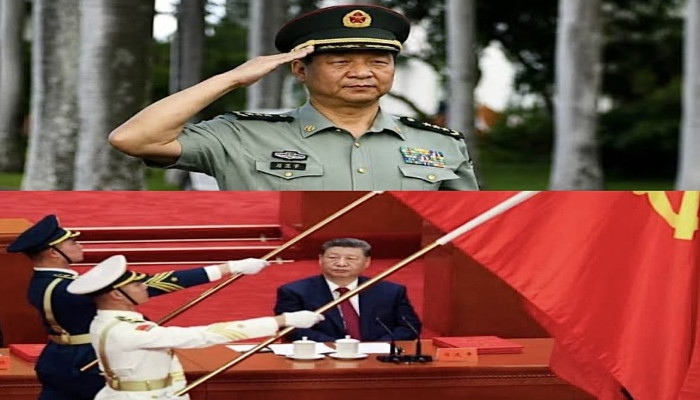
China has removed former People’s Liberation Army (PLA) Western Theatre Command Chief General Zhao Zongqi from key political positions. Zhao led the PLA’s Western Theatre Command during the 2017 Doklam standoff and the 2020 Galwan Valley clash with India. A US intelligence assessment had earlier alleged that Zhao authorised the Galwan operation to "teach India a lesson".
Zhao’s removal comes amid a major purge of China’s military leadership under President Xi Jinping. The campaign has targeted senior PLA officers across theatre commands, weapons procurement, defence universities and other key areas. A February 2026 assessment by the Centre for Strategic and International Studies (CSIS) found that 101 senior PLA officers had either been dismissed or disappeared. The assessment said the action affected about 52% of China’s military leadership positions.
China announced Zhao’s removal on August 26. The country’s top political advisory body, the Chinese People’s Political Consultative Conference (CPPCC), voted to remove him from the Standing Committee of the 14th National Committee. Zhao was also removed as deputy director of the CPPCC’s ethnic and religious affairs committee and stripped of his CPPCC membership.
Chinese state-run news agency Xinhua announced the decision. The official People’s Daily also published it. Beijing did not provide a reason for Zhao’s removal. It also did not say whether authorities had opened an investigation into him for corruption or any other violation. The move has therefore raised questions about whether Zhao has become the latest senior military figure caught in Xi Jinping’s expanding campaign against the PLA leadership.
Zhao’s removal came shortly before China took action against two other senior generals. Zhang Youxia and Liu Zhenli were removed from the state Central Military Commission on August 28 following investigations into suspected "serious violations of discipline and law", Reuters reported. Their removal left only two active members, including Xi Jinping, on the commission. The body previously had seven members.
Xi launched his anti-corruption campaign in 2012. The campaign has since resulted in investigations, dismissals and expulsions of numerous senior military officers. The latest actions have created an extraordinary shake-up at the top of the PLA.
Zhao became the first commander of the reorganised Western Theatre Command in February 2016. The command holds major strategic importance for China. It oversees PLA operations across Tibet and Xinjiang and along a large part of China’s borders with India.
Zhao remained in charge during the 72-day Doklam standoff in 2017. The confrontation began in June that year after Chinese troops attempted to extend a road through territory claimed by both China and Bhutan. Indian troops intervened near the India-China-Bhutan trijunction, close to the Chumbi Valley. The standoff continued for 72 days before both sides disengaged.
Zhao was seen as a key PLA figure responsible for China’s handling of the Doklam crisis. India Today reported in October 2017 that he was "considered responsible for China's handling" of the standoff. He was viewed as the main PLA official overseeing China’s military posture and engagement with India during the confrontation. Despite the episode, Zhao retained his position in the Communist Party’s Central Committee, indicating that the Doklam standoff had not weakened his political standing at the time.
Zhao also remained Western Theatre commander when tensions erupted in eastern Ladakh in May 2020. The PLA deployed troops at several points along the Line of Actual Control. The situation later escalated into the deadly Galwan Valley clash on June 15, 2020.
Indian and Chinese troops fought at close quarters in the Galwan Valley. They used stones, rods and other improvised weapons. Twenty Indian soldiers died in the clash. China officially acknowledged four PLA deaths. Later investigations and assessments suggested that the actual Chinese casualties were much higher. Some estimates put the number of Chinese soldiers killed at least 38 and alleged that Beijing covered up the full extent of its losses.
A US intelligence assessment later linked Zhao directly to the operation that led to the Galwan clash. ANI reported in 2020, citing the assessment, that Zhao had authorised the operation to "teach India a lesson". The assessment was originally reported by US News & World Report and cited an anonymous source familiar with the intelligence findings. It said Zhao saw the confrontation as a way to demonstrate that China would not appear weak before India and the United States.
Zhao left the Western Theatre Command in December 2020 after reaching retirement age. His removal from political office nearly six years later marks a major reversal for a general who once held a central role in China’s military strategy along its border with India.
The action against Zhao also comes as Xi continues to tighten his control over the PLA. His purge has extended beyond frontline commanders to areas such as defence procurement and military education. In July, Xi urged senior Communist Party leaders to intensify the fight against corruption in the armed forces. Zhao’s removal now adds another senior name to the growing list of PLA figures affected by the campaign.



 Loading...please wait
Comments