




Xi’s diplomacy in focus after back to back Trump and Putin visits
- In Reports
- 07:37 PM, May 21, 2026
- Myind Staff
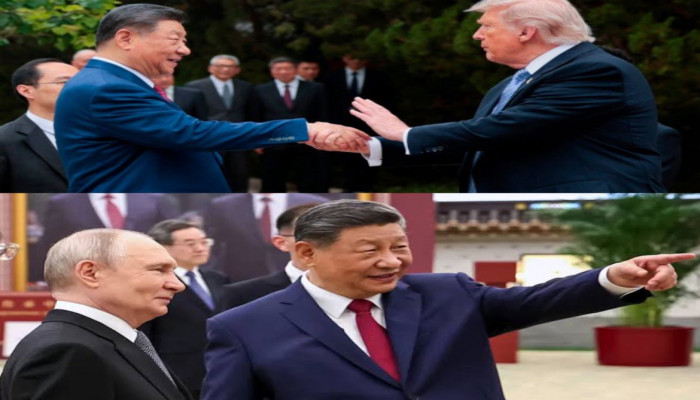
Chinese President Xi Jinping recently hosted separate summits in Beijing with U.S. President Donald Trump and Russian President Vladimir Putin, offering a clear look at how differently China manages its ties with Washington and Moscow. Although both leaders received ceremonial welcomes and held high-level meetings with Xi, the tone, purpose, and outcomes of the visits reflected the very different nature of China’s relationships with the United States and Russia.
Trump’s three-day visit focused mainly on stabilising the strained relationship between Beijing and Washington at a time of trade tensions and political rivalry. Putin’s shorter two-day trip, however, centred on strengthening an already close strategic partnership between China and Russia. The contrast between the two visits highlighted China’s effort to maintain balance in global diplomacy while deepening cooperation with Moscow.
China paid special attention to ceremonial gestures during Trump’s visit. Xi hosted Trump with grand displays of hospitality, including a rare tour of Zhongnanhai, the historic complex that now serves as the headquarters of China’s leadership. George Chen, a partner at The Asia Group, explained the significance of these arrangements, saying, “Xi knows this is what Trump values: being treated like a VIP, respected in front of the cameras.”
The approach during Putin’s visit was notably different. Instead of focusing heavily on symbolism and public spectacle, Xi concentrated on substantive discussions and long-term cooperation. The two leaders reaffirmed their friendship treaty and signed several new agreements, especially in the energy sector. Chen pointed to this difference as a reflection of the deeper and more established relationship between Beijing and Moscow.
The schedules of the two leaders also showed the contrast in priorities. Trump stayed in China for three days, while Putin’s visit lasted two. Both leaders were welcomed with formal ceremonies at Tiananmen Square and attended private meetings with Xi at the Great Hall of the People. However, Trump’s trip included carefully planned cultural activities designed to create a personal connection. He received a private tour of the Temple of Heaven and walked through the imperial gardens of Zhongnanhai.
Putin’s visit remained more focused on official engagements. Along with meetings at the Great Hall, he and Xi attended a photo exhibition showcasing the history of China-Russia relations. The visit also carried symbolic importance because it marked Putin’s 25th trip to China, while Trump was visiting the country for only the second time as president.
The messaging from both summits further revealed China’s different diplomatic goals. During Trump’s visit, Xi repeatedly stressed the need for stability between the world’s two largest economies. At a time when trade disputes and political tensions had increased distrust between the two sides, Xi urged Trump to see China as a partner rather than a rival. Both leaders spoke about building “a constructive China-U.S. relationship of strategic stability.”
With Putin, the message was much more aligned and cooperative. Xi focused on strengthening the long-standing strategic partnership between China and Russia. The discussions centred heavily on economic and energy cooperation. Putin described the energy sector as the “driving force” behind the relationship, particularly in areas such as oil and gas exports.
The outcomes of the two visits also showed a major difference. China and Russia signed more than 40 cooperation agreements covering trade, technology, energy, and media exchanges. Both countries also issued a joint declaration describing themselves as “important centres of power in a multipolar world.” The statement reflected their shared goal of challenging Western influence and promoting an alternative global order.
In comparison, Trump’s visit produced fewer visible results. No public agreements were signed during the summit. After Trump left China, the United States announced that Beijing had agreed to purchase American agricultural products worth around $17 billion every year and buy 200 Boeing aircraft. However, the details of these understandings remained unclear.
Claus Soong, an analyst at the Mercator Institute for China Studies, highlighted this contrast, stating, “China and Russia reached more agreements, and with China and the U.S., what are the agreements? Even that is not very clear.”
At the same time, not all developments during Putin’s visit were seen as positive for Moscow. Lyle Morris, a senior fellow at the Asia Society Policy Institute, noted concerns over the absence of a formal agreement on the proposed Power of Siberia 2 gas pipeline. The lack of progress on the project was viewed as a disappointment for Russia and Putin.
Taiwan remained another major issue separating the two summits. During his meeting with Trump, Xi made it clear that Taiwan continues to be one of the most sensitive matters in China-U.S. relations. He warned that mishandling the issue could lead to serious confrontation between the two countries.
Trump avoided publicly discussing Taiwan while in Beijing. However, after the visit, he referred to U.S. arms sales to Taiwan as a “very good negotiating chip” with China. The comment raised concerns in Taiwan and added to tensions surrounding the issue.
There was no such disagreement between Xi and Putin. Russia strongly supported China’s position on Taiwan during the summit. The joint declaration issued after their meeting reaffirmed Moscow’s opposition to Taiwanese independence and backed China’s efforts to protect its sovereignty and achieve national unification.
The declaration also showed growing alignment between Beijing and Moscow on regional security concerns. Both countries expressed worries about Japan’s military remilitarization at a time when China-Japan relations remain tense over Taiwan and broader security issues in East Asia.
Overall, the back-to-back visits demonstrated China’s carefully balanced diplomacy. While Beijing continues to manage a competitive and often tense relationship with Washington, it is simultaneously building a closer strategic partnership with Moscow. The meetings showed that China views the United States as an important but challenging counterpart, while Russia remains a trusted long-term partner in shaping a changing global order.



 Loading...please wait
Comments