




‘World is entering an era of extreme climate conditions’: UN Secretary General
- In Reports
- 07:56 PM, Nov 09, 2026
- Myind Staff
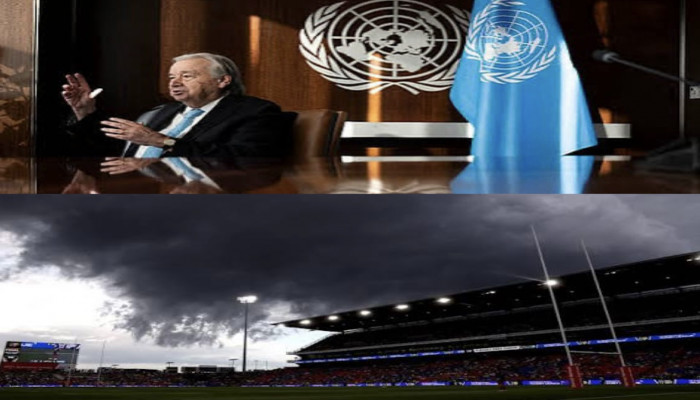
United Nations Secretary-General Antonio Guterres on Monday warned that the world is entering an era of extreme climate conditions, urging global leaders to take stronger action at the 31st UN Climate Change Conference (COP31) in Antalya, Turkey.
“A supersized El Nino is colliding with a planet already superheated by manmade climate change,” Guterres said in a statement. “We have entered a new age of climate extremes.” He urged leaders to “get serious by cutting emissions faster, accelerating a just transition from fossil fuels and delivering the finance and protection vulnerable countries need”.
His warning came as the World Meteorological Organisation (WMO) released a report highlighting continued global warming, melting ice and rising sea levels in 2026. The agency said each of the past 12 years ranked among the 12 hottest on record, while 2026 is expected to be among the hottest years ever recorded.
WMO chief Celeste Saulo said the latest climate data showed unprecedented changes. “What we are seeing gives new meaning to the phrase off the charts,” she told reporters in Geneva. She warned that the exceptionally strong El Nino could increase temperatures and trigger extreme weather events well into 2027. “We should prepare for another record-breaking year in 2027.”
According to the WMO, the global average surface temperature between January and September stood around 1.47 degrees Celsius above pre-industrial levels. This year's El Nino, expected to be the strongest since at least 1950, could push temperatures even higher by December. Preliminary data places 2026 among the four hottest years on record. The naturally occurring phenomenon releases heat from the ocean, which reached its highest recorded temperature this year, Saulo said.
The report also found that global sea levels had reached a record high, freshwater resources were declining and glaciers continued to retreat. In 2025, the annual loss of glacier ice was equivalent to filling five Olympic-sized swimming pools every second.
“We are supercharging our weather and El Nino will be a risk multiplier,” Saulo said. She added that “heatwaves, tropical cyclones, and rainstorms are intensifying faster than our historical baselines prepared us for”.
The WMO also highlighted progress in early warning systems. The number of countries with multi-hazard early warning systems increased from 55 in 2015 to 136 in 2025. However, the agency called for greater investment in global observation, data collection and weather forecasting to strengthen these systems. “We cannot afford to fly blind,” Saulo said.



 Loading...please wait
Comments