




World Bank to end China lending by 2031 as partnership enters new phase
- In Reports
- 01:33 PM, Jul 24, 2026
- Myind Staff
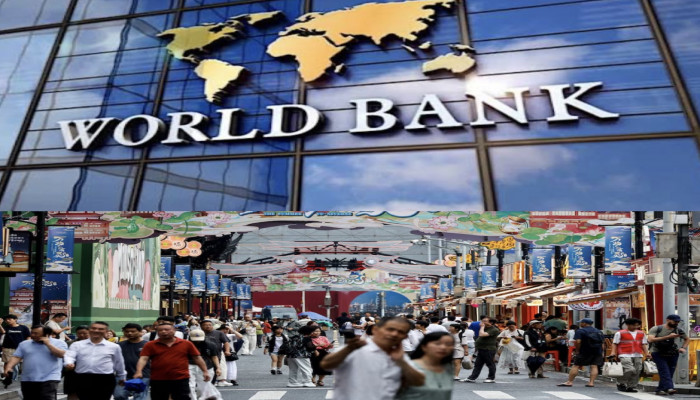
The World Bank has confirmed that it will phase out its lending to China by 2031 under its newly announced Country Partnership Framework (CPF). The decision marks a major shift in the long-standing relationship between the global lender and the world's second-largest economy. The announcement came on Thursday through the World Bank's official website. AFP had first reported the planned move last month.
The new CPF outlines the development priorities that the World Bank and China have agreed to follow over the next five years. A Country Partnership Framework is a jointly prepared plan that guides cooperation between the World Bank and a client country during a multi-year period.
The World Bank said lending through the International Bank for Reconstruction and Development (IBRD) will continue to decline during the five-year framework. The organisation stated, "IBRD lending will continue to phase down during the CPF period, not exceeding US$ 2 billion." It also added, "In principle, no further borrowing is expected from IBRD by the end of the CPF period."
The World Bank said the latest framework represents a new stage in its 45-year relationship with China. It noted that China has moved beyond the stage where it mainly needed financial support. The partnership will now focus more on technical assistance, knowledge sharing and innovation.
Anna Bjerde, the World Bank's Managing Director of Operations, highlighted this shift in priorities. She said, "As our partnership evolves, we are increasingly focused on knowledge, innovation and shared solutions."
The World Bank has steadily reduced its lending to China over the past several years. The country's rapid economic growth and major progress in reducing poverty have lowered its need for development financing from the institution. Instead, the World Bank now plans to work with China in areas where technical expertise and policy support can deliver broader benefits.
Bjerde also pointed to the challenges China now faces as its economy changes. She said, "As China tackles the challenges of an ageing society, a shifting economy, and other development priorities, we will work alongside it to generate ideas that matter not just for China, but for emerging markets around the world."
China has also welcomed continued cooperation with the World Bank despite the planned end to lending. Deputy Finance Minister Liao Min said China would continue to strengthen its engagement with the World Bank, even as the lending relationship changes over time.
The new five-year partnership framework focuses on supporting China's efforts to achieve sustainable economic growth. It also aims to help create better employment opportunities, strengthen social resilience and promote the transition to a low-carbon economy. These areas will remain central to the cooperation between both sides during the framework period.
The decision also comes after years of debate over World Bank funding for China. During his first term as US President, Donald Trump called on the World Bank to stop lending to China entirely. He argued for a tougher economic approach towards Washington's biggest economic rival. Trump maintained a strong stance on China during his second term, although he has not repeated that specific demand to end World Bank lending.
The World Bank's lending to China has already declined sharply over the years. It reached its highest level at $2.42 billion in 2017. The amount dropped significantly in the following years. By 2025, annual lending had fallen to $750 million, reflecting the gradual reduction that is now expected to end completely by 2031.
Even as borrowing declines, China continues to play an important role within the World Bank as a financial contributor. The country contributes funds to the International Development Association (IDA), which supports the world's poorest countries. Under the latest replenishment round, China committed $1.5 billion to the fund. That contribution makes Beijing the fifth-largest donor to the IDA.
The new partnership framework signals a clear change in the World Bank's engagement with China. Financial assistance will gradually end over the next several years. At the same time, cooperation will continue through policy advice, technical support and knowledge exchange. The World Bank sees this approach as better suited to China's current stage of development while allowing both sides to work together on challenges that have wider relevance for developing and emerging economies.



 Loading...please wait
Comments