




Will the UK Go the USSR Way?
- In Military & Strategic Affairs
- 10:05 PM, Nov 16, 2026
- Shubhi Malhotra & Dr Adityanjee
Introduction
In the span of ten weeks in 2026, the political centre of gravity of the United Kingdom moved in ways few had forecast. On 7th May, voters in Scotland returned the Scottish National Party (SNP) for a fifth consecutive term and gave pro-independence parties the largest majority in the history of the newly established Scottish Parliament. In Wales, Plaid Cymru became the largest party in the Senedd for the first time, ending Labour's unbroken run in Welsh elections since devolution. In Northern Ireland, a Sinn Féin First Minister was already in office and was pressing for a border poll by 2030. Then, on 22nd June, Prime Minister Keir Starmer resigned after sweeping electoral defeats, and on 20th July Andy Burnham became Britain's seventh prime minister since 2016.
On September 10th, on the floor of Westminster, he stated that there could be a referendum in Scotland for independence if there is popular consensus among the Scottish people, only to renounce his statement two days later. The Scottish Government has already published a draft Independence Referendum Bill, proposing the question of whether Scotland should be an independent country, intended for introduction at Holyrood once necessary powers are granted. A motion urging Westminster to devolve the required powers under Section 30 of the Scotland Act 1998 previously passed in the Scottish Parliament by 72 votes to 55 following the SNP's re-election.
There was a Cardiff summit and agreement on September 14th, in which not only the three First Ministers (John Sweeny of Scotland, Rhun ap Iorwerth of Wales and Michelle O’Brien from Northern Ireland) participated but also the President of the Sinn Fein party Mary Lou McDonald. The four leaders participated in their capacity as party leaders rather than as members of their respective governments. The memorandum of understanding signed on 14 September 2026 by the leaders set out a shared commitment to independence from the United Kingdom for Wales and Scotland, alongside reunification for Northern Ireland with the Republic of Ireland without any declared timelines. The agreement states that the current UK is "unjust and unsustainable" and calls on the central government to prepare for, plan and facilitate constitutional change. It marks the first time since the introduction of devolution that Scotland, Wales and Northern Ireland have all been led by governments committed to withdrawing from the United Kingdom. It also sets out planned areas of cooperation between the Scottish and Welsh governments, including tackling child poverty, addressing the cost-of-living crisis, pressures and international engagement. The leaders also outlined ambitions for partnership on the economy, energy and international cooperation. Just two days before the Cardiff agreement, the US President Donald Trump was in the Republic of Ireland. Sitting next to the Irish Prime Minister Micheál Martin, he made an interesting observation that it would be nice to have unification of Northern Ireland with the Republic of Ireland. He further elaborated that it is “going to happen eventually,” so it “may as well happen now.”
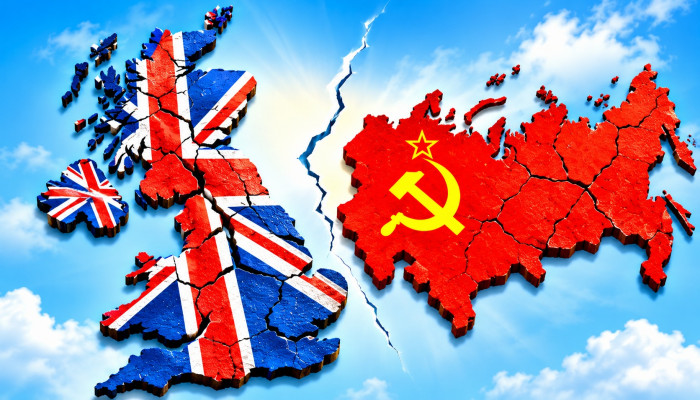
Put these developments side by side and a provocative question suggests itself, one now being asked in British and international commentary: is the United Kingdom, like the Soviet Union in 1991, heading toward dissolution? The short answer to this question is no. The long answer is more interesting. The Soviet analogy is misleading as a prediction, because the UK is a quasi-democratic union of consent (though a result of colonial conquest) whereas the USSR was a coercive, one-party dictatorial empire. But it is useful as a diagnostic test. It shows which stresses are real, which safeguards are present, and where a mismanaged response from the centre could turn a manageable constitutional dispute into an unmanageable one.
Why the Soviet Analogy Tempts
The internal collapse of the USSR in December 1991 is usually explained by a combination of geopolitical, geoeconomic and populist factors. The scholarship of Serhii Plokhy and Stephen Kotkin, among others, stresses five.
1. A legitimacy crisis at the centre: Economic stagnation and the failure of reform had hollowed out the authority of the Communist Party and of Moscow.
2. Republican institutions with democratic mandates: After the 1990 republican elections, parliaments in the Russian Federation, the Baltics and Ukraine had their own electoral legitimacy and used it to declare sovereignty.
3. A constitutional exit clause: Successive Soviet constitutions formally granted each union republic the right to secede, which made exit legally thinkable once the system weakened.
4. Elite defection at the centre: The decisive blow was not delivered by the periphery alone. Boris Yeltsin's Russian republic, the core of the Union, took the lead in leaving it, and the Belovezha Accords of December 1991 “Slavic Summit” were signed by the Russian Federation, Ukraine and Belarus.
5. Loss of coercive will and capacity: The August 1991 military coup had failed, and Boris Yeltsin gained legitimacy by publicly defying and resisting the Putsch; no competent central authority remained willing to hold the Union together by force.
Set against this list, the UK of 2026 shows a few superficial resemblances. Seven prime ministers in a decade is a symptom of a weak centre. United Kingdom economy is declining, with external debt having reached 11,420.6 USD bn in Jun 2026, compared with 11,362.5 USD bn in the previous quarter. The unemployment rate of the United Kingdom was 4.7 per cent in August 2026, unchanged from the previous three months. This represented one of the highest rates of unemployment since 2021, continuing a trend of rising unemployment since late 2022. There is rampant Jihadi terrorism that central authorities have failed to check. Over decades, Pakistani-origin Muslim grooming gangs have been openly raping and sexually exploiting White British girls and women, with Scotland Yard failing to prosecute the perpetrators over decades. Pro-independence parties lead governments in Scotland, and in Wales and Northern Ireland the leading parties are nationalist. Opinion polls in Scotland show the independence question hovering near 50 per cent. And the British government's own constitutional position has been publicly inconsistent. PM Andy Burnham has publicly acknowledged now that Brexit was an unfortunate political event for the UK. The so-called special relationship with the US is no longer “special” in the Trump era and possibly in future. The Russian Federation is testing the British military posture repeatedly in the North Sea and in the skies above.
Three Separate Nations, Three Different Cases
SCOTLAND - Scotland is the most serious case. Scottish nationalists have always questioned the legitimacy of the Acts of Union, passed by the English and Scottish Parliaments in 1707, that led to the creation of a United Kingdom to be called “Great Britain” on 1st May of that year. The UK Parliament met for the first time in October 1707. The Scottish Parliament met until "prorogued sine die" following months of intense debate, with 110 voting in favour of the treaty to 67 against. It is notable that 123 of the 300 members of Parliament were missing from one of the most controversial votes of the age. The passing of that vote has been described as a vote "to end Scotland's independence". Scottish nationalists have always denounced the merger of 1707 as a sell-out by the Scottish aristocracy and questioned its legitimacy.
The SNP has been in power in Scotland continuously since 2007 and recently won 58 of 129 seats in May 2026, seven short of a majority on its own, but with the Scottish Greens it commands 73 seats, a pro-independence majority. On 26th May, the Scottish Parliament backed, by 72 votes to 55, a motion calling on the UK Government to issue a Section 30 order, the legal instrument that would allow Holyrood to hold a referendum. The Conservative, Labour and Liberal Democrats, the establishment parties, all oppose a second referendum, and they dispute that the SNP holds a mandate for one, since it fell short of the majority its own manifesto had named as the test. If Scotland were to secede from the union, it would be able to survive economically because of North Sea oil revenue and handle its proportion of the national debt in proportion to its population. SNP is committed to joining the EU after independence, and that may motivate the Scottish people to opt for independence in a new referendum.
NORTHERN IRELAND - Northern Ireland is governed by a different rulebook. The Good Friday Agreement obliges the Secretary of State to call a border poll if it "appears likely" that a majority would vote for Irish unity. First Minister Michelle O'Neill has called for a poll by 2030. But polling reported in June 2026 suggested support for unity in Northern Ireland had fallen to a ten-year low, and Prime Minister Burnham, on his first visit to Belfast, declared a border poll "off the table", a statement Sinn Féin called anti-democratic and inconsistent with the Agreement. The mechanism, in short, exists in law, but the political threshold has not yet been met. Incidentally, following separation from the UK, Northern Ireland would immediately merge with the Republic of Ireland that is already part of the EU, hence there would be no questions about its future survival or lack of it on economic grounds. It is probable that Northern Ireland might be the first one to leave the union and decolonise itself. After separation, it will merge with the 26 counties to constitute an independent and unified Republic of Ireland with 32 counties.
WALES - Wales is a nationalist government without an independence majority. Plaid Cymru won 43 of the Senedd's 96 seats on roughly 35 per cent of the vote, with Reform UK second on 34 seats. Yet the Welsh Election Study 2026 found only 13.6 per cent of respondents backing independence, and Plaid itself played down independence in the campaign, a significant retreat from its 2021 pledge of a referendum within five years of entering government. Some analysts read the result as a tactical vote against Reform rather than a vote for separation. Wales, in other words, is a story of political realignment, not imminent secession. Wales would be unable to survive economically as an independent country in the hypothetical scenario of total independence. Even if the UK were to disintegrate, Wales and England would continue to remain united as Great Britain!
Where the Soviet Analogy Breaks
First, the nature of the state. The USSR was held together by a single dictatorial party, an ideology and, ultimately, coercion. When those eroded, nothing replaced them. The UK is a parliamentary democracy whose union rests on consent that can be tested at the ballot box. The 2014 referendum was held under a Section 30 order agreed between the UK and Scottish governments, and the UK Supreme Court has since confirmed that Holyrood cannot hold such a vote without Westminster's approval. Whatever the political rhetoric, no serious actor in Scotland is proposing a unilateral declaration of independence or an unofficial vote. The break-up of the UK, if it came, would be negotiated slowly and gradually, not a sudden collapse or internal implosion.
Second, the safety valves. The Soviet constitution's secession clause was a dead letter in practice, because there was no lawful procedure to invoke it. The UK, by contrast, has working procedures for exit: Section 30 for Scotland and the Good Friday Agreement's border-poll mechanism for Northern Ireland. The existence of a lawful route reduces the incentive for extra-constitutional action, provided the route is not blocked indefinitely.
Third, no defection from the core. The Soviet Union was undone, decisively, by its largest republic. In the UK there is no equivalent: no English political force is seeking to leave the Union. However, there is an interpretive risk worth naming. SNP leader John Swinney has argued that an English-dominated Westminster politics, in which Nigel Farage could become prime minister, is itself a reason for Scotland to leave, and he has claimed that Reform UK would curtail Scottish devolution. Whether that claim stands up is a matter for scrutiny, and Labour's rebound under Burnham has since eased pressure on that front: by October, Ipsos had Labour on 32 per cent, ahead of the Conservatives on 24 and Reform on 20. But the underlying point stands: if English voters and the peripheral, formerly colonised nations begin to vote for very different governments, the Union's legitimacy gets harder to sustain in future.
Fourth, the economy. The USSR collapsed amid the breakdown of a command economy and a loss of the capacity to deliver basic goods. Britain faces slow growth, strained public finances and a cost-of-living problem, which are serious political liabilities but not an imminent systemic breakdown.
Fifth, the instruments of coercion are off the table. No British government would use force to hold the Union together. This is a strength, not a weakness. But it also means the Union's survival depends entirely on persuasion and on the quality of the political bargain offered to Scots.
The Gorbachev Lesson
If the Soviet case offers one genuine lesson for London, it concerns the management of the process, not the underlying structure.
The final years of the USSR showed how a central government can hasten what it fears by sending contradictory signals: promising renewal while resisting any binding settlement, holding a referendum on preserving the Union in March 1991 that several republics boycotted, and then watching events outrun it. A referendum "won" by the centre settled nothing.
The parallel with Westminster's present handling of Scotland is imperfect but instructive. Prime Minister Burnham told Swinney in July that another referendum was "off limits". Weeks later, at Prime Minister's Questions, he suggested a vote could be held if public opinion "shows demand for one", which Swinney promptly treated as the acceptance of a principle and wrote to request a legal mechanism. Downing Street then restated that a referendum was off limits, and the Scottish Conservative leader accused the Prime Minister of "pulling the pin on a constitutional hand grenade". By mid-October the line was still being criticised in the press as a mixture of ruling out a Scottish referendum while appearing to entertain others.
The difficulty is structural. A "demand test" without a defined threshold invites each side to define demand for itself. Nationalists will point to the pro-independence majority at Holyrood; unionists to polls showing no clear lead for Yes. A government that appears to be saying both "never" and "if" risks confirming the nationalist argument that Westminster will never concede a vote, while also weakening the unionist argument that the question is settled. Northern Ireland's border-poll test, however imprecise, at least names a standard in law. Clarifying what Westminster would regard as sufficient, such as a sustained polling lead or a renewed electoral mandate, would be a statement of principle, not a concession.
Scenarios to 2030
1. Managed union (the most likely path). Burnham's recovery in the polls holds, Scottish polling stays near parity, and the argument shifts to further devolution (including powers over energy and migration, on which the Scottish Government is already pressing) rather than to a vote. Independence remains a live political cause without securing a referendum.
2. Negotiated Scottish exit (possible, not probable). If a durable Yes lead appears in polling and the SNP and Greens retain their majority at the next Holyrood election, the pressure for a Section 30 order becomes hard to resist. The 2012–14 precedent suggests a process of roughly two years. A negotiation would then have to address currency, the border, EU membership, the division of debt and the basing of the UK's nuclear deterrent at Faslane. Those issues, which neither side has resolved, would be where the real arguments lie.
3. Constitutional confrontation (low probability, high consequence). This would arise if a future UK government curtailed devolution, or if the lawful routes were blocked for so long that nationalist politics turned to extra-constitutional action. This is the scenario in which the Soviet analogy would become more apt, because legitimacy rather than law would then be the issue.
4. Border-poll pressure in Northern Ireland. This would require both a shift in polling and a decision by the Secretary of State, followed by concurrent referendums north and south of the border. Current evidence does not point to that threshold being met soon.
Conclusion
A fragmenting UK would have consequences beyond its own borders. The UK is a veto-wielding permanent member of the UN Security Council, a nuclear-armed state whose submarine deterrent is based in Scotland, and a central NATO ally. Any Scottish exit would raise questions about the continuity of these roles and about the terms on which they would be managed. For partners such as India, which is deepening its economic and strategic engagement with London, the immediate implication is not disruption but uncertainty about how a UK absorbed in constitutional negotiations would allocate diplomatic attention and shepherd the bilateral free trade agreement.
There is also a broader lesson for plural, multi-national states: that union survives when it offers its constituent parts credible and predictable ways to have their grievances heard, and not when the centre relies on ambiguity or on the memory of an earlier settlement.
Will the UK go the way of the USSR? On the evidence, no. The Soviet Union disintegrated because its central institutions ceased to function and no lawful path to a renegotiated union existed. The UK has semi-functioning institutions, a democratic culture and lawful legislative mechanisms for constitutional change. A break-up, if it came, would be a slow negotiated divorce, and a contested one, not an implosion. It may not happen in one go, unlike the USSR’s sudden internal implosion. It will be more akin to the slow dissolution of the former Federal Republic of Yugoslavia where economically prosperous province of Slovenia was the first one to secede followed by Croatia. Both were welcomed by the EU at different timelines.
But the comparison is useful precisely because it identifies how a union can slide toward crisis: weak central legitimacy, declining economy, poor law and order situation, peripheral governments with real mandates, and an unclear response from the centre. Several of these conditions are present in the UK today, most clearly with respect to Scotland. The decisive variable is not whether the Union is weak or strong in the abstract, but whether Westminster can offer a devolution settlement that is clear, credible and acceptable to enough voters across all four nations.
The risk to the Union is thus less a Soviet-style collapse than a slow drift like the former Federal Republic of Yugoslavia: a Union that survives in law but slowly loses consent in practice and fragments eventually. The next few years, and in particular the Scottish and UK elections due by 2029, will show which way it moves.
References
- Difford, D. (2026, October 15). Scotland political snapshot, October 2026. YouGov: Data Analytics & Market Research Services. https://yougov.com/en-gb/articles/55758-scotland-political-snapshot-october-2026
- Elias, A., & Royles, E. (2026, July 17). Plaid Cymru’s independence dilemma – from protest to power. Prifysgol Aberystwyth University. https://www.aber.ac.uk/en/news/archive/2026/07/title-288263-en.html
- A J Staff, & Reuters. (2026, July 23). UK’s Burnham tells Scotland new independence vote is off limits. Al Jazeera. https://www.aljazeera.com/amp/news/2026/7/23/uks-burnham-tells-scotland-new-independence-vote-is-off-limits
- Kelly, C. J., & Kenny, D. (2026, September 22). How would a border poll on Irish unity get called in Northern Ireland? The Irish Times. https://www.irishtimes.com/politics/2026/09/22/how-would-a-border-poll-on-irish-unity-get-called-in-northern-ireland/
- McKay, S., McIver, I., & Aiton, A. (2026, May 9). SPICe general election Scotland 2026 results and analysis. SPICe Spotlight | Solas air SPICe. https://spice-spotlight.scot/2026/05/09/the-results-are-in-general-election-2026/
- Adityanjee, A (2012, June 14th) Partitioning The UK? https://www.boloji.com/articles/12341/partitioning-the-uk
Disclaimer: The opinions expressed within this article are the personal opinions of the author. MyIndMakers is not responsible for the accuracy, completeness, suitability, or validity of any information on this article. All information is provided on an as-is basis. The information, facts or opinions appearing in the article do not reflect the views of MyindMakers and it does not assume any responsibility or liability for the same.



 Loading...please wait
Comments