




West Bengal signs MoU with Central government to join PM SHRI Schools initiative
- In Reports
- 12:24 PM, May 16, 2026
- Myind Staff
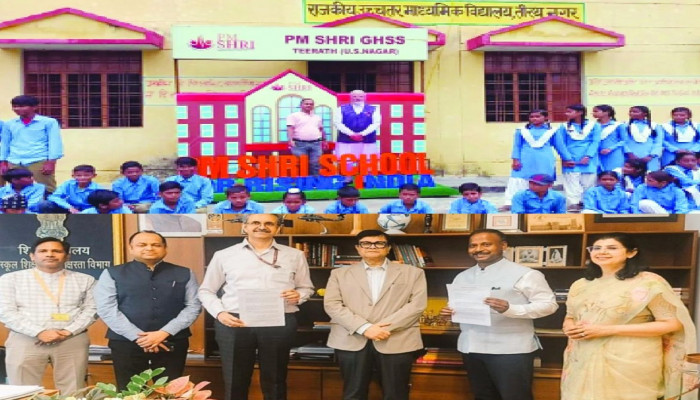
The Union Ministry of Education on Friday signed a memorandum of understanding (MoU) with the West Bengal government for the implementation of the PM SHRI Schools initiative in the state. The move formally brings West Bengal into the Centre’s flagship school transformation programme linked to the National Education Policy (NEP) 2020. The decision also ends the resistance shown by the earlier Trinamool Congress (TMC) government over the scheme.
The MoU was signed at Kartavya Bhawan in the presence of senior officials from both the Centre and the state government. Sanjay Kumar, secretary of the Department of School Education and Literacy (DoSEL), Ministry of Education, and Dheeraj Sahu, additional secretary, signed the agreement on behalf of the Centre. Binod Kumar, additional chief secretary, signed the document on behalf of the West Bengal government.
Sharing details of the development, the Ministry of Education posted on X, “Aligned with the vision of the National Education Policy (NEP) 2020, this initiative focuses on transforming existing schools into model institutions of excellence. These schools will serve as exemplar institutions, guiding and supporting nearby schools to enhance learning outcomes, innovation and holistic education.”
The development comes shortly after the Bharatiya Janata Party (BJP)-led National Democratic Alliance (NDA) formed the government in West Bengal for the first time after the recently announced Assembly election results. The earlier TMC government, led by former chief minister Mamata Banerjee, had refused to sign the MoU for the PM SHRI scheme. The state government had raised objections regarding the branding and structure of the scheme’s implementation.
With West Bengal now becoming part of the initiative, Kerala and Tamil Nadu are the only two states yet to sign the agreement for the PM SHRI scheme. Officials said the Centre is likely to hold discussions with the newly elected governments in both states after recent political changes following the Assembly elections.
In Tamil Nadu, TVK led by Vijay replaced the DMK government headed by M.K. Stalin. In Kerala, the Congress under V.D. Satheesan came to power by replacing the CPI(M)-led government headed by Pinarayi Vijayan. Officials expect fresh discussions with these governments regarding the implementation of the scheme.
The PM SHRI scheme, which stands for Pradhan Mantri Schools for Rising India, was launched in September 2022. The scheme aims to improve and upgrade 14,500 existing government schools across the country into model schools that fully reflect the principles of the National Education Policy 2020.
Under the scheme, selected schools are expected to focus on improving learning standards, encouraging innovation, and promoting holistic education. These schools are also expected to support nearby schools by acting as model institutions and sharing best practices in teaching and school development.
The PM SHRI initiative is a centrally sponsored scheme and follows a 60:40 funding pattern between the Centre and the states. However, northeastern and Himalayan states receive a higher financial contribution from the Centre due to their special geographical and developmental conditions.
According to official data, 13,091 PM SHRI schools have already been selected across the country under the initiative. The inclusion of West Bengal is expected to further strengthen the Centre’s push for the implementation of NEP-linked reforms in school education across India.



 Loading...please wait
Comments