




West Bengal scraps Madrasah Service Commission merges it with School Service Commission
- In Reports
- 07:52 PM, Oct 07, 2026
- Myind Staff
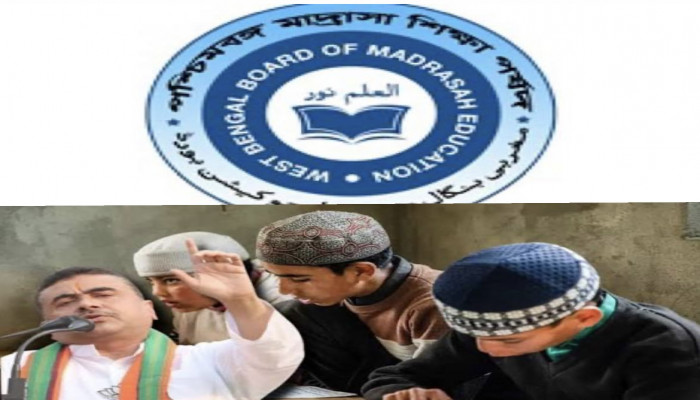
The West Bengal government has dissolved the West Bengal Madrasah Service Commission and merged it with the School Service Commission. The move aims to bring greater uniformity to the recruitment process across the state’s educational institutions. On Tuesday, October 6, Chief Minister Suvendu Adhikari formally announced the decision.
“The Madrasa Service Commission has been dissolved and merged into the School Service Commission,” the CM said. With the change, appointments in madrasas across the state will now be carried out through the School Service Commission.
The government decided after several allegations of irregularities surfaced in the recruitment process conducted by the Madrasah Service Commission. Officials said bringing madrasa recruitment under the School Service Commission would create a uniform system and help speed up appointments.
The state government has also made changes in the administrative control of Aliah University. The university, which was earlier under the Department of Minority Education, has now been brought under the Department of Higher Education.
The latest decision comes amid wider action against madrasas across West Bengal. Last month, the state government ordered the closure of 252 madrasas and issued show-cause notices to another 100. Most of the institutions facing closure are in Malda, North Dinajpur, South 24 Parganas, Murshidabad and Nadia districts.
The action followed a field-level survey of unaided madrasas across the state. The Minority Affairs and Madrassa Education Department began the statewide survey in June this year. Officials surveyed government and private madrasas across all districts to assess their functioning, infrastructure, approval status, management systems and academic standards.
The survey also focused on Khariji madrasas. These institutions operate independently and rely on public donations and charitable trusts instead of government funding. The government alleged that students at several Khariji madrasas were being brainwashed and exposed to anti-national propaganda.
During the survey, authorities identified around 2,396 madrasas functioning without registration. Institutions that fulfilled the required rules and had valid approval were permitted to continue operating.
The government said the measures aim to strengthen regulation of educational institutions and prevent the spread of extremist or anti-national content among students. It also seeks to bring madrasa education closer to the mainstream system and ensure students studying in these institutions receive access to educational opportunities similar to those available to students in other schools.



 Loading...please wait
Comments