




West Bengal proposes one year detention without trial for anti-social activities
- In Reports
- 12:48 PM, Jun 27, 2026
- Myind Staff
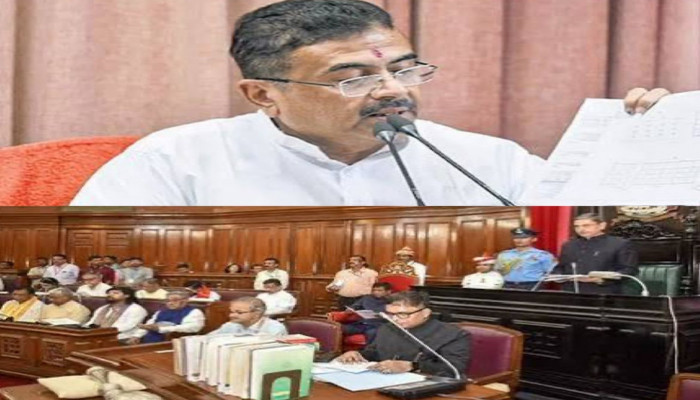
The Bharatiya Janata Party (BJP) government in West Bengal will introduce two new bills in the state assembly next week that propose strict action against organised crime and public disorder. The proposed laws will allow preventive detention for up to 12 months without trial, expand the definition of "anti-social activities," and permit the auction of an offender's property to recover losses. Officials said the government will table the West Bengal Public Safety and Control of Anti-social Activities Bill, 2026, and the West Bengal Maintenance of Public Order (Amendment) Bill, 2026, in the legislative assembly on June 29.
Officials said the bills closely follow similar laws already in force in Uttar Pradesh, Gujarat, Tamil Nadu and Maharashtra. The government aims to curb organised crime, extortion, public disorder, illegal mining and the smuggling of natural resources across the state.
The West Bengal Public Safety and Control of Anti-social Activities Bill, 2026, proposes preventive detention for up to 12 months without trial. It also allows the government to issue fresh detention orders if needed. The West Bengal Maintenance of Public Order (Amendment) Bill, 2026, proposes confiscating an offender's property and auctioning it to compensate for losses caused by criminal acts.
According to the bill and a special Kolkata Gazette notification dated June 24 reviewed by HT, "anti-social activity" covers any act "that causes or is likely to cause, directly or indirectly, alarm, danger, fear or insecurity among people; poses a great or widespread danger to life or property; disturbance in public order; obstructs business, trade or professions; involves the unlawful dispossession of any person from movable or immovable property; and causes substantial loss or damage to public and private property."
The proposed law also includes "any illegal activity relating to mining, quarrying, sand extraction, forest produce or wildlife which causes substantial loss to the public exchequer." A senior state official explained the reason behind this provision. “This part of the law focuses on illegal mining and sand quarrying in districts such as Birbhum and West Burdwan in south Bengal. In north Bengal, too, illegal logging and other activities have affected large forest areas in recent years,” the official said, requesting anonymity.
The bill also defines certain criminals as "goondas." It describes them as members or leaders of a group, gang or syndicate who have earlier been charged under Section 111 of the Bharatiya Nyaya Sanhita (organised crime) or Section 112 (petty organised crime). It also covers people who committed or attempted crimes punishable under the Arms Act, Explosives Substances Act, Immoral Traffic (Prevention) Act or the Narcotic Drugs or Psychotropic Substances Act.
The notification clearly states, “The maximum period for which any person may be detained in pursuance of a detention order made under this Act and confirmed under Section 10 shall not exceed 12 months from the date of detention.”
It also adds, “The state government may, at any time, revoke or modify a detention order. The revocation or expiry of a detention shall not bar the making of a fresh detention order against the same person if, after release, he is found to have again engaged in anti-social activities or if there is reasonable apprehension that he is likely to engage in anti-social activities.”
The West Bengal Maintenance of Public Order (Amendment) Bill, 2026, proposes compensation from people convicted of damaging public or private property during unlawful assemblies, riots, protests or other disturbances that affect public order. The government plans to set up claims commissions at different locations to handle such cases.
The gazette notification states, “Every award passed by the claims commission shall be final and no appeal shall lie against such award before any court.”
The bill also proposes one or more three-member advisory boards to examine applications filed by detainees. Each board will have a serving or retired high court judge as its chairperson and two members who are qualified to become high court judges. The notification states that lawyers cannot represent detainees before the advisory board unless the board permits it. The proceedings of the board will remain confidential except for its final opinion. If all three members do not agree, the majority opinion will become the final decision.
People familiar with the matter said West Bengal has never had such provisions before. Lawyer Anindya Sundar Das said, “Until now, criminals in Bengal were prosecuted mainly under the Indian Penal Code and the BNS, although there are some old state-specific laws...However, this is the first time a law prescribing detention without trial is being introduced in Bengal.”
The BJP currently holds 207 seats in the 294-member West Bengal Legislative Assembly. This majority makes it likely that both bills will pass before being sent to Governor RN Ravi for approval. The opposition Trinamool Congress (TMC), now split into two factions, holds only 80 seats.
Chief Minister Suvendu Adhikari, who also heads the home department, hinted at these changes during his address on Wednesday. He said the new laws would be stricter than the existing ones. “People will think five times before violating the law,” he said.
The Trinamool Congress strongly opposed the proposed legislation. The party argued that the bills lack proper judicial safeguards and legal protection. TMC Lok Sabha MP Mahua Moitra criticised the move and said, “It is even more stringent than the Emergency-era MISA (Maintenance of Internal Security Act), the UAPA (Unlawful Activities (Prevention) Act) and other harsh laws. Multiply all of them by 10 and only then do you arrive at this Bill.” She further said, “It has become clear within one month how disastrous the consequences of this government could be for the people of West Bengal.”
The proposed legislation resembles laws already enforced in several states. The Uttar Pradesh Control of Organised Crime Act, 2017, limits the grant of bail and allows judicial remand to extend from 90 days to 180 days. Gujarat's Control of Terrorism and Organised Crime Act, 2015, allows preventive detention and permits intercepted telephone conversations as evidence in court. Tamil Nadu's Goondas Act of 1982 allows preventive detention without trial for up to one year. Maharashtra's Control of Organised Crime Act, 1999, bars suspects from seeking anticipatory bail during investigation.



 Loading...please wait
Comments