




‘We’ll cut off that hand..’ Pakistan’s provocative threats on Indus Water Treaty
- In Reports
- 06:28 PM, Jun 30, 2026
- Myind Staff
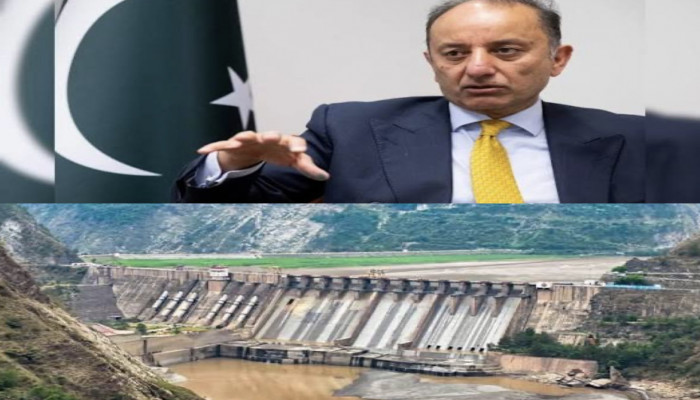
Pakistan's Climate Change Minister Musadik Malik issued a strong warning to India over the ongoing dispute related to the Indus Waters Treaty (IWT). He said Pakistan would not allow anyone to take away its share of water under the treaty. His remarks came at a time when tensions between the two countries remain high after India decided to keep the treaty in abeyance following the 2025 Pahalgam terror attack, which killed 25 tourists and a local resident.
Speaking at a press conference, Malik accused India of trying to control Pakistan's share of water. He claimed that such a move could seriously affect Pakistan's agriculture, economy and food security. Referring to India's reported position on water flow, Malik said, "There is a tap being controlled by the prime minister of a neighbouring country. He says he will not let even a drop of water flow into Pakistan."
Malik said that nearly 40 to 50 per cent of Pakistan's population depends on agriculture for its livelihood. He added that water plays a vital role in supporting jobs, food production and the country's economy. "Someone else [is trying to] control the entirety of the country's food security, 50 per cent of employment in the country and 25 per cent of the economy," he said.
The minister also repeated Pakistan's stand that it would firmly protect its rights under the treaty. He said, "The minister claimed that Pakistan had 'already declared that anyone trying to deprive it of its water would face severe consequences'."
He further warned, "But there is also the question of justice. We will protect ourselves...Not that we've just announced it, but we've proved that if anyone lays a hand over our share of water, we'll cut off that hand."
Malik argued that many countries across the world continue to share river waters even without a formal treaty. According to him, international conventions guide such arrangements. He questioned India's reported stand on stopping the flow of water and said, "Does every upper riparian now have the right to stop the flow of water to the lower riparian?... But we even have a treaty. [...] How can the water be stopped here then? This is the case that we will present tomorrow."
He also stressed that the Indus Waters Treaty remains valid. "The treaty exists," he asserted, adding that Tuesday's conference was primarily about justice and rights. "It will be decided what justice is internationally. […] It will be decided whether the children in lower riparian areas across the world have a right to water."
Several Pakistani media outlets reported Malik's remarks, and clips from the press conference also appeared on social media. However, NDTV said it could not independently verify the authenticity of those videos.
Pakistan's Information Minister Attaullah Tarar also spoke at the same press conference. He defended the Indus Waters Treaty and said India could not suspend, revoke or amend it on its own. He maintained that Pakistan's rights under the agreement remain protected under international law.
According to a report by Dawn, Tarar said, "Legally, Pakistan's stance has garnered support internationally, as the IWT cannot be unilaterally revoked, abolished or amended."
Tarar also referred to statements made by Pakistan Prime Minister Shehbaz Sharif and Chief of Defence Forces and Chief of Army Staff Field Marshal Asim Munir. He said both leaders had repeatedly made Pakistan's position clear by stating that "water is our lifeline as well as our red line".
The latest comments from Pakistani ministers came only weeks after Union Water Resources Minister CR Patil shared India's position in an exclusive interview with NDTV. Patil said India plans to fully use its share of the Indus River waters within the next one-and-a-half to two years. He also said that not a single drop of water meant for India would flow into Pakistan.
India placed the Indus Waters Treaty in abeyance after the deadly cross-border terrorist attack in Jammu and Kashmir's Pahalgam in 2025. The attack claimed the lives of 26 civilians. India has maintained that the treaty will remain suspended until Pakistan takes verifiable action to dismantle the state-sponsored infrastructure of cross-border terrorism operating from its territory.
The Indus Waters Treaty was signed in 1960 with the support of the World Bank. It has governed the sharing and use of the Indus River and its tributaries between India and Pakistan for more than six decades. The agreement remains one of the most significant water-sharing arrangements between the two neighbouring countries. The recent exchange of statements has once again brought the treaty into focus and added to the growing tensions over the future of water sharing in the region.



 Loading...please wait
Comments