




‘We will have to deploy more F-35s to Canadian airspace to protect the continent’: US ambassador warns
- In Reports
- 11:12 AM, Jan 28, 2026
- Myind Staff
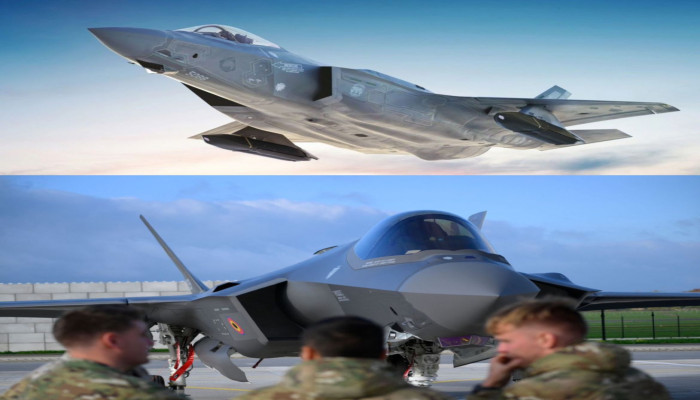
In a recent interview with CBC at Luke Air Force Base in Arizona, U.S. Ambassador to Canada, Pete Hoekstra, warned that Canada could see more and more presence of F-35 fighter jets in its airspace. He stated that regardless of whether Canada proceeds with its planned purchase of 88 aircraft, the United States would have to purchase more F-35 fighters jets for its own air force to protect the continent.
Hoekstra even added that the jets would be flown more frequently into the Canadian airspace to counter aerial threats. The United States has indicated that changes may be required in the North American Aerospace Defence Command (NORAD) if Canada decides not to proceed with its plan to purchase F-35 fighter jets from the US. The warning comes amid growing diplomatic tensions between the two countries and Canada’s review of its earlier agreement to buy the advanced aircraft.
US Ambassador to Canada, Pete Hoekstra, said that if Canada withdraws from the F-35 deal, the US may need to take steps to fill the defence capability gap. Referring to the situation, he stated, “If Canada is no longer going to provide that [capability], then we have to fill those gaps.” His remarks highlight concerns about how changes in Canada’s defence plans could affect joint security arrangements between the two nations.
NORAD, established in 1957, is a joint military organisation of the US and Canada. It is responsible for aerospace warning, control, and maritime warning for North America. The organisation plays a key role in detecting threats such as missiles, aircraft, and space objects. One of its main principles is that the closest aircraft can respond to an incoming threat, regardless of which country’s airspace it is in. This system depends heavily on compatibility and interoperability between the defence systems of both countries.
According to Hoekstra, if Canada does not move forward with the purchase of 88 F-35 fighter jets, NORAD would need to be altered. He warned that the current defence setup is based on Canada providing a certain level of capability through the F-35 aircraft. If that capability is not delivered, the US would have to reconsider how to maintain effective defence coverage across North America.
The ambassador’s comments came after Canada decided last month to “review” its $19 billion order for 88 F-35 stealth fighter jets from the US defence company Lockheed Martin. Canada’s decision to reassess the deal followed tariff threats made by US President Donald Trump against the country. The review has raised questions about whether Canada will continue with the agreement or shift to alternative options.
In 2023, Canada signed a deal to buy 88 F-35 fighter jets. Out of these, 16 jets have already been paid for and were scheduled to be delivered in 2026. However, with the current review process underway, the future of the remaining aircraft order remains uncertain.
Alongside the review of the F-35 deal, Canada is also exploring other defence options. The country is considering the purchase of 72 Gripen E fighter jets and six GlobalEye surveillance aircraft from the Swedish aerospace and defence company Saab. This potential shift has added another layer of complexity to the situation.
Hoekstra suggested that even if Canada chooses the Gripen jets instead of the F-35s, the existing defence arrangements would still need to be reconsidered. He explained, “If they decide, they’re going with an inferior product that is not as interchangeable, interoperable as what the F-35 is, that changes our defence capability. And as such, we have to figure out how we’re going to replace that.” His statement reflects concerns about whether alternative aircraft would match the technical and operational compatibility required for NORAD operations.
The issue highlights how defence procurement decisions can have broader implications for international military cooperation. As Canada continues to review its fighter jet purchase, both countries may need to reassess how they coordinate their shared responsibility for North American security. The outcome of Canada’s decision could influence not only its own defence strategy but also the future structure and functioning of NORAD.



 Loading...please wait
Comments