




‘We don’t give a damn’: Arunachal CM dismisses China’s claims, says state remains unfazed
- In Reports
- 02:24 PM, Jun 05, 2026
- Myind Staff
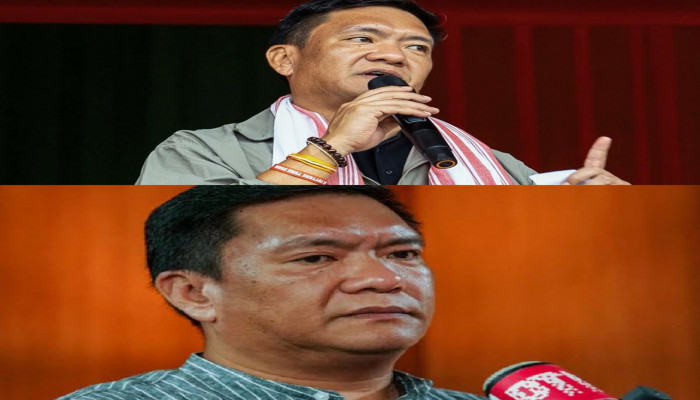
Arunachal Pradesh Chief Minister Pema Khandu on Thursday strongly dismissed China's repeated territorial claims over the northeastern state. He said the people of Arunachal Pradesh do not take such claims seriously and remain unaffected by Beijing's actions.
Speaking during a visit to Shillong, Khandu said China's statements were nothing new for the state. He also referred to China's repeated attempts to rename places in Arunachal Pradesh and described them as a regular practice by Beijing.
“This is not a new thing for us, and we don't give a damn to these kinds of claims. We don't take it seriously,” ANI news agency quoted Khandu as saying.
The chief minister also stressed that Arunachal Pradesh does not share a border with China. Instead, he said the state shares its boundary with Tibet. He made the remark while speaking about the geographical reality of the region and India's position on the issue.
“It is very secure, and we do not share a border with China; we share a border with Tibet, Arunachal Pradesh shares a border with Tibet only,” Khandu said, according to ANI.
Khandu also rejected comparisons between the present border situation and the circumstances that existed during the 1962 India-China war. He said such comparisons do not reflect the current reality because India has witnessed major changes in infrastructure and connectivity over the years.
“...Comparing the infrastructure of 1962--or that era--with the present day is quite misleading. This is 2026--the era of 'New India' and a 'Developed India' (Viksit Bharat),” Khandu added.
The chief minister said there had been significant improvements in border infrastructure across the country. He noted that development had taken place in regions stretching from Kashmir to Arunachal Pradesh. According to him, these changes have strengthened connectivity and accessibility in border areas.
Khandu credited Prime Minister Narendra Modi for giving a major push to infrastructure development in these regions. He said the government's efforts have made border areas highly accessible and improved overall connectivity.
The remarks come amid continuing tensions over China's claims on Arunachal Pradesh. Since the Doklam stand-off in 2017, Beijing has repeatedly released Chinese names for locations in the state. According to reports, China has renamed a total of 82 cities and geographical features in Arunachal Pradesh during this period.
The latest list was released on April 10, 2026. India has consistently rejected these actions and maintained that such attempts do not change the reality on the ground.
The Ministry of External Affairs has repeatedly criticised China's move to rename places in Arunachal Pradesh. The ministry has described these efforts as “vain”, “preposterous”, and “mischievous”. It has also made it clear that Arunachal Pradesh is an inseparable part of India.
The MEA has stated that Arunachal Pradesh “was, is, and will always remain” an integral and inalienable part of India. Earlier this year, the ministry also warned that such actions by Beijing could affect ongoing efforts to improve and normalise relations between India and China.
The issue gained attention again after reports suggested that China had created a third new county in the Aksai Chin region. Reports also said that Beijing had assigned names to 23 locations in Arunachal Pradesh.
Responding to these developments, the Ministry of External Affairs strongly rejected China's actions. “India categorically rejects any mischievous attempts by the Chinese side to assign fictitious names to places which form part of the territory of India…These actions by the Chinese side detract from ongoing efforts to stabilise and normalise India-China bilateral ties,” the MEA stated.
India has maintained that changes in names announced by China have no impact on its sovereignty over Arunachal Pradesh. New Delhi continues to reject Beijing's claims and insists that the state remains an integral part of the country.



 Loading...please wait
Comments