




Washington's plan to indict Raul Castro raises Cuban fears
- In Reports
- 12:40 PM, May 16, 2026
- Myind Staff
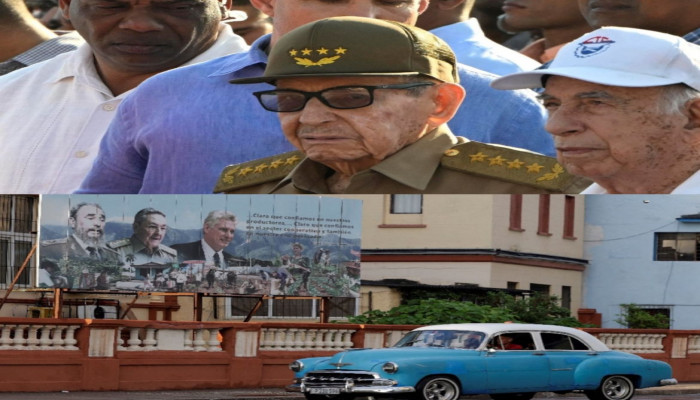
The United States’ reported plan to indict former Cuban leader Raul Castro over the 1996 downing of humanitarian planes has raised fears and tensions across Cuba. The development comes at a time when the island nation is already facing one of its worst economic crises in decades, marked by severe fuel shortages and growing uncertainty.
If the indictment moves forward, it would mark a major escalation in pressure from the Trump administration against Cuba’s communist government. Washington has repeatedly described the Cuban administration as corrupt and ineffective while increasing efforts to push political change on the island.
Raul Castro, now 94, remains one of the most influential figures linked to Cuba’s revolution despite no longer holding an official government position. He served for decades as the head of Cuba’s military and later became president from 2008 to 2018 after his brother Fidel Castro stepped down.
Cuba has not directly responded to the possibility of an indictment against Raul Castro. However, Cuban Foreign Minister Bruno Rodriguez reacted strongly while speaking at a meeting of BRICS foreign ministers. He said, “Despite the (U.S.) embargo, sanctions and threats of the use of force, Cuba continues on a path of sovereignty towards its socialist development.”
Many Cubans in Havana believe such a move would worsen already strained relations between the two countries. Several residents told Reuters that an indictment would push diplomatic ties further into crisis and damage any possibility of future negotiations.
Sonia Torres, a 59-year-old schoolteacher from Havana, viewed the possible prosecution of Raul Castro as an insult to Cuban national pride during a difficult period for the country. “Cubans must always keep moving forward,” she said. “If they try to process Raul, we`ll defend Cuba with sticks and rocks if we have to.”
Relations between Cuba and the United States have remained tense since Fidel Castro’s communist revolution in 1959. After taking power, Fidel Castro formed close ties with the Soviet Union and nationalised businesses and properties owned by U.S. citizens. Those actions led to decades of political hostility between the neighbouring countries.
Since January, the Trump administration has sharply increased pressure on Cuba. The U.S. has enforced what many describe as a de facto fuel blockade against the island. It has also expanded sanctions and issued threats of military action. These measures have reportedly forced several foreign companies to leave Cuba, including Canadian mining company Sherritt International.
Experts believe an indictment against Raul Castro would represent a historic turning point in relations between Havana and Washington. Peter Kornbluh, an author who has written extensively on secret negotiations between Cuba and the United States, said the move could end diplomatic efforts completely.
“This was an ultimatum: It’s do or die time,” Kornbluh said. “(The indictment) has created a fig leaf of legality for any military operations to seize or assassinate Raul Castro.”
The United States has previously used criminal charges against foreign leaders to justify military operations. Earlier this year, the Trump administration captured Venezuelan leader Nicolas Maduro in a military raid. The U.S. government described the action as a “law enforcement operation” aimed at bringing Maduro to New York to face criminal charges. Trump later warned that “Cuba is next,” increasing fears among many Cubans about possible future action by Washington.
Despite stepping away from official leadership, Raul Castro is still seen by many Cubans as a symbol of the revolution and one of the country’s most powerful figures. His influence within the political system and military establishment remains significant.
According to sources within the U.S. Department of Justice, the planned indictment is connected to Cuba’s 1996 shooting down of two aircraft operated by the humanitarian group Brothers to the Rescue. The organisation had long carried out missions connected to Cuban migrants and humanitarian support.
At the time of the incident, Cuba defended the attack by saying it was protecting its airspace. However, the American position later received support from the International Civil Aviation Organisation, which concluded that the planes were shot down over international waters.
Fidel Castro had earlier stated that Cuba’s military acted under “standing orders” to target planes entering Cuban airspace. He also maintained that Raul Castro, who was serving as defence minister then, did not personally order the attack.
Some Cubans continue to defend the government’s actions in the case. Havana resident Eliecer Diaz, 45, said Cuba had every right to protect itself from what it viewed as aggression from the United States.
“That's an invasion ... and you have to defend yourself,” said Havana resident Eliecer Diaz, 45. “If they are now thinking of prosecuting (Raul Castro), I think that is wrong.”
The growing tensions have added more uncertainty to life in Cuba, where people are already struggling with shortages, sanctions and economic difficulties. Many fear that any further confrontation between the United States and Cuba could worsen conditions on the island and close the door on diplomatic engagement for years to come.



 Loading...please wait
Comments