




Washington pauses $14 billion Taiwan arms deal due to Iran war, says US Navy secretary
- In Reports
- 01:55 PM, May 22, 2026
- Myind Staff
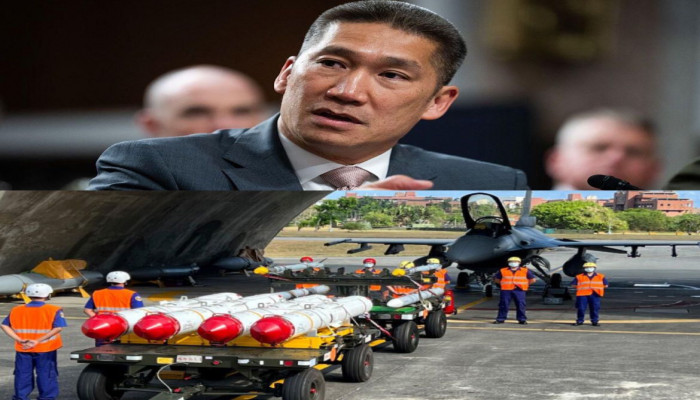
The United States has temporarily paused a proposed $14 billion arms sale to Taiwan as Washington reviews its military stockpile amid the ongoing conflict involving Iran. The development was confirmed by Acting Navy Secretary Hung Cao during a Senate hearing on Thursday. His remarks came just days after the proposed weapons package became a key topic during talks between US President Donald Trump and Chinese President Xi Jinping in Beijing.
Speaking before the Senate Appropriations Subcommittee on Defence, Cao said the US administration was being cautious about maintaining enough military supplies for its own operations linked to the Iran conflict. “Right now, we’re doing a pause in order to make sure we have the munitions we need for Epic Fury – which we have plenty,” Cao told the panel.
“But we’re just making sure we have everything, but then the foreign military sales will continue when the administration deems necessary.”
The proposed Taiwan package, if approved, would become the largest arms transfer ever made to the island. The US Congress cleared the weapons package in January, but it still requires final approval from Trump before it can officially move forward. The deal would exceed the previous record of an $11 billion Taiwan arms package approved by Trump in December.
The US decision comes despite a ceasefire between Washington and Iran that was agreed upon on April 8. While active fighting has stopped for now, both sides have not yet reached a permanent peace agreement. American officials are therefore continuing to monitor military readiness closely.
Cao told lawmakers that the final decision on whether the Taiwan deal proceeds would rest with Defence Secretary Pete Hegseth and Secretary of State Marco Rubio. Their assessment will determine when or if the foreign military sale resumes.
The pause has raised concerns in Taiwan, where officials continue to push for stronger defence ties with Washington. Taiwanese Premier Cho Jung-tai said on Friday that Taiwan would continue pursuing weapons purchases from the United States, according to Taiwanese outlet FTV News.
The move has also triggered debate among strategic experts. William Yang, senior analyst for northeast Asia at the Crisis Group, said in a social media post that the pause will “exacerbate anxiety and scepticism about US support in Taiwan and make it difficult for the Taiwanese government to request additional defence budget for the foreseeable future”.
Trump himself has offered mixed signals about the future of the deal. In a recent interview with Fox News, the US president confirmed that the Taiwan arms package was discussed with Xi during their meeting in Beijing. However, Trump refused to commit to approving it immediately.
He said he “may” or “may not” approve the package. Trump also suggested that the proposed sale could be used as a “negotiating chip” in discussions with China. Such remarks have drawn attention because Washington has traditionally avoided consulting Beijing regarding military sales to Taiwan.
China considers Taiwan part of its territory and strongly opposes any form of military cooperation between Washington and Taipei. Although Taiwan governs itself independently, Beijing has repeatedly stated that reunification remains its goal.
The United States officially shifted diplomatic recognition from Taipei to Beijing in 1979. However, under the Taiwan Relations Act passed that same year, Washington remains committed to helping Taiwan defend itself. While the US does not formally recognise Taiwan as a country, it continues to provide military and strategic support to the island.
Trump has also indicated he may consider direct communication with Taiwanese President William Lai Ching-te regarding the weapons package. Such a conversation would mark a major break from long-standing diplomatic protocol, as US presidents have generally avoided direct talks with Taiwanese leaders to prevent tensions with China.
A direct call between Trump and Lai would likely provoke a strong reaction from Beijing. Trump had earlier spoken with former Taiwanese President Tsai Ing-wen after winning the 2016 US presidential election. However, that interaction took place before he officially entered office.
The temporary suspension of the Taiwan arms package highlights the balancing act facing Washington as it handles military commitments in the Middle East while also trying to maintain strategic support for Taiwan amid growing tensions with China.



 Loading...please wait
Comments