




Virupaksha radar poised to transform Su-30MKI fleet and boost India's defence export potential
- In Reports
- 10:54 PM, Aug 21, 2024
- Myind Staff
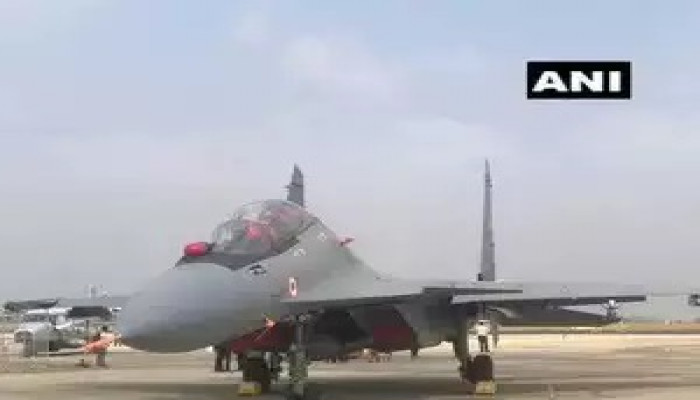
In a major advancement in radar technology, the Virupaksha radar has been introduced as an enhanced version of the LRDE's Uttam Active Electronically Scanned Array (AESA) radar. Building on the proven capabilities of its predecessor, which is already deployed on the TEJAS aircraft, the Virupaksha radar promises to deliver superior tracking, detection, and monitoring of targets. With its advanced features, it is expected to significantly extend the range and improve accuracy, setting a new standard in defense radar systems.
India's Virupaksha radar is poised to transform the nation's Su-30MKI fighter jet fleet with its advanced technology. According to military experts, this cutting-edge radar will enable the aircraft to launch multiple air-to-air and air-to-ground missiles simultaneously, significantly enhancing their combat capabilities. Additionally, the Virupaksha radar is expected to double the Su-30MKIs' ability to track, detect, and neutralise threats, marking a substantial upgrade in the jets' defensive and offensive operations.
The development of the Virupaksha radar, a key initiative under India's "Make in India" program, is spearheaded by the Defence Research and Development Organisation (DRDO) in collaboration with its subsidiary, the Electronics & Radar Development Establishment (LRDE), along with Hindustan Aeronautics Limited (HAL) and Bharat Electronics Limited (BEL). The project is progressing rapidly, with the LRDE preparing to install a prototype of the Virupaksha radar on the Sukhoi-30MKI combat aircraft. This marks a significant milestone in the radar's development, bringing it closer to operational deployment.
The Virupaksha radar is set to significantly enhance the Su-30MKI fighter jets with its advanced features. Designed for long-range surveillance, the radar will greatly improve the situational awareness of the Su-30MKI fleet by extending its ability to track and monitor aerial targets. It employs Active Electronically Scanned Array (AESA) technology, leveraging Gallium Nitride (GaN) to provide superior range and performance compared to traditional Gallium Arsenide (GaAs) systems. This technology supports the simultaneous tracking of multiple targets, which enhances the aircraft’s effectiveness in engaging threats while minimising size, weight, and power (SWAP) requirements. Additionally, the radar's capabilities will allow the Su-30MKI jets to fire multiple air-to-air and air-to-ground missiles at once, effectively doubling their ability to track, detect, and neutralise threats.
As part of India's Make in India initiative, the Virupaksha radar underscores a significant push towards bolstering indigenous defence capabilities and reducing reliance on foreign technology. The Indian Air Force (IAF) plans to upgrade 84 Su-30MKI aircraft with this radar as part of a broader modernisation effort, which is projected to cost approximately ₹65,000 crore.
The upgrade to the Su-30MKI fleet will incorporate several systems, with a substantial proportion featuring indigenous content. During trials, the advanced Virupaksha radar demonstrated its capability to track between 64 and 100 targets simultaneously. Moreover, the radar has proven its effectiveness in air-to-air combat scenarios by successfully managing, manoeuvering, and guiding up to six missiles at a single target concurrently, highlighting its critical role in enhancing the aircraft’s missile deployment capabilities.
Experts suggest that if ongoing trials continue to yield positive results, there is a strong likelihood that the Indian Air Force (IAF) will request Hindustan Aeronautics Limited (HAL) to equip the Su-30MKIs with the Virupaksha radars. This development is poised to be a significant boost not only for the IAF's Su-30MKI fleet but also for India's defence export capabilities, potentially enhancing the country's position in the global defence market.
Image source: ANI



 Loading...please wait
Comments