




Vinay Kwatra debunks myths on FCRA bill, says new law will improve transparency
- In Reports
- 03:47 PM, Aug 10, 2026
- Myind Staff
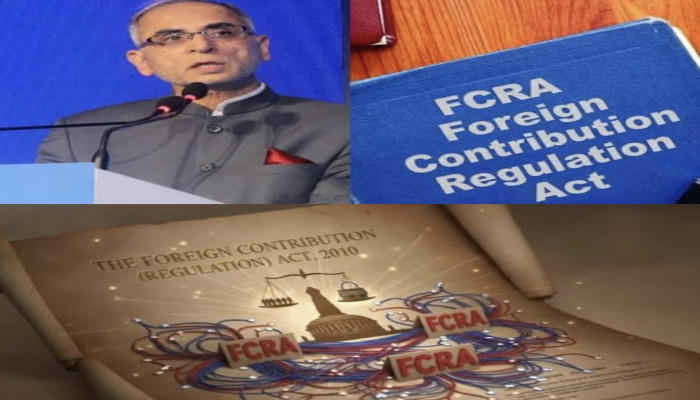
India's Ambassador to the United States, Vinay Mohan Kwatra, has rejected several claims surrounding the Foreign Contribution (Regulation) Amendment Bill, 2026. In a series of posts on X, Kwatra sought to address what he described as "myths" about the proposed changes to the Foreign Contribution (Regulation) Act, or FCRA. He said the proposed law is aimed at improving transparency, strengthening governance and making the rules clearer.
Kwatra addressed five major claims about the bill. These included concerns that the proposed law would restrict foreign aid to civil society, affect the functioning of NGOs, lead to the seizure of assets belonging to religious and charitable organisations, target specific communities and place India outside the international norm.
Responding to the claim that India is introducing a new law to stop foreign aid to civil society, Kwatra said regulating foreign financial flows in public and political spaces is a sovereign decision linked to national security. He said such regulations are common in modern governance across several democracies.
The first FCRA was introduced in India in 1976. It was replaced by a new framework in 2010 and was further strengthened through amendments in 2016, 2018 and 2020. Kwatra said the 2026 Bill and Rules continue this process by focusing on transparency, better governance and clearer regulations.
He also said the law does not prevent Indians from receiving foreign donations and does not seek to shut down civil society organisations that follow the law. Tens of thousands of associations are registered under the FCRA and receive foreign contributions for areas such as healthcare, education, disaster relief, research and humanitarian work.
Addressing concerns that the FCRA has already affected NGOs and charitable organisations and that the proposed changes could make their operations more difficult, Kwatra pointed to the increase in foreign contributions received by registered organisations. According to him, foreign contributions rose from around $1.2 billion in 2010-11 to $2.67 billion in 2024-25.
India has more than three million NGOs, while only 14,450 of them hold FCRA registration. Kwatra said this means the vast majority of civil society organisations in the country fall outside the scope of the Act. He added that the FCRA does not prohibit foreign charity, research grants or humanitarian assistance. Organisations are required to register, receive funds through the prescribed process and report how the money has been used.
The ambassador also rejected claims that the proposed law would result in the seizure of assets belonging to NGOs, religious charities, places of worship, hospitals, schools and other organisations that depend on foreign contributions.
Kwatra said India continues to support genuine international partnerships and has a legal system that allows foreign contributions to be received and used. He pointed out that when an organisation's FCRA registration is cancelled or surrendered, foreign contributions and assets created from those funds already vest in a State Government authority. This provision has existed since 2010 and is not a new feature of the 2026 Bill.
According to Kwatra, the proposed legislation introduces a Designated Authority to safeguard such assets. It also provides a route for organisations to regain them if their registration is restored. If an organisation gets its FCRA registration back, its assets and unused funds are returned in full.
He also highlighted provisions concerning places of worship. If a cancelled association has created property linked to a place of worship, that property will be transferred to another FCRA-registered organisation belonging to the same faith. The stated aim is to ensure that worship can continue.
Kwatra further rejected the allegation that the FCRA specifically targets a particular religion or community. He said the Act applies equally to organisations irrespective of their religion, community or ideology. Faith-based welfare activities, religious education, maintenance of places of worship and charitable work by organisations of different faiths remain eligible for foreign funding.
The ambassador also dismissed the argument that India is an outlier in regulating foreign funding. He cited laws and regulations in several countries to support his position. The United States has had the Foreign Agents Registration Act, or FARA, since 1938 and the Foreign Account Tax Compliance Act, or FATCA, since 2010. Australia introduced legislation in 2018, while Canada followed in 2024. The UK's foreign influence registration scheme came into force in July 2025, while the European Union is also working on legislation in this area.
The Foreign Contribution (Regulation) Amendment Bill, 2026 was introduced in the Lok Sabha on March 25, 2026. The proposed legislation seeks to regulate foreign contributions received by NGOs, trusts and associations. One of its key provisions is the creation of a Designated Authority to manage assets created using foreign contributions when an organisation's FCRA registration is cancelled, surrendered or not renewed.
Opposition and several other groups have criticised the proposed provision of the FCRA bill. Critics have argued that organisations could risk losing their assets if they fail to renew their FCRA registration. Concerns have also been raised that the legislation could disproportionately affect minority-run NGOs and institutions.
The controversy has also attracted attention in the United States. US Congressman Riley Moore raised concerns over the proposed legislation and alleged that some provisions could allow the Indian government to take control of churches and religious charities.
The Republican Congressman from West Virginia warned that the legislation could affect relations between New Delhi and Washington. "Christians have been in India since St Thomas the Apostle travelled to the Malabar Coast just decades after the resurrection of our Lord Jesus Christ. But despite this long Christian history, India's Parliament is considering amending Foreign Contribution Regulation Amendment (FCRA) rules to permit government takeovers of churches and religious charities,” he wrote on X.
India's Ministry of External Affairs responded by saying that the legislation is an internal matter for the country. MEA Spokesperson Randhir Jaiswal said, “Legislative matters concerning India are our internal affairs on which decisions are taken by the Parliament of the country. I would also like to point out that there are several nations, including the United States, which regulate the flow of foreign funds,"
Kwatra's remarks come amid the wider debate over the proposed FCRA changes. While the government has presented the bill as a measure focused on transparency, governance and regulation of foreign funds, critics continue to raise concerns over its possible impact on NGOs, religious institutions and other civil society organisations.



 Loading...please wait
Comments