




Venezuelans and Cubans on board US’ first deportation flight to Liberia
- In Reports
- 08:18 PM, Aug 21, 2026
- Myind Staff
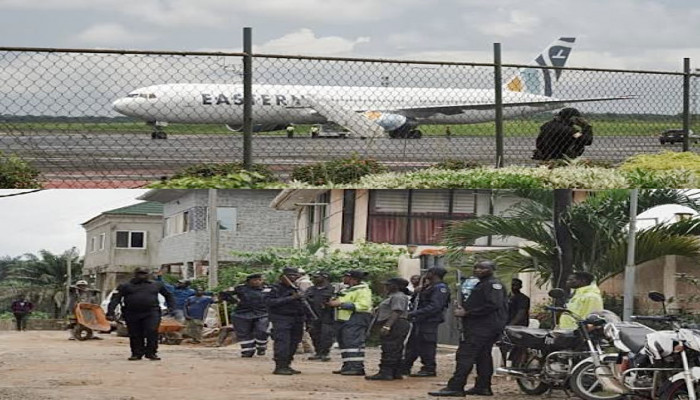
Liberia has received the first group of people deported from the United States under a new agreement with the Trump administration. Most of those sent to the West African country are expected to come from Latin American nations, including Venezuela and Cuba, Liberia's information minister said. The first deportation flight arrived in the capital Monrovia on Thursday, marking the start of a deal that could see up to 1,200 third-country deportees sent to Liberia over the next 12 months.
Liberia announced the agreement on Tuesday. The country said it had agreed to receive deportees from the United States who are not citizens of Liberia. The government described them as people from "African and Western Hemisphere countries" but did not give details about their nationalities. The U.S. State Department also did not provide information on the nationalities of the people covered by the arrangement.
Liberia's Information Minister Jerolinmek Piah told Reuters that "most of the people are from Latin American countries. Some from Venezuela, Cuba, Colombia and others." His comments provided the first clear indication of the nationalities expected to make up a large part of the group being sent to Liberia.
Piah also said the International Organisation for Migration and the U.N. refugee agency would assist with services for the deportees. Similar arrangements have been used in other African countries that have agreed to receive people deported by the United States.
The first flight carried 20 deportees and landed in Monrovia on Thursday. Liberia has not released information about their nationalities. The aircraft arrived at 12:45 p.m. local time after departing from Louisiana and making a stop in Dakar, Senegal. Two Liberian security sources confirmed details about the flight. The arrival was also tracked by the ICE Flight Monitor, managed by Human Rights First.
The agreement with Liberia is among several third-country deportation arrangements the Trump administration has pursued in Africa. The United States has also reached similar agreements with the Democratic Republic of Congo, Central African Republic, Equatorial Guinea, Cameroon, Ghana and Sierra Leone. Liberia's agreement, which allows for up to 1,200 deportees, is among the largest arrangements reached by Washington on the African continent.
The deportees covered by these agreements generally have legal protection against being returned directly to their home countries. In many cases, U.S. immigration judges have ruled that they could face torture or other forms of abuse if sent back to their countries of origin. The Trump administration has defended third-country deportation arrangements as lawful. Rights groups and immigration advocates have raised concerns over the treatment of deportees and said some people sent to third countries have eventually been returned to their home nations
Liberia has presented a different approach to the people it is receiving. The government said the deportees would be welcomed "as guests". It also said they would be free to leave when they wanted and would have the option to apply for asylum in Liberia. This arrangement allows them to seek protection in Liberia rather than being automatically returned to their countries of origin.
Liberia has linked the agreement to its own history as a country that provided refuge to freed slaves from the United States. The government also pointed to its "long history of accepting people seeking refuge from political and other crises". Liberia said it was not asking the United States for direct compensation for accepting the deportees.
However, the Liberian government said it would receive support to manage the programme and improve its wider migration system. The United States has already awarded $5 million to Liberia this year for what it described as "migration management activities". The funding is expected to support Liberia's capacity to handle migration-related programmes.
Liberia had previously shown its willingness to accept people deported from the United States. In October last year, the country said it was prepared to receive Kilmar Abrego Garcia, whose wrongful deportation to El Salvador became a major point of controversy during Trump's immigration crackdown.
Abrego Garcia is currently protected from being sent to Liberia. His lawyer, Simon Sandoval-Moshenberg, said on Thursday that a federal district court in Maryland had issued an injunction blocking his removal to Liberia. The U.S. government has appealed the decision, but the order remains in effect while the appeal is pending. Sandoval-Moshenberg said, "The government has appealed that order, but the order remains in place while the appeal is pending, and we are confident that we will prevail on the appeal."
The arrival of the first 20 deportees signals the beginning of Liberia's new role in the U.S. immigration programme. With the agreement allowing up to 1,200 people to enter the country over the next year, the arrangement could become a significant part of Washington's wider effort to accelerate deportations by sending people to countries other than their own.



 Loading...please wait
Comments