




Venezuela overtakes Saudi Arabia as India’s third-largest oil supplier in August
- In Reports
- 07:52 PM, Sep 01, 2026
- Myind Staff
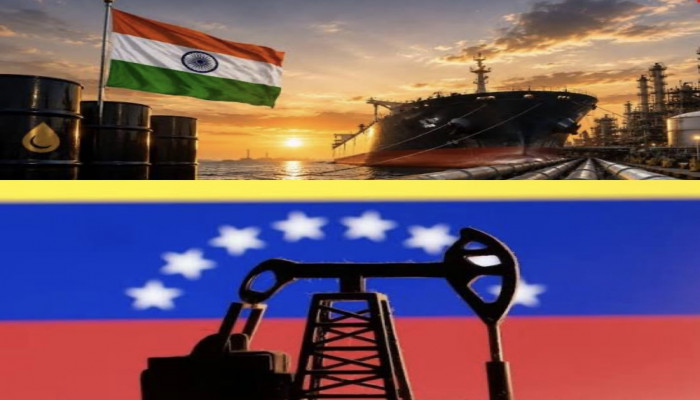
India sharply increased its crude oil purchases from Venezuela in August, pushing the South American nation ahead of Saudi Arabia to become India’s third-largest oil supplier. Venezuelan crude imports rose 64 per cent from July to 358,000 barrels per day (bpd), marking their highest level since 2020, according to commodity analytics firm Kpler. The increase came as Indian refiners raised purchases after the easing of US sanctions on Venezuelan oil.
Russia continued to remain India’s biggest source of crude oil in August. However, imports from Russia dropped to a four-month low of 2.06 million bpd. This marked a 27 per cent decline from July, when Indian refiners imported around 2.8 million bpd of Russian crude. The fall came as Russian export availability tightened and Chinese buyers increased their competition for Russian oil.
The decline in Russian crude purchases also comes amid growing pressure from the United States on countries buying Russian oil. The US Senate passed a bill proposing tariffs of up to 100 per cent on Russian crude importers, including India, China and Hungary. The move has added to the uncertainty around future Russian oil supplies to India, although analysts do not see the latest decline as a major shift away from Russian crude.
The United Arab Emirates remained India’s second-largest crude supplier in August. Indian imports from the UAE increased 15 per cent to 542,000 bpd from 470,000 bpd in July. The rise helped the UAE maintain its position behind Russia in India’s crude import basket.
Kpler said Russian crude arrivals are expected to remain lower than the record levels seen in July. "Russian arrivals are expected to fall by more than 700,000 bpd from July's record 2.8 mbd as refinery maintenance, tighter Russian export availability and stronger Chinese competition weigh on flows. Venezuelan imports, meanwhile, are set to reach 350,000 bpa, their highest level since 2020," Kpler said.
Venezuela’s rise pushed Saudi Arabia into fourth place among India’s crude suppliers. Indian imports from Saudi Arabia fell 18 per cent month-on-month to 339,000 bpd in August. The decline followed a naval blockade imposed against the Gulf nation by Houthi militants in July.
Kpler said the latest changes in India’s crude import basket point towards market normalisation rather than a long-term withdrawal from Russian oil. Russian crude flows to India are expected to stabilise between 2.0 million and 2.5 million bpd in the near term. The August decline, therefore, may reflect temporary supply and market conditions rather than a permanent change in India’s sourcing strategy.
The increase in Venezuelan oil supplies follows a major change in US policy towards the country’s energy sector. In March, the US Treasury issued a broad licence allowing Venezuela’s state-owned oil company, PDVSA, to sell crude directly to US companies and international markets. The move marked a significant shift after years of restrictions on Venezuela’s oil industry.
The United States also unveiled details of its Venezuela oil agreement on August 31. The White House said Venezuela’s interim authorities had granted US-backed North American Blue Energy Partners (NABEP) 100-year concessions for 17 oil fields. The fields hold about 65 billion barrels of proven reserves. NABEP is the second-largest private oil producer in Venezuela.
Venezuela has previously played a significant role in India’s crude oil supply. It accounted for 6.7 per cent of India’s oil import basket in FY18. Between FY18 and FY20, Venezuela consistently remained among India’s top six oil suppliers. Its share of India’s imports during that period ranged between 5.9 per cent and 6.7 per cent, according to data from Rubix Data Sciences.
India has also been expanding its crude purchases from other countries as refiners seek to diversify supplies amid disruptions in West Asia and increased imports from Angola, Iraq, Nigeria and Brazil. Imports from Angola recorded a particularly sharp rise in August. Indian refiners bought 198,000 bpd from Angola, compared with just 30,000 bpd in July.
India also continued to source crude from the United States, although US supplies declined in August. Imports from the US stood at 111,000 bpd during the month, down 11 per cent from 125,000 bpd in July. The wider shift in sourcing reflects Indian refiners’ efforts to maintain stable supplies while responding to changes in global oil markets, sanctions and regional disruptions.
The latest figures show a notable change in India’s crude import mix. Venezuela’s return to a prominent position comes as Russian supplies decline from their July peak and Saudi shipments fall. However, Russia is still expected to remain India’s largest supplier in the near term. The rise in Venezuelan purchases, meanwhile, signals a renewed role for Caracas in India’s oil trade after several years of reduced supplies.
Venezuela’s position as India’s third-largest supplier also highlights the changing global crude market. Indian refiners continue to look for competitive supplies from different regions. The country’s purchases from Venezuela, the UAE, Angola, the US and other major producers show that diversification remains a key part of its crude sourcing strategy.



 Loading...please wait
Comments