




Uttarakhand to install advanced warning systems at 13 high-risk Himalayan glacial lakes
- In Reports
- 02:06 PM, Aug 28, 2026
- Myind Staff
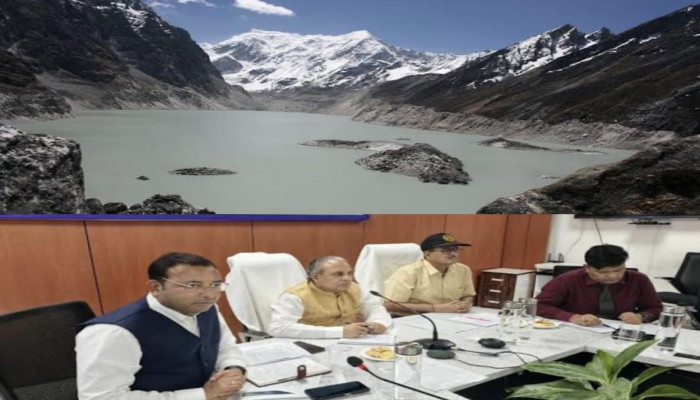
Uttarakhand is stepping up measures to tackle the threat of Glacial Lake Outburst Floods (GLOFs) in the Himalayan region. Chief Minister Pushkar Singh Dhami has directed officials to install advanced sensors and early warning systems at vulnerable glacial lakes across the state. The move aims to detect sudden changes in lake conditions and water levels and give downstream communities enough time to respond.
Vinod Kumar Suman, Secretary, Disaster Management and Rehabilitation, said Uttarakhand has identified 13 glacial lakes as sensitive and requiring close monitoring. “Surveys of four lakes have already been completed, while scientific assessments of the remaining lakes will be conducted in phases,” he said.
The state will conduct detailed scientific assessments to understand the risks linked with these lakes. Suman said an expert team will soon survey Saraswati Tal in Chamoli district and Kedartal in Uttarkashi district. “The surveys will assess the present condition of the lakes, water levels, changes in their size, surrounding terrain, potential hazard factors and the likely impact on downstream areas”, he said.
The move comes as concerns grow over the risks posed by glacial lakes in the Himalayan region. A sudden rise or fall in water levels can create serious risks for downstream settlements and infrastructure. A GLOF occurs when water stored in a glacial lake is suddenly released, potentially sending large volumes of water, ice and debris downstream.
The state government plans to take measures beyond monitoring lakes and installing warning systems. Dhami has asked officials to identify vulnerable locations and map areas that could possibly be impacted by the flood. Authorities will also work on safe evacuation routes and strengthen communication networks in vulnerable regions.
The government will also improve local warning mechanisms and strengthen relief and rescue preparations. These steps are initiated to ensure communities living downstream are better prepared to respond if a sudden flood occurs. Officials will need to coordinate monitoring, communication and evacuation efforts so that warnings reach people in time.
On Thursday, Vinay Ruhela, Vice-Chairman of the State Advisory Committee, Disaster Management Department, and Lt Col Raghuvir Singh Bhandari (retd) held a review meeting with district magistrates to assess disaster preparedness. The meeting focused on the preparedness of districts to deal with potential emergencies and improve response mechanisms in high-risk areas.
District magistrates have been instructed to keep a regular watch on high-risk areas in their respective districts. They must also report any unusual activity or changes to higher authorities without delay. Regular monitoring will help officials identify possible warning signs and take timely action.
Suman said the government is working on an end-to-end response mechanism that will cover every stage of a possible disaster. The system will run from the detection of risks and issuing warnings to evacuation, relief and rescue operations. It will include continuous monitoring of sensitive glacial lakes and the installation of advanced sensors and warning equipment.
The state also plans to collect real-time data from these monitoring systems. Officials will expand the network of monitoring devices wherever necessary. The government will also establish alternative communication channels to ensure emergency alerts can reach communities even if regular communication networks are disrupted during a disaster.
The proposed measures are part of Uttarakhand’s wider efforts to improve disaster preparedness in the Himalayan region. The state’s plans also align with the Centre’s ₹150-crore National GLOF Risk Mitigation Project (NGRMP), which was approved in February 2025 for Arunachal Pradesh, Himachal Pradesh, Sikkim and Uttarakhand.
The national project focuses on the use of remote-sensing data, community-based monitoring and early warning systems. It aims to improve the ability of Himalayan states to detect GLOF risks and communicate warnings to people living in vulnerable areas.
With 13 glacial lakes identified as sensitive, Uttarakhand is now focusing on building a stronger system to detect risks and respond quickly. The combination of scientific surveys, advanced sensors, real-time monitoring, stronger communication and evacuation planning is expected to improve preparedness for possible GLOF events and reduce risks to downstream communities.



 Loading...please wait
Comments