



USCIRF recommends targeted sanctions on RSS, RAW
- In Reports
- 02:04 PM, Mar 16, 2026
- Myind Staff
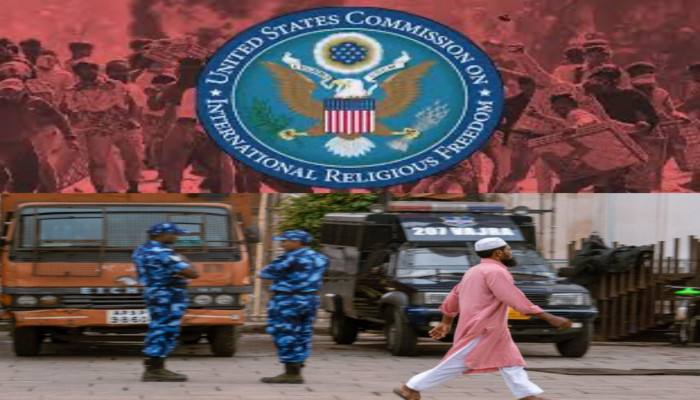
The United States Commission on International Religious Freedom (USCIRF) has once again raised concerns about the state of religious freedom in India in its latest annual report. The panel has recommended that the US government consider targeted sanctions against organisations such as the Rashtriya Swayamsevak Sangh (RSS), which is considered the ideological base of the ruling Bharatiya Janata Party (BJP), and India’s external intelligence agency, the Research and Analysis Wing (R&AW). The commission has also urged the United States to classify India as a “country of particular concern” and suggested that issues related to religious freedom should influence Washington’s decisions on arms sales and trade relations with the country.
So far, India’s Ministry of External Affairs has not issued any response to the most recent USCIRF report. However, in previous years, the ministry has strongly rejected the commission’s findings. Officials in the ministry have repeatedly described such reports as biased and driven by political motives. According to the ministry, these assessments fail to represent the true situation in India and tend to highlight isolated incidents while ignoring the broader social reality of the country.
The USCIRF was established in 1998 through legislation passed by the US Congress. Its main role is to observe and evaluate the status of religious freedom in different countries and to make recommendations to the US President, the Secretary of State, and members of Congress. The commission describes itself as an independent body, although its nine commissioners are appointed by the US President as well as senior political leaders in the House of Representatives and the Senate.
In its latest report, the commission stated that the condition of religious freedom in India has been declining in recent years. It is alleged that the government has increasingly taken actions that affect religious minority communities and their places of worship. According to the report, several state governments have moved to introduce new anti-conversion laws or strengthen existing ones by including stricter punishments such as longer prison terms. The commission also claimed that authorities have allowed the detention and expulsion of some citizens and religious refugees and have not taken strong action against vigilante groups accused of targeting minority communities.
The report also criticised certain pieces of legislation introduced in India, including the Waqf (Amendment) Act, which brings significant changes to how Islamic charitable properties and endowments are managed and regulated. The USCIRF also mentioned the Uttarakhand State Authority for Minority Education Act while discussing what it called growing restrictions affecting minority communities and institutions.
In addition, the commission referred to communal clashes that have taken place in several states, including Maharashtra, Odisha, and Uttar Pradesh. The report alleges that some groups connected to the Vishwa Hindu Parishad, an organisation linked to the RSS, were involved in incidents of violence. Based on these concerns, the USCIRF suggested that the United States should increase diplomatic pressure on India regarding religious freedom issues.
The report further recommended that the US government consider stronger policy actions. One of the suggestions was to apply Section 6 of the Arms Export Control Act, which could lead to a halt in arms sales to India if continued violations of religious freedom are identified. The commission argued that such measures would send a clear signal that intimidation, harassment, or discrimination against religious minorities and US citizens should not be tolerated.
India, however, has consistently rejected these allegations in the past. In 2025, the Ministry of External Affairs responded to a similar USCIRF report by stating that the commission continues to produce assessments that are not objective. Officials argued that the panel repeatedly presents a distorted picture by highlighting selective incidents and ignoring the country’s broader democratic and multicultural environment.
The ministry also emphasised that India is home to nearly 1.4 billion people belonging to different religions and communities. According to officials, the country’s social structure is built on diversity and long-standing traditions of coexistence. They stated that the USCIRF has failed to recognise this reality and instead continues to make claims that question India’s reputation as a democratic and tolerant society.
In earlier remarks, the ministry suggested that such reports appear to be driven more by an agenda than by a genuine effort to understand the complexities of India’s pluralistic system.
India has also taken a firm stand against the commission in other ways. In the past, the government has refused visas to USCIRF representatives who wished to visit the country. It has also pushed back strongly against the commission’s criticism of the Citizenship (Amendment) Act introduced in 2019, maintaining that the law does not discriminate against any religious community.
Despite these disagreements, the USCIRF continues to include India in its annual review of global religious freedom conditions. Its latest recommendations are likely to add to the ongoing debate between Washington and New Delhi on issues related to human rights, governance, and international perceptions of religious freedom.



 Loading...please wait
Comments