




US warns China of visa curbs over deportation dispute ahead of Trump's visit
- In Reports
- 08:55 PM, May 05, 2026
- Myind Staff
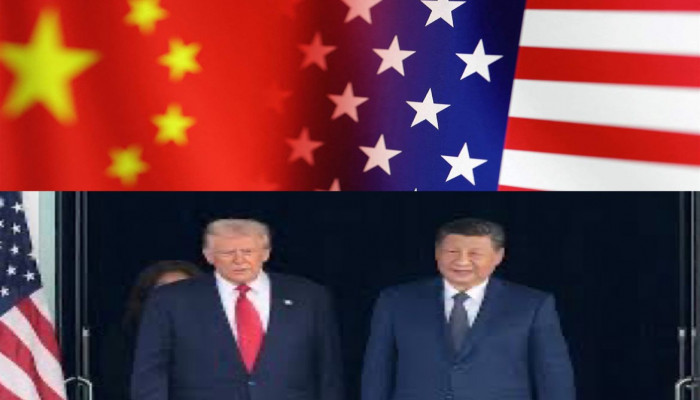
The United States is preparing to impose visa restrictions on China if it does not step up efforts to take back its citizens who are staying illegally in the country. A senior official from the administration of Donald Trump told Reuters that China has slowed down the process of repatriating its nationals, raising concerns in Washington. The official said the US is ready to increase travel restrictions if Beijing does not change its approach.
This warning comes just days before Trump’s scheduled visit to Beijing on May 14 and 15. During the visit, he is expected to meet Xi Jinping and discuss several issues, including the deportation of Chinese nationals from the US. The trip is seen as significant for Trump, who is also aiming to secure trade concessions from China. These outcomes could help him politically ahead of the November midterm elections, where his Republican Party is expected to face challenges.
Since returning to the White House last year, Trump has taken a tough stand on immigration. His administration has repeatedly threatened tariffs and sanctions on countries that do not cooperate in accepting deported individuals. Deportation remains a key part of his policy agenda and was central to his election campaign. The current situation with China reflects this broader approach.
For years, China has been hesitant to accept large numbers of its citizens who have overstayed their visas or entered the US illegally. When Trump began his current term, China had indicated that it would accept “confirmed Chinese nationals” after proper verification. However, Beijing has maintained that the process takes time and cannot be rushed.
According to the US official, China had accepted around 3,000 deportees through charter and commercial flights in early 2025. However, cooperation has decreased over the past six months. The official, who spoke on condition of anonymity to discuss internal plans, said the slowdown is a serious concern for the US government.
The official was direct in criticising China’s stance. “China "refuses to fully cooperate with the United States to take back its citizens," the official said, calling it a violation of China's international obligations and responsibility toward its people.” The statement reflects growing frustration within the US administration over the issue.
The US has indicated that it may respond with stricter visa policies if China does not improve cooperation. These measures could include higher cash bonds for visa applications, denying more visas, and increasing the number of people blocked at the border. The official also warned of broader consequences, saying, “Inaction by the Chinese government will jeopardise future travel for law-abiding Chinese citizens.”
The Chinese embassy in Washington did not immediately respond to requests for comment. In the past, Beijing has stated that it opposes illegal migration and sees it as a global issue that requires cooperation between countries. However, it has not directly addressed the recent US concerns.
The issue of undocumented Chinese nationals in the US has grown in recent years. During the administration of Joe Biden, the number of Chinese nationals crossing the southern border rose sharply. Earlier, such numbers were negligible. The increase was linked to economic challenges in China and stricter visa policies during the COVID-19 period, which made legal entry more difficult.
The US official stated that there are now more than 100,000 undocumented Chinese nationals living in the country. Out of these, more than 30,000 have received final orders for removal. Among them, over 1,500 individuals are currently detained and waiting for deportation. The official added that most of those detained have been involved in other crimes.
Estimates of the total number of undocumented Chinese nationals vary. The Migration Policy Institute reported that by mid-2022, there were as many as 239,000 Chinese immigrants in the US without proper authorisation. These figures highlight the scale of the issue and the challenges involved in addressing it.
The US has pointed out that other countries with large undocumented populations, including India, have been cooperating fully with deportation requests. Washington expects China to do the same by providing necessary travel documents and allowing charter flights carrying deportees to land in the country. The US government funded these flights.
Under Section 243(d) of the Immigration and Nationality Act, the US has the authority to impose visa sanctions on countries that do not cooperate with repatriation efforts. China has often been labelled as “recalcitrant” under this provision by the Department of Homeland Security. This legal framework gives Washington the option to act if cooperation does not improve.
US officials have long believed that China delays issuing travel documents for deportees on purpose. This approach is seen as a way to avoid taking back its citizens or to use the issue as leverage in its relationship with the US. Law enforcement officials have also indicated that China sometimes links deportation discussions with its own requests. These include demands for the extradition of economic or political fugitives who have taken refuge in the United States.
The situation remains sensitive as both countries prepare for high-level talks. The outcome of Trump’s visit to Beijing may play a key role in determining how the issue is handled in the coming months.



 Loading...please wait
Comments