



US-Taiwan trade deal cuts chip tariffs, spurs investment
- In Reports
- 02:16 PM, Jan 16, 2026
- Myind Staff
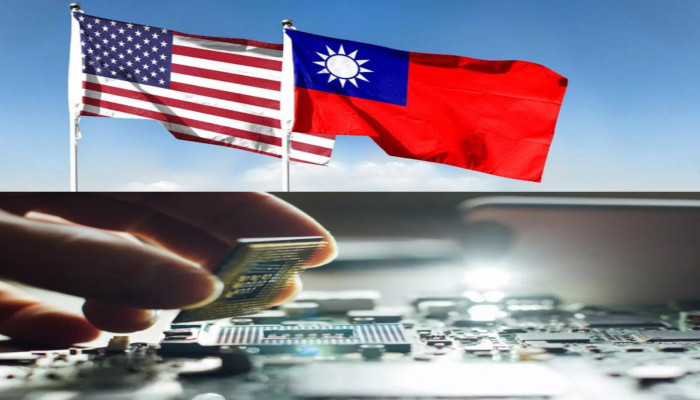
The United States and Taiwan have reached a major trade agreement that lowers tariffs on many Taiwanese exports, especially semiconductors, while encouraging large new investments in the U.S. technology sector. The deal, announced on January 15, places semiconductor chips and China at the centre of a move that could deepen tensions in the region.
The agreement strengthens ties between Washington and Taipei at a sensitive moment. China has been increasing pressure on Taiwan, which it considers its own territory, a claim Taiwan rejects. At the same time, the United States has been trying to avoid a full-scale trade war with Beijing. This new deal highlights how important Taiwan has become to U.S. economic and national security interests, particularly in the semiconductor industry.
Under the long-negotiated agreement, Taiwanese chipmakers that expand their manufacturing operations in the United States will benefit from lower tariffs. Companies such as Taiwan Semiconductor Manufacturing Company (TSMC) will pay reduced tariffs on semiconductors and related manufacturing equipment imported into the U.S., and some of these products can even be brought in duty-free. Broad tariffs that apply to most other Taiwanese exports to the U.S. will be reduced from 20% to 15%.
Certain products will face no tariffs at all. According to the U.S. Commerce Department, generic pharmaceuticals, aircraft components, and what it called “unavailable natural resources” will be subject to a 0% tariff. Taiwan also said that the United States is committed to treating Taiwan no worse than any other trading partner if semiconductor tariffs are increased in the future.
In return, Taiwanese companies have agreed to make massive investments in the United States. They will invest a total of $250 billion to boost production in semiconductors, energy, and artificial intelligence. This figure includes $100 billion that TSMC had already committed in 2025, with more investments expected later. In addition, Taiwan will guarantee another $250 billion in credit to support further investment, according to the Trump administration.
U.S. Commerce Secretary Howard Lutnick said the goal of the agreement was to move a large part of Taiwan’s chip industry to the United States. He told CNBC that the objective was to bring 40% of Taiwan’s entire chip supply chain and production to the U.S. He also warned that if companies failed to build in the U.S., the tariff on their products could rise sharply. Lutnick said, “Look, they need to keep our president happy, right,” and added, “Because our president is the key to protecting their country.”
The expansion of chip production is expected to benefit many suppliers in the semiconductor supply chain. Major chip-making tool companies, such as ASML, Lam Research, and Applied Materials, are likely to see increased business. Smaller suppliers of chemicals and materials, including Sumitomo Corp and DuPont spinoff Qnity Electronics, are also expected to gain.
Many of these firms already have a presence in Arizona due to Intel’s major operations. With TSMC expanding its facilities in the state, these suppliers have increased their own investments. TSMC is enlarging an existing manufacturing plant in Arizona, further strengthening the region’s role as a semiconductor hub.
The market reacted positively to the news. Shares of Nvidia, which relies on TSMC for manufacturing, rose more than 2%. Shares of ASML, Lam Research, Applied Materials, and Qnity increased by about 4% to 6%. Intel’s shares were slightly lower.
Washington increasingly views computer chips as a national security issue. While semiconductors were invented in the U.S. and many are designed there, much of the most advanced manufacturing takes place abroad, especially in Taiwan. This reliance has made U.S. policymakers uneasy, given China’s stance toward the island.
TSMC first announced its Arizona factory in 2020 during Donald Trump’s first term as president and expanded the plan under his successor, Joe Biden. As TSMC continues to grow its U.S. footprint, it faces challenges such as labour shortages, skill gaps, immigration issues for foreign workers, and the political risks of shifting production away from Taiwan.
Under the new deal, chipmakers expanding in the U.S. can import up to 2.5 times their new capacity of semiconductors and wafers without extra tariffs during an approved construction period. Preferential treatment will also apply to chips that exceed this quota.
TSMC recently reported a 35% jump in fourth-quarter profit. Its CEO, C.C. Wei, said the company is applying for permits in Arizona to build a fourth factory and its first advanced packaging plant. Meanwhile, tariffs on auto parts, timber, lumber, and wood products from Taiwan will be capped at 15%, subject to review by Taiwan’s parliament.
The deal comes as the U.S. Supreme Court is expected to rule on the president’s authority to impose broad tariffs without congressional approval, a decision that could affect future trade agreements.



 Loading...please wait
Comments