




US, Taiwan finalise trade deal to cut tariffs, expand purchases of US goods
- In Reports
- 01:11 PM, Feb 13, 2026
- Myind Staff
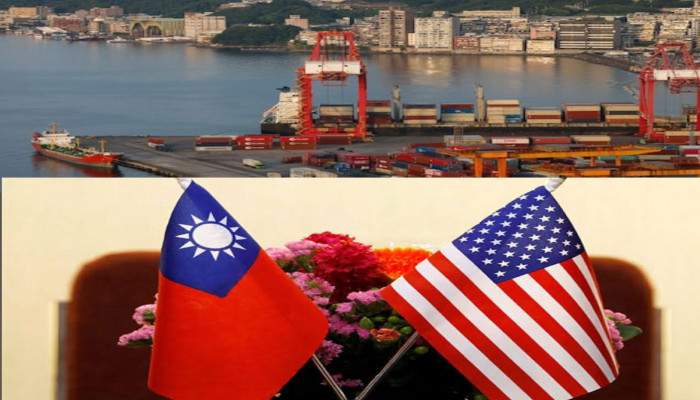
The United States and Taiwan have finalised a reciprocal trade agreement that sets a 15 % tariff rate on Taiwanese imports and commits Taiwan to significantly expand its purchases of American products over the next several years. The deal, confirmed on Thursday by officials from the Trump administration, also outlines a schedule to eliminate or reduce tariffs on almost all U.S. goods sold in Taiwan.
The agreement released by the U.S. Trade Representative’s office includes detailed provisions that build on a trade framework initially agreed upon in January. Under that framework, tariffs on Taiwanese products – including from the island’s strong semiconductor sector – were reduced from the 20 % originally imposed by the Trump administration to 15 %. With the final deal, Taiwan will now be placed on the same tariff footing as other key Asian exporters such as South Korea and Japan.
Taiwan President Lai Ching-te said the trade agreement marks an important moment for Taiwan. In a post on his Facebook page, he wrote, “This is a pivotal moment for Taiwan’s economy and industries to ride the winds of change and undergo a major transformation.” He added that the deal will improve the Taiwan–U.S. economic and trade framework, strengthen reliable industrial supply chains, and help to build a Taiwan–U.S. high-tech strategic partnership.
According to Lai, Taiwan has also gained tariff exemptions for more than 2,000 export product items going to the United States. Because of these exemptions, he said the average tariff on U.S. exports to Taiwan will fall to 12.33 %.
Before the deal can take effect, it must be approved by Taiwan’s parliament, the Legislative Yuan, where the opposition holds a majority. Lawmakers will review the agreement and vote on whether to accept the terms.
The agreement obligates Taiwan to increase its purchase of U.S. products over a scheduled period from 2025 through 2029. Among the key purchase commitments are:
- $44.4 billion worth of liquefied natural gas (LNG) and crude oil,
- $15.2 billion worth of civil aircraft and engines, and
- $25.2 billion worth of power grid equipment, generators, marine equipment, and steelmaking machinery.
These commitments are part of an effort to deepen economic ties between the two partners and provide more opportunities for American companies across multiple sectors.
The January framework agreement had included a pledge by Taiwanese companies to invest $250 billion in the United States in areas such as semiconductors, energy, and artificial intelligence. This figure included $100 billion already committed by Taiwan Semiconductor Manufacturing Company (TSMC). In addition to private sector commitments, the Taiwanese government said it would guarantee another $250 billion in U.S. investments, according to U.S. Commerce Secretary Howard Lutnick.
While the final text released on Thursday did not offer new specifics on the investment plans, it stated that Taiwan’s representative office in the U.S. would work with American authorities to support additional new greenfield and brownfield investments, especially in strategic high-tech manufacturing areas, including AI, semiconductors, and advanced electronics.
The new agreement will eliminate Taiwan’s tariffs of up to 26 % on a range of U.S. agricultural imports immediately. This means that products such as U.S. beef, dairy, and corn will enter Taiwan with no tariffs. However, for certain items, tariff reductions will take place more gradually. For example, tariffs that currently stand at 40 % on pork belly and 32 % on ham will be reduced to 10 % under the agreed schedule.
In addition to tariff cuts, Taiwan has agreed to remove several non-tariff barriers for U.S. goods. As part of the agreement, Taiwan will accept U.S. standards for automobile safety, as well as U.S. regulations on medical devices and pharmaceuticals. These changes are intended to make it easier for U.S. companies to export products to Taiwan without facing differing regulatory requirements.
U.S. Trade Representative Jamieson Greer said the agreement will greatly enhance opportunities for American exporters. In a statement, Greer said, “This agreement will boost export opportunities for U.S. farmers, ranchers, fishermen, workers, and manufacturers.” He also stated, “This agreement also builds on our longstanding economic and trade relationship with Taiwan and will significantly enhance the resilience of our supply chains, particularly in high-technology sectors.”
The U.S. trade deficit with Taiwan has grown substantially in recent years. For the first 11 months of 2025, the U.S. trade deficit with Taiwan was reported to be $126.9 billion, compared with $73.7 billion for all of 2024, largely driven by increased imports of advanced AI chips from Taiwan, according to data from the U.S. Census Bureau.
Once Taiwan’s Legislative Yuan approves the text, the agreement will move toward implementation. Both sides will then begin the process of lowering tariffs, executing the purchase commitments, and working on investment initiatives. The deal is seen by both countries as a major step forward in trade cooperation, economic partnership, and strategic alignment in key technology and infrastructure sectors.
The successful finalisation of this trade agreement underscores the importance of economic ties between the United States and Taiwan, particularly as global economic competition increases and supply chain resilience becomes a priority for both nations.



 Loading...please wait
Comments