




US strikes Iran’s Larak launchers, Tehran hits American bases in Jordan
- In Reports
- 02:28 PM, Aug 31, 2026
- Myind Staff
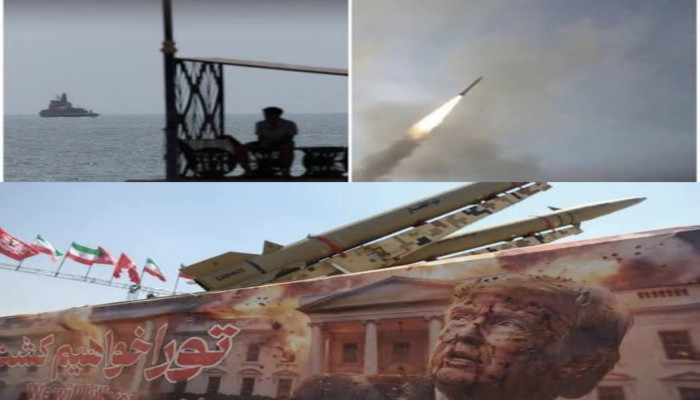
The United States has struck two Iranian launchers on Larak Island after American forces said Islamic Revolutionary Guard Corps (IRGC) personnel were preparing to fire rockets carrying sea mines into the Strait of Hormuz. Iran responded by launching ballistic missiles at US military bases in Jordan, according to Iranian media. The exchange marks a sharp escalation in the confrontation between Washington and Tehran, which had remained relatively calm since June.
A US official told Axios that American forces targeted the two launchers on Larak Island after IRGC personnel were seen preparing to launch rockets carrying sea mines into the Strait of Hormuz. The official said the US was closely watching the area and was ready to protect commercial shipping through the strategic waterway.
"Earlier today, US forces struck two Iranian launchers on Larak Island. Islamic Revolutionary Guard Corps forces were observed preparing to launch rockets with sea mines into Strait of Hormuz," the official said, as per Axios. The official added that US forces were "monitoring the area closely and remain prepared to protect the free flow of commerce" through the strait.
Another US official later confirmed the strike to Reuters. "I can confirm that earlier today US forces struck two Iranian launchers on Larak Island. Islamic Revolutionary Guard Corps forces were observed preparing to launch rockets with sea mines into the Strait of Hormuz," the official said.
The US strike came shortly after the American military completed an operation to clear mines from the main shipping route through the Strait of Hormuz. President Donald Trump had issued a strong warning to Tehran after the operation. He said any ship or boat involved in placing new mines in the waterway would face immediate destruction.
"There is a Zero Tolerance policy on mine placement in full force and effect," Trump wrote on Truth Social.
Iran had earlier warned that it would respond to the US attack. The Islamic Revolutionary Guard Corps said on Monday that it launched ballistic missile attacks on the King Hussein and Al Azraq US bases in Jordan. Iranian media reported that the strikes were carried out in response to the US attack on Larak Island.
The IRGC had earlier warned that the US strike would not go unanswered. Its forces said the attack "will be answered by the sons of Iran and will result in the punishment of the aggressor", according to Iranian state media. Reuters reported that Iranian state broadcaster IRIB said the US strike on Larak killed and wounded several Iranian personnel and civilians.
An IRGC spokesperson also warned that the United States would pay for the attack on Larak Island on both economic and military fronts. Tasnim News Agency, which is affiliated with the IRGC, separately reported that a drone carried out the attack. It said two people were killed and two others were wounded.
The latest exchange could bring a fresh phase of military confrontation between the two countries. Washington has increasingly shifted its focus from direct bombing operations towards financial pressure on Tehran. The conflict has now entered its seventh month.
The United States has also claimed greater control over the Strait of Hormuz in recent weeks. Washington said it has managed to move millions of barrels of oil through the waterway under military protection despite Iran's blockade. At the same time, reports of attacks on vessels in the strait have continued almost daily. Tehran has maintained that the vital waterway remains closed.
Iran has responded to previous US strikes with missile and drone attacks on American military bases in neighbouring countries that host US troops. The latest attacks on bases in Jordan follow that pattern and raise the risk of further retaliation.
The confrontation is also taking place alongside a growing US economic campaign against Iran. Last week, Trump's administration announced what it called "D-Day" sanctions aimed at putting greater financial pressure on Tehran. The measures include secondary sanctions against countries and companies that continue to conduct business with Iran.
Despite the sanctions campaign, Pentagon chief Pete Hegseth has warned that Washington remains prepared to use military force if required. US officials have also said Iran's control over the Strait of Hormuz has weakened. They argue that sanctions and the military blockade of Iranian ports are placing increasing pressure on Iran's economy. Tehran has rejected the pressure and said it remains ready for a prolonged conflict.
Larak Island has a key role in the latest escalation. The small Iranian island lies in the Strait of Hormuz, off the coast of Bandar Abbas. It is located east of Qeshm Island and south of Hormuz Island. Larak covers around 49 square kilometres, but its location gives it major strategic value.
The island hosts an Iranian Islamic Revolutionary Guard Corps Navy base. Its position near the Strait of Hormuz has made it important for Iran's military operations. Historical accounts also point to military installations and missile sites on the island.
The Strait of Hormuz connects the Persian Gulf with the Gulf of Oman and serves as one of the world's most important maritime routes. Around one-fifth of global oil and liquefied natural gas shipments normally pass through the strait. The ongoing conflict has disrupted that traffic.
The US strike on Larak therefore carries significance beyond the immediate attack. Washington has made keeping the waterway open a major objective. Tehran has used the threat of disrupting shipping through the strait as leverage during periods of tension. Iran's missile strikes on US bases in Jordan now mark another direct escalation in the confrontation and could trigger further military action in the region.



 Loading...please wait
Comments