




US strikes Iranian missile sites along Strait of Hormuz with 5,000-pound bunker-buster bombs
- In Reports
- 02:03 PM, Mar 18, 2026
- Myind Staff
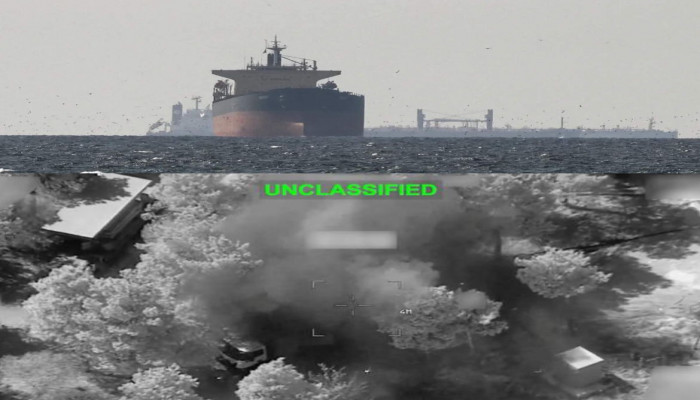
The United States has carried out a major military strike on Iranian missile installations near the Strait of Hormuz, using powerful “bunker-buster” bombs. These strikes come at a time when the crucial maritime route has nearly shut down due to the ongoing conflict involving the US, Israel, and Iran. The move is seen as a direct attempt to weaken Iran’s ability to threaten ships passing through one of the world’s most important oil transit chokepoints.
According to the US Central Command, American forces used multiple deep penetrator munitions to hit hardened missile sites along Iran’s coastline. The military shared details of the operation on X, stating, “Hours ago, US forces successfully employed multiple 5,000-pound deep penetrator munitions on hardened Iranian missile sites along Iran’s coastline near the Strait of Hormuz.” It further added, “The Iranian anti-ship cruise missiles in these sites posed a risk to international shipping in the strait.”
These bunker-buster bombs are specially designed to destroy targets that are located deep underground or protected by reinforced structures. With these, the US specifically targeted fortified missile launch and storage facilities that are part of Iran’s coastal defence system. By hitting these sites, the US aims to reduce the threat posed by Iranian anti-ship missiles, which have made the waters around the Strait extremely unsafe for commercial vessels.
The strikes represent a significant shift in strategy. Instead of only responding to broader military actions, the US is now directly targeting threats to maritime security. This comes as global shipping through the Strait of Hormuz has slowed down drastically, with many vessels avoiding the route due to safety concerns. The disruption has already started affecting global energy supplies, as a large portion of the world’s oil passes through this narrow channel.
The current crisis intensified after Iran responded to US-Israeli actions with a series of attacks using drones, missiles, and naval mines. These actions have effectively blocked tanker movement in the region. As a result, oil shipments have been delayed, and global oil prices have surged sharply. The situation has created uncertainty in international markets and raised concerns about long-term energy security.
Donald Trump has urged several countries to join efforts to secure and reopen the Strait of Hormuz. He called for international cooperation to ensure safe passage for ships and stabilise the situation. However, many US allies have not shown immediate willingness to send naval support. This lack of response has added to the challenges faced by the US in managing the crisis alone.
Trump openly expressed his disappointment with allies, especially members of NATO. He criticised their reluctance to participate, saying they were making a “foolish mistake” by staying out of the effort. Highlighting the situation, he said, “Everyone agrees with us, but they don’t want to help. And we, you know, we as the United States have to remember that because we think it’s pretty shocking.” Despite this, he also made it clear that the US is capable of handling the situation independently if needed.
He further stated that American operations would continue regardless of support from other countries. Trump mentioned that the US does not rely on assistance from nations like Japan, Australia, and South Korea to carry out its objectives. This statement reflects a firm stance by the US administration, even as it faces limited international backing in the ongoing conflict.
The use of bunker-buster bombs marks an escalation in military action and highlights the seriousness of the situation in the region. With the Strait of Hormuz playing a key role in global energy trade, any disruption has wide-reaching effects. The US strikes may help reduce immediate threats, but the broader conflict continues to pose risks to international stability and economic balance.



 Loading...please wait
Comments