




US signs $58.6 billion deal with Lockheed Martin for Patriot Missiles
- In Reports
- 02:35 PM, Jul 30, 2026
- Myind Staff
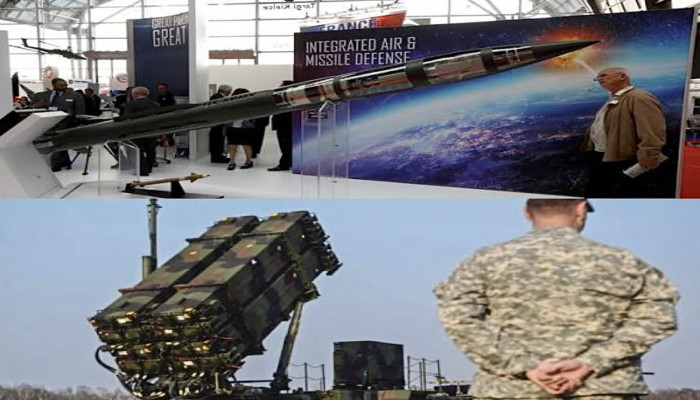
The United States has awarded a defence contract worth up to $58.6 billion to Lockheed Martin for the production of Patriot interceptor missiles. The Pentagon announced the agreement on Wednesday as rising military demands in Iran and Ukraine continue to put pressure on the country's missile stockpiles. The contract aims to strengthen the U.S. air defence inventory and ensure a steady supply of interceptor missiles over the coming years.
The U.S. has supplied a large number of weapons to its allies while also using its own military equipment during operations in Iran. These developments have increased concerns over the availability of important air defence systems and precision-guided weapons. The new agreement is part of the government's effort to improve production and maintain adequate defence supplies.
The U.S. Army said the latest contract replaces a one-year agreement worth $4.7 billion that it awarded to Lockheed Martin in April. The new arrangement extends the programme into a seven-year draft agreement. It covers procurement from fiscal year 2026 through 2032 and provides a long-term production plan for Patriot interceptor missiles. The Army expects the multi-year approach to help increase manufacturing capacity and improve planning.
The Pentagon has also increased pressure on defence companies to speed up production. Officials are working with contractors to accelerate manufacturing through production agreements negotiated earlier this year. These agreements form an important part of the government's strategy to increase missile output and strengthen military readiness.
Trump administration is pushing defence companies to fast-track production and has asked contractors to focus on delivering military equipment over shareholder returns. In January, President Trump signed an executive order directing officials to identify contractors that were underperforming on government contracts while continuing to distribute profits to shareholders. The order aimed to improve accountability and encourage faster delivery of defence projects.
Industry leaders have welcomed the production agreements and expressed support for the government's efforts to increase manufacturing. However, company executives also noted that Congress must first approve the required funding before defence firms can make larger investments in production facilities, equipment and components. Until lawmakers allocate the necessary funds, companies cannot fully expand manufacturing capacity.
Several Pentagon contracts for missile production are also still under discussion. Officials continue to negotiate final delivery schedules and other terms for many munitions agreements. The government expects these discussions to continue as it works to increase defence production across different weapons programmes.
The Pentagon has already reached a similar framework agreement with RTX, the parent company of Raytheon, to expand the production of Tomahawk cruise missiles. Under that plan, annual production for the U.S. is expected to increase from around 60 missiles to as many as 1,000 units each year.
Lockheed Martin, which is based in Bethesda, Maryland, said the new funding will help the company meet its target of tripling production capacity for PAC-3 MSE interceptor missiles by the end of 2030. The company also plans to expand its workforce at its Camden, Arkansas, manufacturing plant. Employment at the facility is expected to increase by 50 per cent, rising from about 1,200 workers to nearly 1,850.
The company had earlier announced plans to increase Patriot PAC-3 missile interceptor production to 2,000 units every year. Lockheed Martin also revealed that it will invest $8-$9 billion through 2030 to modernise more than 20 facilities across the United States. The investment includes the development of new munitions centres in Alabama and Arkansas, which will support higher production levels and strengthen manufacturing infrastructure.
The PAC-3 MSE interceptor plays an important role in the Patriot air defence system. It uses hit-to-kill technology to destroy incoming threats, including ballistic missiles, cruise missiles and aircraft. The system remains one of the key components of the United States' air defence network and is also used by several allied nations.
The need to expand production has become more urgent after recent assessments of U.S. missile inventories. Per Washington-based think tank the Centre for Strategic and International Studies (CSIS), the U.S. military currently has fewer than 1,000 Patriot interceptor missiles and fewer than 250 THAAD interceptors in its stockpile. Both air defence systems have seen heavy operational use in the Middle East in recent months.
The new contract with Lockheed Martin is part of the U.S. government's broader effort to strengthen defence manufacturing, replenish missile inventories and improve long-term military preparedness. The multi-year agreement is expected to provide stability for production planning while supporting the expansion of critical air defence capabilities in the years ahead.



 Loading...please wait
Comments