




US shuts Peshawar Consulate over safety concerns, shifts operations to Islamabad
- In Reports
- 12:41 PM, May 06, 2026
- Myind Staff
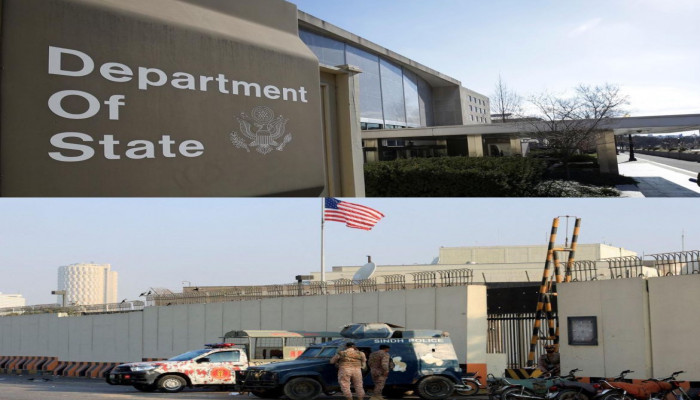
The United States Department of State has announced that it will close its consulate in Peshawar, Pakistan, in a phased manner. The decision was made keeping in mind the safety of diplomatic personnel. Officials confirmed that the process will be gradual to ensure a smooth transition and continued diplomatic functioning in the region.
Following the closure, responsibilities handled by the consulate in Peshawar will be transferred to the US Embassy in Islamabad. This shift means that diplomatic engagement in the Khyber Pakhtunkhwa region will now be managed from Islamabad instead of having a direct presence in Peshawar.
In an official statement, the department said, "The US Department of State is announcing the phased closure of the US Consulate General in Peshawar. Responsibility for diplomatic engagement with Khyber Pakhtunkhwa will transfer to the US Embassy in Islamabad." The statement clearly outlined the administrative transition that will follow the closure.
The department further explained the reason behind the move. "This decision reflects our commitment to the safety of our diplomatic personnel and efficient resource management," it added.
Despite shutting down the consulate, the United States has made it clear that its overall policy priorities in Pakistan will remain unchanged. According to the department, the US administration’s approach towards Pakistan continues to be “steadfast despite the change in physical presence in Peshawar”. This indicates that while the physical office will close, diplomatic efforts and relations will continue without interruption.
Officials also reassured that engagement with the Khyber Pakhtunkhwa region will not stop. The US will continue to work with local authorities and stakeholders to strengthen economic ties, support regional security, and promote American interests. These efforts will now be handled through other diplomatic channels instead of the Peshawar consulate.
The department highlighted that its broader mission in Pakistan remains active. "The Department, through the US Mission to Pakistan, remains dedicated to advancing the US-Pakistan relationship through our remaining diplomatic posts in Islamabad, Karachi, and Lahore," the statement said. This confirms that while one consulate is being closed, other diplomatic offices will continue their operations.
The development comes at a time of shifting geopolitical dynamics. Pakistan has been trying to play a mediating role between the United States and Iran to help bring an end to the ongoing conflict between the two nations. This backdrop adds further significance to the decision, as regional diplomacy continues to evolve.
At the same time, recent developments suggest that tensions between the US and Iran may be easing. Marco Rubio announced that "Operation Epic Fury is concluded", 66 days after the US launched attacks on Iran on February 28, which had escalated into a broader conflict. He also stated, “We achieved the objectives of that operation," indicating that the US considers the mission successful.
Soon after, Donald Trump shared another update regarding the situation. He announced that ‘Project Freedom’, which restricted the movement of ships through the Strait of Hormuz, would be paused temporarily. This pause is intended to allow time for a possible agreement with Iran.
Trump stated, “Project Freedom (The Movement of Ships through the Strait of Hormuz) will be paused for a short period of time to see whether or not the Agreement can be finalised and signed,” in a post on Truth Social. His statement suggested that diplomatic negotiations may be underway.
However, he also clarified that the US naval blockade would remain in place. He noted that the decision to pause certain restrictions came after requests from Pakistan and other countries. This highlights Pakistan’s role in encouraging dialogue and attempting to reduce tensions in the region.
Overall, the closure of the Peshawar consulate reflects a strategic shift in US diplomatic operations in Pakistan. While security concerns have driven the decision, the United States has maintained that its engagement with Pakistan will continue actively through other diplomatic channels.



 Loading...please wait
Comments