



US sets 2027 deadline for Europe-led NATO defence
- In Reports
- 06:40 PM, Dec 06, 2025
- Myind Staff
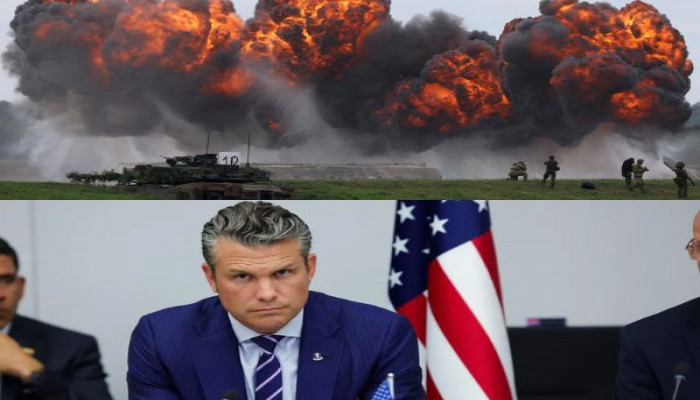
The United States wants Europe to take on most of NATO's conventional defence responsibilities, including intelligence to missile systems, by 2027. Pentagon officials shared this message with diplomats in Washington this week. Several European officials felt the deadline was unrealistic.
This message was confirmed by five people familiar with the meeting, including one United States official. This was conveyed during discussions between Pentagon staff who handle NATO policy and a number of European delegations.
Such a shift in responsibility from the US to European members of the North Atlantic Treaty Organisation (NATO) would deeply change how the United States, which helped create the alliance after the war, works with its closest military partners.
In the meeting, Pentagon officials said that Washington was still not satisfied with how much Europe has strengthened its defence since Russia expanded its invasion of Ukraine in 2022.
United States officials told their European counterparts that if Europe failed to meet the 2027 target, then the United States might withdraw from some NATO defence coordination efforts, as per some sources.
One United States official said that some people on Capitol Hill were aware of this message and were worried about it.
Conventional defence capabilities include all non-nuclear assets from troops to weapons and the officials did not explain how the United States planned to measure Europe's progress toward taking on most of the responsibility.
It was also unclear whether the 2027 deadline represented the full position of the Trump administration or only the views of some Pentagon officials. Debates within Washington continue over the military role the United States should play in Europe.
Several European officials said the 2027 deadline was unrealistic in any scenario because Europe needs more than funding and political commitment to replace certain United States capabilities so quickly.
NATO allies are also dealing with delays in producing the military equipment they want to buy. Even though United States officials have encouraged Europe to purchase more United States systems, many of the most advanced ones would take years to arrive if ordered now.
The United States also provides capabilities that Europe cannot simply buy, such as unique intelligence, surveillance and reconnaissance, which have been crucial for Ukraine during the war. An anonymous NATO official speaking for the alliance said that European allies have begun taking more responsibility for security in the region, but did not comment on the 2027 target.
"Allies have recognised the need to invest more in defence and shift the burden on conventional defence" from the U.S. to Europe, the official said.
The Pentagon and the White House did not respond immediately to requests for comment.
European countries have mostly accepted United States President Donald Trump's push for them to take more responsibility for their own security. They have announced major increases in defence spending.
The European Union has set a goal of making the continent able to defend itself by 2030. It says it needs to fill major gaps in air defence, drones, cyber security, munitions and other capabilities. Officials and experts said that even the 2030 goal is extremely ambitious.
The relationship between Washington and NATO often changes and the Trump administration has repeatedly said that European allies must contribute more to the alliance but it has not always been clear what the president wants from NATO.
During the 2024 campaign, Trump often criticised European allies and said he would encourage Russian President Vladimir Putin to invade NATO members that did not spend their fair share on defence.
However, at the NATO summit in June, Trump praised European leaders for agreeing to a United States plan to increase the defence spending target for member states to 5 per cent of their gross domestic product.
In the months since then, Trump has shifted between taking a tougher line on Russia, which is NATO's main rival and saying he is open to negotiating with Moscow over the war in Ukraine, and European officials said they were mostly left out of those talks.
At a meeting of NATO foreign ministers this week, United States Deputy Secretary of State Christopher Landau said it was "obvious" NATO allies should take responsibility for Europe's defence.
"Successive US Administrations have been saying this in one form or another pretty much my whole life...but our Administration means what it says," Landau wrote on X.



 Loading...please wait
Comments