




U.S. senators move to block any attempt by Trump to seize Greenland or other NATO territory
- In Reports
- 01:43 PM, Jan 14, 2026
- Myind Staff
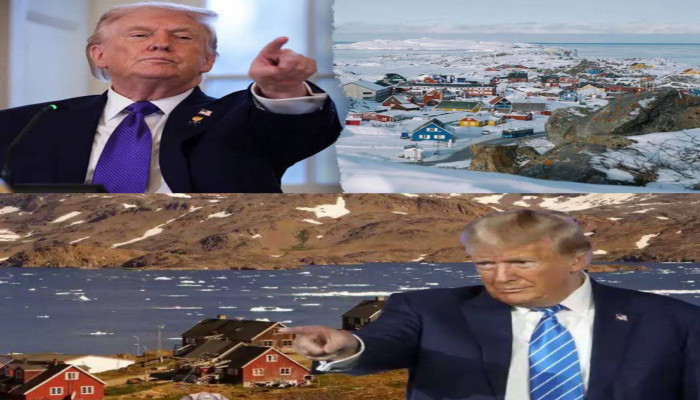
United States senators have introduced a bipartisan bill aimed at stopping President Donald Trump from using American resources to seize or take control of territory belonging to NATO allies, including Greenland. The proposed law comes amid growing concern over Trump’s repeated statements suggesting that the United States could take control of the Danish territory, even by force if necessary.
The bill, called the NATO Unity Protection Act, was introduced on Tuesday by Democratic Senator Jeanne Shaheen and Republican Senator Lisa Murkowski. It seeks to bar the US Department of Defence and the Department of State from using federal funds to “blockade, occupy, annexe or otherwise assert control” over the territory of any other NATO member state. Greenland is a self-governing territory under the Kingdom of Denmark, which is a founding member of NATO.
The legislation is a direct response to Trump’s continued remarks about Greenland. Trump has repeatedly claimed that Greenland is vital to US national security and has said Washington must bring the territory under its control. His comments have raised alarm in Europe and within the United States, as any military action against a NATO ally would threaten the very foundation of the alliance.
Explaining the intent of the bill, Senator Jeanne Shaheen said the legislation clearly draws a line against such actions. “This bipartisan legislation makes clear that US taxpayer dollars cannot be used for actions that would fracture NATO and violate our own commitments to NATO,” Shaheen said in a statement. She added, “This bill sends a clear message that recent rhetoric around Greenland deeply undermines America’s own national security interests and faces bipartisan opposition in Congress.”
Senator Lisa Murkowski, who represents Alaska and is one of the few Republicans to openly criticise Trump, also strongly defended NATO. She described the alliance as the cornerstone of global stability. “The 32-member NATO security alliance was the strongest line of defence against efforts to undermine global peace and stability,” Murkowski said. She further warned against hostile actions toward allies, stating, “The mere notion that America would use our vast resources against our allies is deeply troubling and must be wholly rejected by Congress in statute.”
Legal experts have also weighed in on the proposal. Jessica Peake, an expert in international law and the laws of war at the University of California, Los Angeles, said the bill could act as an important safeguard. “If such a bill were to pass, it should place restraint on the president acting unilaterally and continuing to threaten our NATO relationship,” Peake told Al Jazeera. However, she also expressed caution, noting Trump’s past behaviour. “However, President Trump has made repeated threats against NATO in this term and the last, and we have seen in other instances that President Trump is willing to flout congressional authority when it suits his broader agenda,” she said.
Trump’s comments about Greenland have strained relations with European allies and sparked fears about the future of NATO. The alliance is based on the principle that an attack on one member is considered an attack on all. Any attempt by the United States to seize territory from a fellow NATO member would directly challenge this principle.
Despite these concerns, Trump has dismissed criticism and continued to defend his position. He has argued that Greenland’s location in the Arctic makes it strategically important and has claimed that rival powers could otherwise gain influence there. Trump has said that China or Russia would take control of Greenland if the US does not act. Speaking on Sunday, Trump said, “I’d love to make a deal with them. It’s easier.” He then added, “But one way or the other, we’re going to have Greenland.”
These remarks have prompted firm responses from Danish and Greenlandic leaders. Danish Prime Minister Mette Frederiksen and Greenland Prime Minister Jens-Frederik Nielsen issued some of their strongest statements yet defending Denmark’s sovereignty. At a joint news conference in Copenhagen on Tuesday, Nielsen made Denmark and Greenland’s position clear. “If we have to choose between the United States and Denmark here and now, we choose Denmark,” he said. He continued, “We choose NATO. We chose the Kingdom of Denmark. We choose the EU.”
Diplomatic efforts are now underway to ease tensions. Danish Minister for Foreign Affairs Lars Lokke Rasmussen and Greenland’s Foreign Minister Vivian Motzfeldt are scheduled to meet US Secretary of State Marco Rubio and Vice President JD Vance in Washington, DC, on Wednesday to discuss the escalating situation. In addition, a bipartisan group of US lawmakers, including Democratic Senator Chris Coons and Republican Senator Thom Tillis, is set to arrive in Denmark on Friday for further talks.
Public opinion in Greenland strongly opposes any move toward US control. According to polling, the vast majority of the island’s 57,000 residents do not want to become part of the United States. A survey commissioned last year by the Danish newspaper Berlingske found that 85 per cent of Greenlanders opposed joining the US, while only 6 per cent supported the idea.
The introduction of the NATO Unity Protection Act highlights growing bipartisan concern in Congress over Trump’s statements and their potential impact on America’s alliances. As debates continue in Washington and diplomatic talks take place, the bill stands as a clear signal that many US lawmakers want to prevent any action that could damage NATO unity and international stability.



 Loading...please wait
Comments