




US Senate votes against reining in Trump’s war powers on Iran
- In Reports
- 01:37 PM, Mar 05, 2026
- Myind Staff
A bipartisan effort to limit the authority of Donald Trump to conduct military action against Iran without congressional approval failed in the United States Senate, as the conflict involving the United States, Israel, and Iran continues to escalate.
The proposed war powers resolution was voted down in the Senate by 53 votes to 47. The measure aimed to restrict the president’s ability to continue military operations in Iran unless Congress formally approved the action. However, the vote largely followed party lines, with most Republicans opposing the resolution and Democrats supporting it.
Democrats argued that the president had bypassed Congress and had provided changing explanations for the military action. They said Congress should have a direct role in decisions related to war. However, several Republicans who opposed the resolution indicated that their position might change if the conflict grows in the coming weeks.
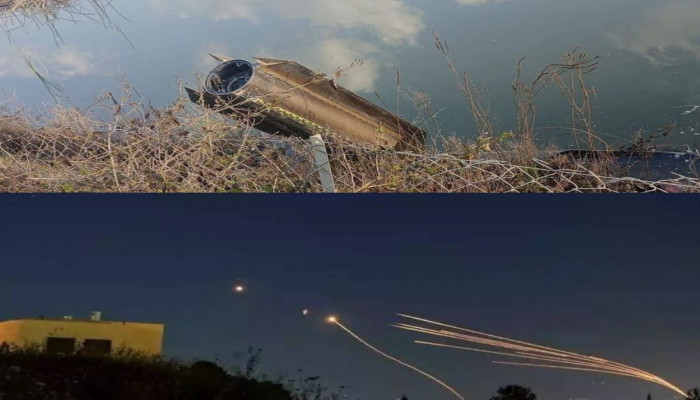
The United States and Israel began launching strikes on Iran on Saturday. In response, Iran has carried out attacks targeting Israel and countries in the Gulf region that are allied with the United States.
With no immediate solution to end the conflict, US Defence Secretary Pete Hegseth said the fighting could continue for up to eight weeks. This estimate is almost twice the duration that President Trump had suggested earlier during the weekend.
During the Senate vote, two lawmakers broke from their party positions. Democratic Senator John Fetterman of Pennsylvania voted against the resolution, while Republican Senator Rand Paul of Kentucky voted in favour of it. Apart from these two exceptions, all other senators voted along their party lines.
Another Republican senator, Susan Collins of Maine, also opposed the measure. After the vote, she explained her decision and said that passing the legislation at this moment would have sent the wrong signal to both Iran and American troops.
“At this juncture, providing unequivocal support to our service members is critically important, as is ongoing consultation by the administration with Congress,” Collins said.
Before the vote took place, Senate Democratic leader Chuck Schumer strongly supported the resolution and questioned whether lawmakers should support the president’s actions.
“Do you stand with the American people who are exhausted with forever wars in the Middle East or stand with Donald Trump and Pete Hegseth as they bumble us headfirst into another war?” Schumer said.
Although the resolution failed in the Senate, the legislation is expected to be voted on in the House of Representatives on Thursday. However, it is expected to face significant difficulty there as well.
Under US law, the president has broad authority to order military action even without a formal declaration of war from Congress. However, the law requires that Congress must be informed within 48 hours after hostilities begin.
US Secretary of State Marco Rubio stated that the Trump administration followed this requirement.
According to officials, top congressional leaders were informed before the initial strikes began. President Trump also sent a letter to Congress on Monday informing lawmakers about the military action, although he maintained that such notification was not necessary.
This is not the first time Trump has ordered military action without congressional approval. In the past, he authorised US strikes on Iranian nuclear facilities last year and also ordered the capture of Venezuela’s president Nicolás Maduro in January.
Rubio also commented on the broader debate surrounding presidential war powers and the role of Congress.
“To begin with, no presidential administration has ever accepted the War Powers Act as constitutional – not Republican presidents, not Democratic presidents,” Rubio said.
The War Powers Resolution was originally passed by the US Congress in 1973 in an attempt to limit the authority of then-President Richard Nixon during the Vietnam War.
Under the law, the president must notify Congress within 48 hours after beginning military operations. It also requires Congress to pass an Authorization for Use of Military Force, commonly known as an AUMF, within 60 days of the start of hostilities.
Since the attacks of 11 September 2001, US administrations have relied on the AUMF passed after those attacks to justify military operations across the Middle East.
Over the years, several attempts have been made to repeal or replace that authorisation, but none of those efforts has succeeded.
As the conflict involving the United States, Israel, and Iran continues, debates in Washington over presidential war powers and congressional authority are likely to remain a key issue in the coming weeks.



 Loading...please wait
Comments