




US revises proposed Russian oil tariffs to 100%, giving relief to India and China
- In Reports
- 07:12 PM, Jul 15, 2026
- Myind Staff
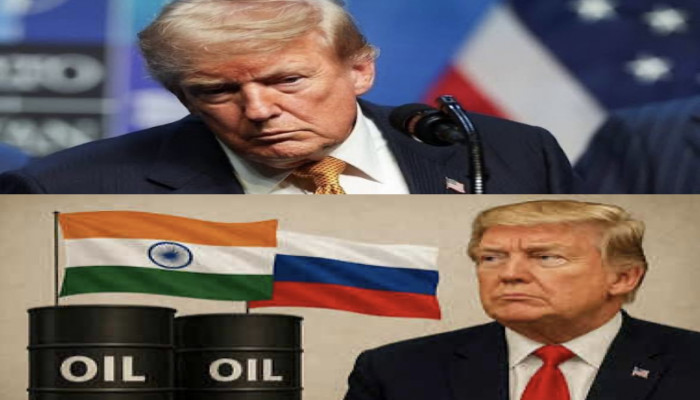
The United States has revised its proposed Russia sanctions bill and reduced the maximum tariff on countries importing Russian energy from 500 per cent to 100 per cent. The move offers major relief to India and China, two of the biggest buyers of Russian crude oil. The revised bill still allows US President Donald Trump to impose tariffs of up to 100 per cent on countries that continue to purchase Russian oil and natural gas.
US lawmakers introduced the updated version of the bipartisan bill, which late Republican Senator Lindsey Graham and Democratic Senator Richard Blumenthal first proposed. The legislation aims to increase economic pressure on Russia and push Moscow to end its four-year-long war in Ukraine. The conflict has killed around two million military personnel and caused nearly $200 billion in damage across Ukraine.
The bill proposes sanctions against Russian officials and major financial institutions. It also targets countries that continue to rely heavily on Russian energy. Lawmakers believe these measures will reduce Russia's revenue from energy exports and increase pressure on the Kremlin.
China, India, Slovakia, Hungary and Azerbaijan remain the five largest buyers of Russian crude oil. China, France, Japan, Hungary and Belgium are the biggest importers of Russian natural gas. If President Trump uses the powers under the bill, the tariffs could affect US trade ties with India and China, which already face several trade challenges with Washington.
The revised bill lowers the maximum tariff for the top five buyers of Russian oil and natural gas from the earlier proposal of 500 per cent to 100 per cent. It also introduces an important exception. Countries that import less than 15 per cent of Russia's natural gas exports and are making significant efforts to reduce those imports may avoid the tariffs. This exemption could apply to Japan, France, Hungary and Belgium.
The legislation also expands sanctions against Russia. It targets Russia's shadow fleet of oil tankers that operate outside Western shipping services. The bill also includes sanctions on Russian financial institutions, including the Central Bank of the Russian Federation. It further targets Russia's major state-owned energy projects such as Yamal LNG and Arctic LNG 1, 2 and 3.
The updated proposal also gives President Trump the authority to waive these sanctions if he believes such a decision serves the national interest of the United States. This provision gives the White House flexibility while implementing the law.
Senator Lindsey Graham had strongly supported the legislation before his death last week. During his visit to Ukraine one day earlier, Graham announced that he had reached an agreement with President Trump to move ahead with the Russia sanctions bill. The bill had remained under discussion for more than a year after lawmakers first introduced it.
Senate aides said the bill already had the support of 26 co-sponsors. They also expected more lawmakers to join within hours. One Senate aide said, "We're pretty confident on its path." The current version differs from the original proposal that Graham, a Republican from South Carolina, and Blumenthal, a Democrat from Connecticut, introduced in April 2025.
A Senate aide told Reuters that lawmakers softened several provisions after months of discussions with the Trump administration. The aide said, "This is the only product that currently has buy-in from everybody and is likely the only product that is going to move forward and put pressure on Russia the way we would all like to get." The aide spoke on the condition of anonymity.
President Trump also suggested expanding the bill further. While speaking to reporters at the White House, he said lawmakers might add sanctions against Iran and Hezbollah. He described the possible addition as a "very big thing" if lawmakers included those measures.
Trump also expressed confidence that Congress would approve the bill. He said, "This is in honour of Lindsey. This was his thing. He wanted this more than anything. You know how he felt, and there's a good chance that it gets done."
Senator Richard Blumenthal, who first introduced the legislation, urged lawmakers to stay focused on the current proposal. He cautioned against adding new targets. He told reporters, "With all due respect to the president, he has approved this bill, and we should move forward with this bill rather than opening it, in my view, to other potential targets."
After Trump's remarks, another Senate aide told Reuters that the bill already contains provisions that expose countries such as Iran, which work with Russia's defence industrial base, to sanctions and tariffs.
The revised legislation now moves closer to becoming law. If Congress passes the bill and President Trump signs it, the United States will gain stronger powers to pressure Russia while giving the administration greater flexibility in deciding how and when to apply sanctions and tariffs on countries that continue importing Russian energy.



 Loading...please wait
Comments