




US proposes new tariffs on India over forced labour related restricted under Section 301
- In Reports
- 06:03 PM, Jun 03, 2026
- Myind Staff
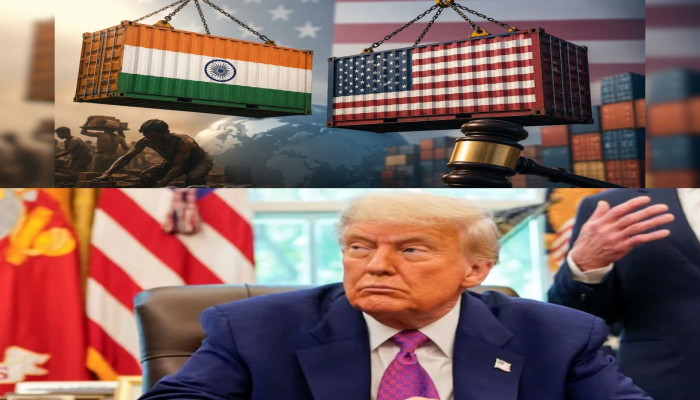
The United States has proposed imposing fresh tariffs of up to 12.5% on imports from India, China and several other economies over concerns related to forced labour. The proposal was announced by the Office of the United States Trade Representative (USTR) under Section 301 of the US Trade Act of 1974. The same law was used during President Donald Trump's first term to impose tariffs on Chinese goods.
India and China are among nearly 60 economies that could be affected if the proposal is approved. The move is still under review and no final decision has been taken. However, if implemented, the tariffs could impact a broad range of products entering the US market and create additional uncertainty for global trade.
The proposal comes at a time when India and the United States are engaged in trade negotiations. Officials from both countries began discussions on June 2 and the talks are scheduled to continue until June 4.
According to the USTR, additional tariffs of up to 12.5% could be imposed on imports from 60 economies, including India, China, Japan, South Korea, the United Kingdom and several Southeast Asian countries. The agency said these economies either failed to ban imports linked to forced labour or did not effectively enforce existing restrictions.
Under the proposal, countries that have introduced a full or partial prohibition on imports connected to forced labour could face a 10% tariff. Countries that have not implemented such prohibitions may face a higher tariff of 12.5%.
US Trade Representative Jamieson Greer said the failure of key trading partners to address imports made with forced labour had created unfair conditions for American workers. "The failure of our most important trading partners to address the importation of goods made with forced labour is unacceptable," Greer said in a statement.
The USTR's findings placed India and China among 54 economies that were found to have neither imposed a legal prohibition nor effectively enforced restrictions on imports connected to forced labour.
In its assessment of India, the USTR stated that the country had "failed to impose and effectively enforce a forced labour import prohibition." It also concluded that India's policies and practices place a burden on or restrict US commerce.
The USTR argues that products made using forced labour often enter global supply chains at lower costs. This, according to the agency, creates an unfair advantage over businesses and workers in countries that maintain stricter labour standards and enforcement measures.
China was also included in the same category. This comes despite the country already facing several US trade and labour-related restrictions in recent years.
The proposed tariffs are based on Section 301 of the US Trade Act of 1974. The law gives the US government authority to investigate foreign trade practices and take action if those practices are considered unfair or harmful to American commercial interests.
Section 301 became widely known during Donald Trump's first term when it was used to impose tariffs on hundreds of billions of dollars worth of Chinese imports. Those measures led to a prolonged trade dispute between the world's two largest economies.
The latest investigations under Section 301 were launched on March 12, 2026. They covered economies that together account for around 99.4% of total US imports. The investigations examined whether governments had failed to prohibit or effectively restrict imports of goods produced wholly or partly through forced labour.
Apart from India and China, the list includes the European Union, Japan, South Korea, the United Kingdom, Vietnam, Bangladesh, Thailand, Canada, Mexico and several Gulf countries.
The USTR also noted that six economies already have legal prohibitions against forced labour-linked imports, but were found to be ineffective in enforcing them. These economies include Canada, Mexico, Pakistan, Indonesia, Ecuador and the European Union.
The proposal is still not final. The USTR said its recommendations will go through additional review and consultation before any tariffs are formally imposed.
The agency has also proposed a separate system for textile and apparel imports. Under this mechanism, limited quantities of certain products may be allowed into the United States at lower tariff rates. Details regarding which countries may qualify for this benefit have not yet been announced.
The latest proposal reflects a broader shift in US trade policy. Washington has increasingly linked trade enforcement measures to labour standards, supply chain transparency and concerns over forced labour. The US has already implemented the Uyghur Forced Labour Prevention Act, which restricts imports connected to China's Xinjiang region unless importers can demonstrate that the goods were not produced using forced labour.
If the proposed Section 301 tariffs are eventually approved, exporters across Asia, including those in India and China, could face additional challenges in accessing the US market. The proposal also highlights the growing importance of labour standards in shaping American trade policy and future trade relations.



 Loading...please wait
Comments