



US pending dues owed to UN ‘non-negotiable’ says Guterres
- In Reports
- 12:35 PM, May 01, 2026
- Myind Staff
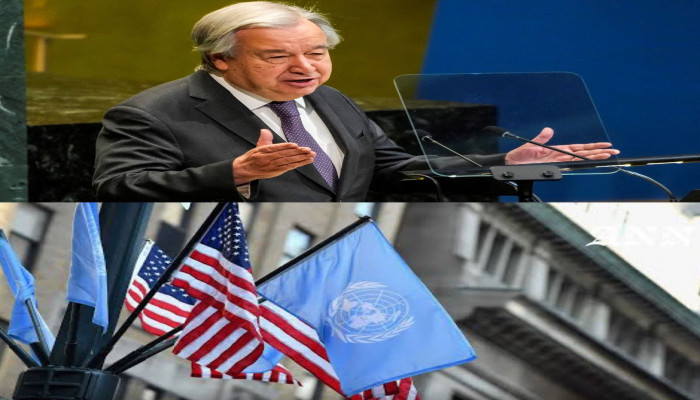
Antonio Guterres, the Secretary-General of the United Nations, has made it clear that the financial contributions owed by the United States to the UN cannot be negotiated or altered through conditions. His statement comes at a time when reports suggest that Washington is linking the release of funds to a set of reform demands aimed at reshaping how the global body functions.
Speaking to reporters on Thursday, Guterres addressed the issue directly after a report by Devex claimed that the US had circulated diplomatic notes outlining specific conditions for releasing more money. These conditions reportedly include a series of “quick-hit” reforms targeting efficiency, cost reduction, and limiting the influence of China within the United Nations system.
Guterres emphasised that the financial contributions in question fall under what are known as assessed contributions. These are mandatory payments that member states are required to make as part of their obligations to the organisation. He did not leave room for ambiguity on this matter. “The money we are talking about is referred to as assessed contributions,” Guterres told reporters when asked about the reports. “Assessed contributions are an obligation of member states. They are non-negotiable.”
At the same time, Guterres acknowledged the ongoing push for reforms within the United Nations. He noted that the organisation is already working to improve its efficiency and ensure that it delivers better results with the resources it has. These efforts have been driven in part by pressure from key member states, including the United States, which has repeatedly called for changes in how the UN operates.
Guterres stressed, however, that financial obligations and reform efforts are separate matters. He made it clear that while the UN is committed to improving its functioning, this should not be tied to the payment of dues. “The U.N. would do its best ‘to make sure that we make this organisation as effective and as cost-effective and as able to deliver for the people we care for.’” He added, “But these are two separate things.”
According to the Devex report, the list of reforms proposed by the United States is detailed and wide-ranging. One of the key suggestions includes restructuring the UN’s pension system. The aim is to reduce long-term financial liabilities and make the system more sustainable. Another proposal calls for limiting long-distance business-class travel for certain staff members, especially senior and mid-level professionals, to cut costs.
The report also mentions plans to reduce the number of senior positions within the organisation. This move is seen as part of a broader effort to streamline operations and reduce administrative expenses. Additionally, the US has proposed a 10 per cent reduction in peacekeeping missions that are considered long-running and ineffective. These missions often require significant funding, and the suggestion reflects a push to reassess their impact and value.
Another important aspect of the reported US demands relates to China’s role within the United Nations. The proposals include measures to prevent China from channelling large sums of money into a discretionary fund managed by the office of the UN Secretary-General. This move is reportedly aimed at limiting Beijing’s influence within the organisation and ensuring a more balanced distribution of power among member states.
Despite the significance of these reports, the US mission to the United Nations has not issued any official comment on the matter. However, Washington has consistently maintained its stance on the need for reform. Over the past year, the United States has taken several steps to express its dissatisfaction with certain aspects of the UN system. These actions include withdrawing from multiple UN bodies and reducing its financial contributions.
The financial strain on the United Nations has been growing due to delayed and unpaid contributions from member states. In January, Guterres warned that the organization was facing an “imminent financial collapse” if the situation did not improve. A large portion of the unpaid dues is attributed to the United States, which is one of the biggest contributors to the UN budget.
In February, the United Nations provided an update on the payments made by the US. It stated that Washington had paid around $160 million, which is only a small part of the more than $4 billion it currently owes. This gap highlights the scale of the financial challenge facing the organisation and the urgency of resolving the issue.
The situation has placed the United Nations in a difficult position. On one hand, it must continue its operations and fulfill its global responsibilities. On the other hand, it must deal with financial uncertainty caused by delayed payments. Guterres’ firm stance reflects an effort to uphold the rules that govern the organisation while also navigating political pressures from powerful member states.
The ongoing debate over funding and reforms is likely to shape the future of the United Nations. While the US continues to push for changes, the Secretary-General has made it clear that financial commitments must be honoured without conditions. The coming months will be crucial in determining how both sides move forward and whether a balance can be found between reform and responsibility.



 Loading...please wait
Comments