




US Navy starts replacing conventional Ohio-class submarines with next generation Virginia-class boats
- In Reports
- 06:52 PM, Aug 04, 2026
- Myind Staff
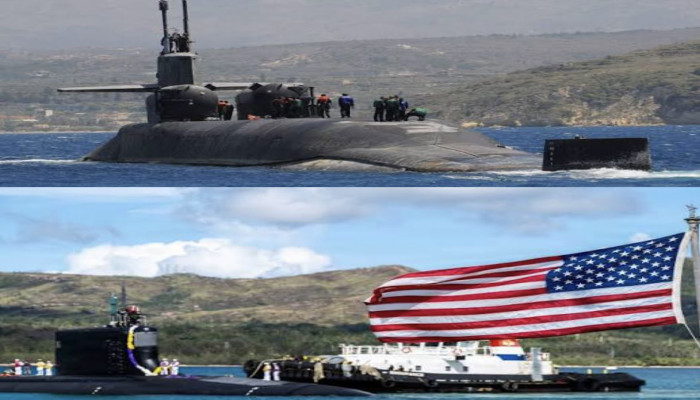
The United States Navy has officially started replacing the world's most heavily armed conventional guided missile submarines with a new generation of strike platforms. As part of this transition, the Navy has redesignated 19 planned Virginia-class submarines fitted with the Virginia Payload Module (VPM) as SSGNs, marking a major shift in its undersea strike capability.
The announcement came on 3 August 2026, a day after USS Georgia, the first of the four Ohio-class guided missile submarines, entered the inactivation process on 31 July 2026. USS Georgia served for more than four decades and was among the most powerful conventional strike submarines ever built.
The redesignation reflects a change in the primary role of these submarines. In US Navy terminology, an SSN is a nuclear-powered fast attack submarine. Its main mission is to track and destroy enemy ships and submarines, collect intelligence, and support special operations. Virginia-class submarines have carried the SSN designation since the programme began.
An SSGN, on the other hand, is a nuclear-powered guided missile submarine. Its primary mission is to carry and launch large numbers of cruise missiles for long-range precision strikes. The four Ohio-class submarines were converted from ballistic missile submarines into guided missile submarines in the early 2000s. They have served in this role for over two decades. The difference between the two classifications is straightforward. An SSN is built mainly to hunt enemy targets, while an SSGN is designed to deliver large-scale missile strikes.
The Ohio-class SSGNs being retired include USS Ohio, USS Michigan, USS Florida and USS Georgia. These submarines were converted from ballistic missile submarines at an estimated cost of around one billion dollars per vessel in the early 2000s.
Each Ohio-class SSGN measures 560 feet in length and operates with a crew of around 155 sailors. Every submarine carries 22 missile tubes. Each tube can hold multiple Tomahawk land-attack cruise missiles, allowing a single submarine to carry up to 154 Tomahawks. Together, the four submarines have a combined theoretical capacity of 616 Tomahawk missiles, making them the most heavily armed conventional strike submarines ever operated by any navy.
These submarines also support special operations missions. Each platform can accommodate more than 60 special operations personnel and includes facilities for dry deck shelters that allow covert deployment and recovery of special forces teams. Describing the platform in a US Navy release published on navy.mil, Commanding Officer of USS Ohio Captain Andrew Hale said, "While other submarines can carry Tomahawks and deploy special forces teams, the Ohio class SSGN can carry significantly more of both, and for a much longer sustained period."
USS Georgia has already entered the inactivation process. USS Ohio is scheduled to begin retirement during the 2027 financial year, followed by USS Florida in 2028 and USS Michigan in 2029. Once all four submarines leave service, the Navy will lose a combined launch capacity of 616 Tomahawk missiles from some of its most stealthy strike platforms.
The Virginia-class submarines taking over this role will receive a major upgrade through the Virginia Payload Module. The VPM is a 70-foot hull extension inserted into the middle section of Block V and later Virginia-class submarines. This increases the submarine's overall length from around 377 feet to 460 feet and raises its submerged displacement to nearly 10,200 tonnes.
The module contains four large-diameter payload tubes. According to the US Navy's Virginia-class fact sheet published on navy.mil, each tube can carry seven Tomahawk land-attack cruise missiles. The addition provides 28 extra Tomahawks. Along with the existing 12 vertical launch positions, every VPM-equipped submarine will be able to carry a total of 40 Tomahawk missiles.
The payload tubes are designed to support future weapons and systems as well. They can carry Intermediate-Range Conventional Prompt Strike hypersonic missiles, large unmanned underwater vehicles, seabed warfare systems and other future payloads. Every Virginia-class submarine also carries four 533mm torpedo tubes capable of launching Mk 48 heavyweight torpedoes, anti-ship missiles and other submarine-launched weapons.
Like other submarines in the class, these vessels are powered by an S9G nuclear reactor. The reactor provides virtually unlimited endurance, with resupply required only for food and other consumable items. The Virginia Payload Module also restores the ability to carry dry deck shelters for special operations, bringing back one of the key capabilities that made the Ohio-class SSGNs highly effective.
The lead Block V submarine, USS Oklahoma, is being built without the Virginia Payload Module. The future USS Arizona, the second Block V submarine, will become the first to receive the module. The remaining Block V submarines will follow. The redesignation applies to submarines across Virginia-class Blocks V and VI, bringing the total number of planned SSGNs to 19.
The first submarine to receive the new designation, SSGN 803, is expected to be delivered during the 2029 financial year. Deliveries are planned to continue through the 2038 financial year.
Explaining the decision, Vice Admiral Rob Gaucher, Director of Submarine Programs, said the redesignation is "a clear acknowledgment of the increased lethality VPM brings to the undersea fight," adding that the new SSGNs would give fleet commanders "an incredibly versatile, hard-hitting instrument of national power."
Chief of Naval Operations Admiral Daryl Caudle said the new platforms build on the Ohio-class legacy "with greater survivability, adaptability, and sustained combat power," and that they would "provide our Nation with a powerful and persistent deterrent" and "ensure the Navy remains ready to fight and win whenever and wherever called upon."
Vice Admiral Rick Seif, Commander of Submarine Forces, said the new SSGNs would serve as "the ultimate enabler for Distributed Maritime Operations, giving our warfighters the overwhelming, flexible firepower required to win decisively in any theater."
Although each new Virginia-class SSGN will carry fewer Tomahawk missiles than an Ohio-class submarine, the overall numbers are expected to increase once the full fleet enters service. A single Ohio-class SSGN can carry up to 154 Tomahawks, while a Virginia-class SSGN equipped with the Virginia Payload Module will carry 40.
The Navy plans to operate 19 of these submarines. If all 19 become operational, their combined Tomahawk carrying capacity will reach 760 missiles. This will exceed the Ohio-class fleet's combined capacity of 616 missiles across four submarines. However, that level will not be achieved until the late 2030s, as deliveries are scheduled between 2029 and 2038.
The US Navy said the redesigned SSGNs will retain the Virginia class's stealth, advanced sensors and multi-mission attack capabilities while taking on a stronger strike role. According to the Navy, these submarines will remain "an integral part of the storied Virginia Class program."



 Loading...please wait
Comments