




US Navy intercepts three Iranian-flagged oil tankers in Asian waters
- In Reports
- 11:33 AM, Apr 23, 2026
- Myind Staff
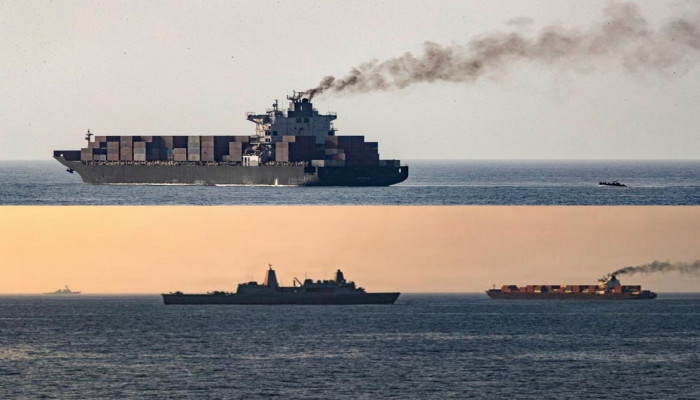
The United States military has intercepted at least three Iranian-flagged oil tankers in Asian waters and redirected them from areas near India, Malaysia, and Sri Lanka, according to shipping and security sources who spoke on Wednesday. The move comes as tensions remain high following the ongoing conflict involving the United States, Israel, and Iran. The situation has disrupted key maritime routes and intensified concerns about global energy supplies.
Washington has enforced a naval blockade on Iran’s sea-based trade, while Iran has responded by targeting vessels attempting to pass through the Strait of Hormuz. This critical waterway serves as the main entry point to the Middle East Gulf and is essential for global oil and gas transport. Nearly two months after the war between the U.S. and Israel against Iran began, there are still no clear signs that peace talks will resume, even though a fragile ceasefire remains in place.
The closure of the Strait of Hormuz has significantly affected global energy markets. Around one-fifth of the world’s oil and gas supplies pass through this route, and its disruption has led to a growing energy crisis worldwide. In recent days, U.S. forces have seized both an Iranian cargo ship and an oil tanker. At the same time, Iran has escalated its actions by capturing two container ships that were attempting to leave the Gulf through the Strait. Iranian forces reportedly fired on these vessels and another ship, marking the first such seizures since the conflict began.
According to multiple sources, including U.S. and Indian shipping officials as well as Western maritime security experts, the U.S. has diverted at least three additional Iranian oil tankers in recent days. These operations appear to be part of a broader effort to enforce the blockade and limit Iran’s ability to export oil.
Among the intercepted vessels is the Iranian-flagged supertanker Deep Sea. It was partially loaded with crude oil and was last tracked off the coast of Malaysia about a week ago, based on ship tracking data from the MarineTraffic platform. Another vessel, the Sevin, which has a capacity of up to 1 million barrels, was carrying around 65% of its load when it was intercepted. It had last been seen near Malaysia about a month earlier.
A third tanker, the Dorena, was fully loaded with approximately 2 million barrels of crude oil. It was last tracked off the southern coast of India just three days before being intercepted. According to a post by U.S. Central Command on X, the Dorena “has been under the escort of a U.S. Navy destroyer in the Indian Ocean after attempting to violate the blockade.”
Shipping sources also indicated that U.S. forces may have intercepted another Iranian tanker, the Derya. This vessel had reportedly failed to unload its cargo in India before a U.S. waiver allowing purchases of Iranian crude expired on Sunday. The Derya was last tracked off India’s western coast on Friday, according to MarineTraffic data.
The U.S. military has not provided detailed public information on all intercepted vessels. It did not immediately respond to requests for comment regarding the Deep Sea and Derya. However, U.S. Central Command stated on Wednesday that since the beginning of its blockade operations, U.S. forces have directed 29 vessels to either turn back or return to port.
A maritime security source explained that U.S. forces are deliberately targeting Iranian vessels in open waters rather than near the Strait of Hormuz. This strategy is intended to reduce the risk posed by floating mines, which could complicate naval operations in the narrow and highly sensitive waterway.
The ongoing standoff has created a tense environment in key shipping routes across Asia and the Middle East. The interception and diversion of tankers highlight the broader impact of the conflict on international trade and energy security. With both sides continuing to take aggressive actions at sea, the situation remains unstable, and the risk of further escalation cannot be ruled out.



 Loading...please wait
Comments