



US mulling ‘friendly takeover’ of Cuba: Report
- In Reports
- 03:53 PM, Feb 28, 2026
- Myind Staff
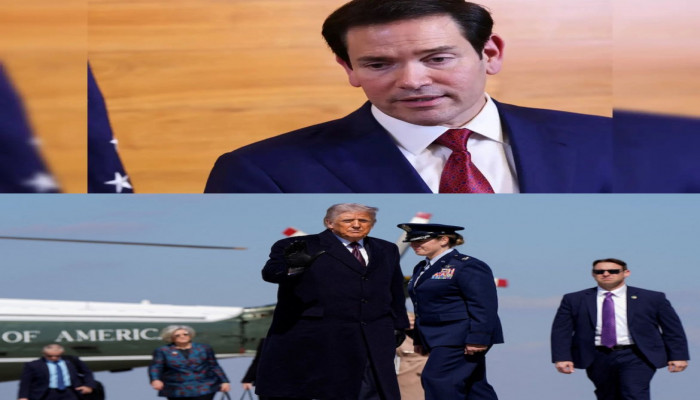
U.S. President Donald Trump has suggested that the United States might pursue a “friendly takeover” of Cuba, saying the idea could become a reality if negotiations continue to develop and the Cuban government seeks support. Trump made this remark to reporters as he left the White House for a trip to Texas, explaining that discussions with Cuban officials were underway and that U.S. Secretary of State Marco Rubio was handling these contacts at a “very high level.”
He said, “The Cuban government is talking with us, and they’re in a big deal of trouble,” noting that the island currently lacks basic resources and is struggling economically. Trump added, “They have no money. They have no anything right now, but they’re talking with us, and maybe we’ll have a friendly takeover of Cuba.” He described Cuba as a nation in serious crisis, saying he had heard about the country’s difficulties “since I was a little boy,” and stated that the situation might soon change in a way that opens the door for U.S. involvement.
Trump doubled down on this point by emphasising again that Rubio was deeply engaged in discussions. He said, “I can see that happening. Marco Rubio is dealing with it and at a very high level,” and continued by stating, “They have no money, they have no oil, they have no food. And it’s really right now a nation in deep trouble and they want our help.” These comments reflect his belief that Cuba’s current economic distress could lead to a U.S. role in reshaping the island’s political future.
However, the Cuban government has publicly denied that it is holding formal high-level talks with the United States. While Havana did not fully dismiss reports of communication between U.S. officials and Raul Guillermo Rodriguez Castro, the grandson of former Cuban President Raul Castro, it stressed that no official high-level negotiations are taking place. Press accounts have suggested that U.S. envoys close to Rubio may have met informally with the former leader’s grandson at a Caribbean regional conference, but Cuba has been clear that no official engagement has been agreed upon at the highest diplomatic levels.
The backdrop to these comments includes increased tensions between Washington and Havana, which have heightened following a deadly encounter at sea. Cuban forces recently killed four exiles and wounded six others who sailed into Cuban waters aboard a Florida-registered speedboat and opened fire on a Cuban patrol. Rubio has denied that this was a U.S. government operation and said no official U.S. personnel were involved in the incident. This confrontation came at a time when the United States had blocked virtually all oil shipments to Cuba, adding pressure to the already struggling Cuban government.
Last month, U.S. forces captured Venezuelan President Nicolas Maduro, a key ally of Cuba, removing a significant source of support for the island. This development has further strained Cuba’s economy and left it more reliant on scarce resources, weakening the government’s standing and intensifying discussions about the future leadership of the country. Rubio has been vocally critical of Cuba, calling the current situation there unsustainable and insisting that the nation must change “dramatically.”
The idea of a “friendly takeover” — though not clearly defined in terms of how it would unfold — has historical resonance in the context of long-standing aspirations among many Cuban exiles in the United States, particularly in Miami, for the overthrow of the country’s communist government. Trump tapped into this sentiment by suggesting that such a change could be “something good … very positive” for people who had been expelled from Cuba and are living in the United States. He said, “We have people living here that want to go back to Cuba, and they’re very happy with what’s going on.” This comment underscores how U.S. domestic political considerations and the views of the Cuban American community are shaping discussions about Cuba’s future.
Overall, Trump’s remarks signal a potential shift in U.S. policy towards Cuba, moving beyond decades of strict embargo and limited engagement to entertain the possibility of deeper involvement, though the exact nature of any “friendly takeover” remains unspecified and controversial, both internationally and within Cuban political circles.



 Loading...please wait
Comments