




US lawmakers to introduce bill to ban Chinese-linked vehicles over national security concerns
- In Reports
- 06:36 PM, May 11, 2026
- Myind Staff
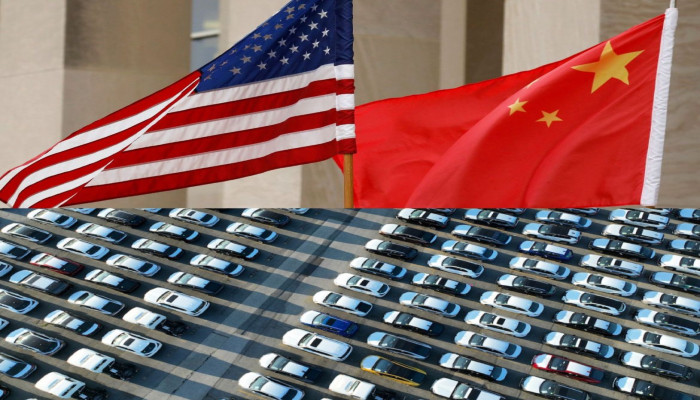
A group of bipartisan lawmakers in the United States is preparing to introduce legislation aimed at preventing Chinese-linked vehicles from operating on American roads. The proposed bill comes amid rising concerns in Washington over national security, cybersecurity threats, and the growing influence of Chinese automakers in the global market.
According to a report by The Epoch Times, Representative John Moolenaar, chairman of the House Select Committee on the Chinese Communist Party, and Representative Debbie Dingell, chair of the House Democratic Policy and Communications Committee, announced plans to introduce the bipartisan legislation. The lawmakers released a joint statement on May 7 outlining the reasons behind the proposed move.
In their statement, the lawmakers argued that modern vehicles are no longer just modes of transportation. They said that every vehicle travelling on US roads acts as a “rolling data collection device.” According to them, these vehicles can gather real-time information linked to location, movement, individuals, and even infrastructure. Because of this, they stated that Chinese vehicles or Chinese-made components should not become part of the American transportation system.
The legislation comes in the wake of growing concerns raised by several US national security agencies in recent years. In 2025, the United States Department of Commerce finalised regulations that banned certain transactions involving the sale or import of connected vehicles containing specific Chinese hardware or software. The restrictions also covered related vehicle components.
The US government has repeatedly warned that connected vehicles from countries viewed as strategic rivals could pose serious risks. In 2024, former Commerce Secretary Gina Raimondo expressed concerns over the possibility of foreign-connected vehicles being used against the United States. As quoted in the TET report, Raimondo said, “Imagine if there were thousands or hundreds of thousands of Chinese-connected vehicles on American roads that could be immediately and simultaneously disabled by someone in Beijing.”
Concerns over possible disruptions during times of conflict have also been raised by lawmakers. During a December 2025 hearing titled Trojan Horse: China's Auto Threat to America, Moolenaar spoke about a potential scenario involving tensions between China and Taiwan. According to the TET report, he explained that if China invaded Taiwan, senior US officials travelling toward the Pentagon or the White House to coordinate a response could face blocked roads if Chinese-made vehicles suddenly stopped working, swerved unexpectedly, or locked their brakes at the same time.
Apart from fears related to physical disruptions, cybersecurity concerns have become another major factor behind the proposed legislation. Former Federal Bureau of Investigation Director Christopher Wray testified in 2024 that Chinese state-backed hacking groups were already positioning themselves to potentially target critical American infrastructure. He specifically referred to hacking groups such as Volt Typhoon. According to Wray, such groups could potentially disrupt transportation systems and other infrastructure whenever they choose.
The debate over Chinese-linked vehicles is not limited to national security alone. American lawmakers and industry experts have also raised concerns about the economic impact of Chinese automakers entering the US market. Some officials believe that Chinese companies benefit heavily from state-backed financial support, making competition difficult for American manufacturers.
In a September 2025 analysis, Stephen Ezell warned about the possible impact of Chinese vehicle manufacturers on the US automobile sector. He argued that allowing Chinese Communist Party-backed automakers to expand into the American market, even through manufacturing facilities located inside the United States, could become what he described as an “extinction-level event” for the American auto industry.
Economic concerns have also been supported by findings from the Information Technology and Innovation Foundation. According to the organisation, the Chinese government directed nearly USD 230.9 billion in subsidies toward its electric vehicle industry between 2009 and 2023. The foundation stated that these subsidies allowed Chinese companies to lower prices aggressively and weaken international competitors, while also damaging foreign manufacturing industries.
The House proposal closely resembles the Connected Vehicle Security Act of 2026 that was earlier introduced in the Senate. The Senate legislation was brought forward by Senators Bernie Moreno and Elissa Slotkin. Slotkin has previously voiced strong concerns over Chinese-connected vehicles and their potential role in surveillance operations.
According to the TET report, Slotkin referred to Chinese vehicles as “surveillance packages on wheels.” She also said that the proposed legislation would create the legal protections needed to stop China from weakening the American automobile industry.
The proposed bill reflects the growing concern in Washington over the role of Chinese technology in critical American sectors. With lawmakers from both major political parties backing stricter measures, the issue is increasingly being viewed not just as a trade matter but as a broader national security challenge tied to technology, infrastructure, and economic competition.



 Loading...please wait
Comments