




US lawmakers introduce bill to suspend H-1B visas for three years
- In Reports
- 09:11 PM, Apr 25, 2026
- Myind Staff
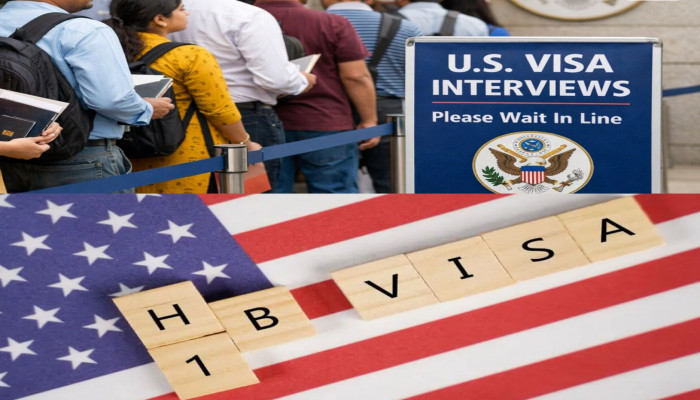
A fresh challenge has emerged for the H-1B visa programme in the United States, as a group of Republican lawmakers in the US Congress has introduced a bill seeking to suspend the programme for three years. The move comes under the administration of President Donald Trump and adds to earlier measures, including a steep $1,00,000 fee on new H-1B applications announced months ago. The proposal has raised concerns, especially among Indian professionals who form a significant portion of H-1B visa holders.
The legislation, titled the End H-1B Visa Abuse Act of 2026, has been introduced by Congressman Eli Crane of Arizona, along with seven Republican co-sponsors. These include Brian Babin, Brandon Gill, Wesley Hunt, Keith Self from Texas, Andy Ogles from Tennessee, Paul Gosar from Arizona, and Tom McClintock from California. The lawmakers argue that the H-1B programme has been misused by companies to replace American workers with lower-paid foreign employees.
The bill proposes several major changes to the existing system. It seeks to reduce the annual H-1B visa cap from 65,000 to 25,000. It also recommends setting a minimum salary requirement of $2,00,000 per year for H-1B workers. Another key provision is preventing visa holders from bringing their dependents to the United States. These changes aim to tighten the rules and limit the number of foreign workers entering the country through this route.
In addition, the bill suggests replacing the current lottery-based selection system with a wage-based process. Under this system, applicants offering higher salaries would be given priority. Employers would also need to prove that they are unable to find qualified American workers before hiring foreign talent. They must confirm that no layoffs have taken place before offering H-1B positions. The proposal further restricts H-1B workers from holding multiple jobs and bars third-party staffing agencies from employing them.
The legislation also goes beyond the H-1B programme. It calls for ending the Optional Practical Training (OPT) programme and preventing federal agencies from hiring or sponsoring non-immigrant workers. Another significant change is reinforcing the temporary nature of such visas by blocking H-1B holders from transitioning to permanent residency. It also requires non-immigrants to leave the United States before switching to another visa category.
The impact of these proposed changes is particularly important for Indian professionals. The H-1B visa programme is widely used by US technology companies to hire skilled workers from abroad, and Indians make up one of the largest groups of recipients. Many work in sectors like technology and healthcare, where demand for skilled labour remains high. A pause or major reform of the programme could disrupt career plans and long-term settlement goals for thousands.
Legal experts suggest that such a move is possible. Immigration attorney Rahul Reddy stated that the US Congress has the authority to pause a visa programme. If such a decision is made, the administration would be required to implement it. He pointed out that similar restrictions have been applied to certain countries in the past.
However, the practical consequences could be complex. If the freeze comes into effect, many H-1B visa holders may have to leave the United States or shift to another visa category. For some, this could mean moving to a student visa, while others may have no option but to return to their home countries. Reddy also highlighted that Indian professionals waiting for employment-based green cards could be the most affected. Many of them have been in long backlogs, sometimes waiting up to 20 years. If the bill blocks their ability to adjust status, it could erase years of legal progress and raise constitutional concerns.
Supporters of the bill strongly defend the move. Congressman Eli Crane said, "The federal government should work for hardworking citizens, not the profit margins of massive corporations. We owe it to the American people to prevent the broken H-1B system from boxing them out of jobs they are qualified to perform." Other lawmakers echoed similar views, stating that the programme needs strict reform to protect domestic employment.
Rep Brandon Gill stated, "I am proud to cosponsor Rep Eli Crane's efforts to reform and tighten our H-1B visa system, ensuring that our immigration system serves American workers first before foreigners." Rep Paul Gosar was more direct in his criticism, saying, "H-1B programme has been 'hijacked to replace American workers with cheaper foreign labour - plain and simple'." He added, "If a company can hire an American, they should. No loopholes. No excuses. We're done subsidising the outsourcing of our own workforce."
Rep Andy Ogles also expressed concern over job displacement, stating, "We will not bow down to the corporations, and we will not let Americans become strangers in their own country. End the H-1B scam." Supporting the bill, Rosemary Jenks, Cofounder of the Immigration Accountability Project, said, "This is the strongest H-1B bill that has ever been introduced in Congress. H-1B visas were sold to the American people as a short-term visa to fill temporary labour gaps, while Americans are trained to take those jobs."
The proposed legislation reflects a growing push in US politics to prioritise domestic workers and reduce dependence on foreign labour. While it is still in the early stages and has not yet become law, its potential impact is significant. For Indian professionals and companies relying on global talent, the future of the H-1B visa programme now faces increased uncertainty.



 Loading...please wait
Comments