




US lawmakers accuse China of using peacekeeping missions to spy on other countries
- In Reports
- 07:15 PM, Jul 23, 2026
- Myind Staff
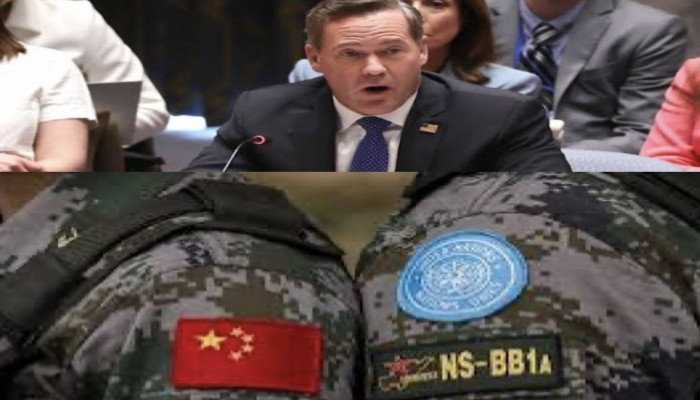
US lawmakers have raised fresh concerns over China's growing role in United Nations peacekeeping missions. They claimed Beijing is using these operations to collect intelligence in strategically important regions. The issue came up during a House Foreign Affairs Committee hearing in Washington on Wednesday. The hearing focused on US funding for the United Nations. It also turned into a heated political debate over President Donald Trump's Iran war.
Republican Representative Sheri Biggs of South Carolina said China's peacekeeping deployments are not limited to humanitarian work. She argued that Beijing has placed its personnel in regions that hold major strategic value.
“The Chinese peacekeeping department is concentrated in strategically sensitive regions, including areas along Belt and Road [Initiative] corridors, near ports, mineral resources, and existing or potential basing locations,” Sheri Biggs told the committee.
She added, “These are long-standing concerns about whether this designation is cover to advance military and intelligence objectives in regions where the US has strategic interests.”
US Ambassador to the United Nations Mike Waltz agreed that China's peacekeeping forces perform well during UN missions. He said they are often better equipped and better prepared than forces from many other member nations. At the same time, he questioned China's intentions.
“That said, I don’t think for a second that they don’t serve a dual purpose as eyes and ears on the ground for the Chinese Communist Party,” added Waltz.
Waltz said the Trump administration wants to reform the United Nations. He said Washington plans to use its influence in the UN Security Council to reduce the size of the peacekeeping mission in South Sudan. China has major energy investments and important geopolitical interests in the country.
He also acknowledged that China has sometimes supported useful discussions at the Security Council.
“In fairness to our Chinese colleagues on the Security Council, their contributions often are helpful,” said Waltz, adding that further details would have to be covered in a secure briefing.
He repeated his concerns over China's wider objectives.
“But again, they can serve a dual purpose, and we are very wide-eyed to that issue.”
Waltz also spoke about Taiwan's participation in international organisations. He said the administration has consistently opposed China's attempts to isolate Taiwan within the United Nations and other global bodies.
“We have repeatedly pushed back,” said the former Republican Congressman from Florida. “We are fighting for participation in UN bodies across the board as a matter of US policy.”
Several Republican lawmakers criticised the United Nations during the hearing. They questioned its efficiency, its record in resolving global conflicts and China's growing influence within the organisation.
Republican Representative Scott Perry of Pennsylvania argued that China's Belt and Road Initiative has increased Beijing's influence over voting at the UN General Assembly.
“The Belt and Road Initiative countries shift their UN General Assembly voting patterns to align more closely with Beijing after the money arrives,” said Scott Perry. “This is a voting block that’s bought and paid for over time with these loans.”
Despite these concerns, Waltz defended continued US engagement with the United Nations. He said the organisation remains an important platform for global discussions, even though it requires major reforms.
“If we didn’t invent it, somebody else would,” he said. He added that the United States needs to remain involved to protect its veto power in the Security Council and help shape international standards. “And I don’t want to see a UN Beijing or UN Brussels or what have you.”
China rejected the allegations made during the hearing. The Chinese embassy in Washington said Taiwan is an internal matter and dismissed the committee's claims.
“Countries make independent judgments at the UN based on the merits of each issue and their own national interests,” embassy spokesman Liu Chang said. “Such actions should not be distorted by certain individuals through the lens of Cold War mentality.”
The hearing later shifted to the Trump administration's military action against Iran. Democratic lawmakers strongly criticised Waltz over the conflict. They questioned the administration's transparency and said too few officials had appeared before Congress to explain its decisions.
Democratic Representative Sara Jacobs of San Diego asked Waltz whether Americans were actually safer after Trump launched the war. She referred to the disruption in the Strait of Hormuz and rising fuel prices, which had crossed US$4 per gallon.
Waltz defended the administration's actions.
“Yes, the world and the American people are safer,” he countered. “Americans are better off with Iran not having a nuclear weapon.”
He also praised President Trump and described him as “a peace president”. Waltz said the United Nations should help advance US interests while supporting peace efforts.
He said the UN is a place “to help the United States deliver peace, share the burden, and advance an America first policy”.
Jacobs rejected his argument. She criticised the financial and human cost of the conflict.
“We are obviously not better off. This administration has just asked Congress for US$87 billion more to pay for this war. We’ve lost at least 18 American service members … you should all be ashamed. It’s very clear that Americans are not better off.”
The hearing also witnessed repeated clashes between Republican and Democratic lawmakers. Members argued over speaking time, accused witnesses of filibustering and exchanged allegations over President Trump's growing personal wealth during his presidency.
Waltz and Jeff Bartos, the US Representative for UN management and reform, highlighted the administration's efforts to reduce spending at the United Nations. They said the administration had cut the UN budget by US$1 billion, eliminated around 4,000 positions and ended peacekeeping missions in Lebanon and other regions.
“We are putting the UN on a diet,” said Waltz. “Our charge is to make the UN great again.”



 Loading...please wait
Comments