



US launches Section 301 probes against 16 countries including India
- In Reports
- 12:14 PM, Mar 12, 2026
- Myind Staff
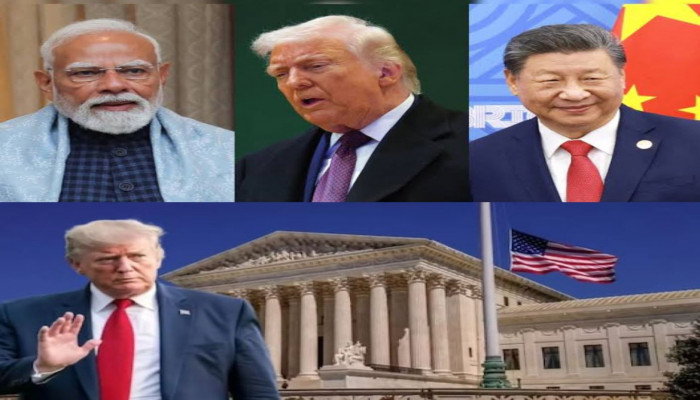
The administration of US President Donald Trump has started major trade investigations into India, China and several other key economies, claiming that their industrial policies may be creating excess manufacturing capacity that harms American producers. The move could eventually lead to new tariffs on imports into the United States.
On Wednesday, the Office of the United States Trade Representative (USTR) announced two separate investigations under Section 301 of the Trade Act of 1974. One of the investigations will focus on excess manufacturing capacity among several major US trading partners. The other probe will examine goods that are allegedly produced using forced labour.
Section 301 is considered one of the strongest trade enforcement tools used by the US government. It allows the United States to investigate what it believes are unfair trade practices by other countries that harm American businesses. Under this law, the US administration can also impose trade measures, including tariffs, without needing approval from the World Trade Organisation.
The latest action is part of Trump’s effort to continue his global tariff strategy after a major legal setback. The Supreme Court of the United States had earlier struck down a key tariff policy introduced by the administration. The court ruled that imposing tariffs by declaring an economic emergency was unconstitutional.
Despite the court’s ruling, the administration has indicated that its broader goal of protecting domestic industries remains unchanged. US Trade Representative Jamieson Greer said the government would continue to pursue policies to protect American workers and businesses.
“The policy remains the same, the tools may change depending on, you know, the vagaries of courts and other things," Greer said, while stressing that the focus remains on safeguarding American jobs.
The investigation into excess manufacturing capacity will cover a total of 16 trading partners. Apart from India and China, the probe will include the European Union, Japan, South Korea, Mexico, Taiwan, Vietnam, Thailand, Malaysia, Cambodia, Singapore, Indonesia, Bangladesh, Switzerland and Norway.
According to Greer, the probe will examine economies where industrial production appears to be much higher than actual market demand. Officials say this kind of imbalance could harm US industries by allowing foreign companies to export large amounts of goods at competitive prices.
“These investigations will focus on economies that we have evidence appear to exhibit structural excess capacity and production in various manufacturing sectors, such as through larger persistent trade surpluses or underutilised or unused capacity,” Greer told reporters during a conference call.
US officials explained that the investigation will study several indicators while examining the global manufacturing system. These indicators include persistent trade surpluses, unused or underused industrial capacity and government policies that support large-scale production.
The USTR also said the probe will examine whether government actions such as subsidies, suppressed wages, support for state-owned companies and subsidised lending are allowing companies in these countries to produce much more than the global market actually needs. Such policies, officials argue, could give foreign manufacturers an advantage over American firms.
Several industries are expected to come under scrutiny during the investigation. According to the USTR, sectors such as automobiles and advanced manufacturing will be closely examined as the United States studies global production patterns.
The office also highlighted concerns about the rapid expansion of manufacturing capacity in certain countries. As an example, officials pointed to Chinese electric vehicle company BYD, which they say is expanding its global production network despite already having domestic capacity that exceeds demand.
According to the USTR, BYD has already established factories in several countries, including Uzbekistan, Thailand, Brazil, Hungary and Turkey. The company is also planning additional expansion in Europe.
US officials believe such examples show how global manufacturing output may be growing faster than real demand. They also pointed to high export levels from some European economies and large industrial output supported by government policies in parts of Asia.
Along with the manufacturing investigation, the USTR has also announced a second Section 301 probe focused on forced labour. This investigation could affect imports from more than 60 countries and may lead to wider restrictions on goods suspected of being produced using forced labour.
The US already has restrictions in place under the Uyghur Forced Labour Protection Act. That law blocks imports of products linked to forced labour in China’s Xinjiang region.
Washington has repeatedly accused Chinese authorities of forcing members of the Uyghur community and other Muslim minorities into labour camps. Beijing has denied these allegations.
Greer said the United States wants other trading partners to adopt enforcement systems similar to American laws that restrict the import of goods linked to forced labour.
The USTR has also set a timeline for the investigation process. Public comments on the excess manufacturing capacity probe will be accepted until April 15. A public hearing on the matter will take place in early May.
Officials said the administration hopes to complete the investigation and make recommendations on possible tariff actions before the temporary tariffs imposed earlier in February expire in July.
The investigations could increase tensions in global trade, especially if new tariffs are eventually imposed on major economies such as India, China and the European Union.
For India, the probe introduces another level of uncertainty in trade relations with Washington. The US administration is currently exploring different legal methods to revive its tariff strategy following the Supreme Court ruling that blocked its earlier approach.



 Loading...please wait
Comments