




US launches fresh strikes on Iranian radar and drone command facilities
- In Reports
- 01:09 PM, Jun 01, 2026
- Myind Staff
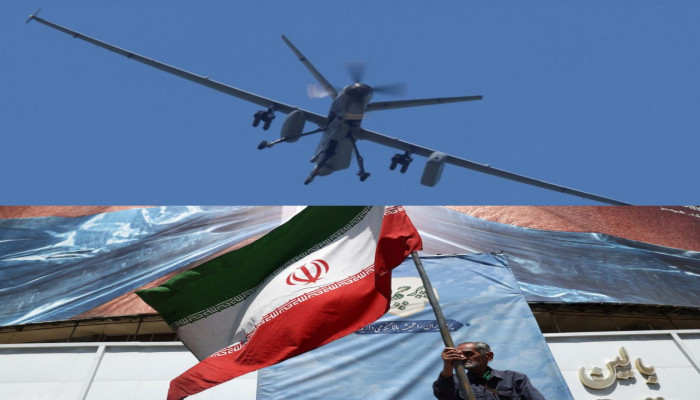
The United States carried out what it described as "self-defence strikes" on Iranian radar and drone command facilities located on Goruk and Qeshm Islands over the weekend. The strikes mark another escalation in tensions between Washington and Tehran, even as both countries remain engaged in discussions aimed at extending a ceasefire and reopening the strategically important Strait of Hormuz.
According to the US Central Command (CENTCOM), the military operation targeted Iranian radar installations and command-and-control sites used for drone operations. The announcement was made through a post on X, where CENTCOM outlined the reasons behind the action.
"US Central Command (CENTCOM) conducted self-defence strikes on Iranian radar and command and control sites for drones in Goruk, Iran, and Qeshm Island this weekend," CENTCOM said in a post on X.
The US military stated that the strikes were launched after Iran shot down an American MQ-1 Predator drone. According to CENTCOM, the drone was flying over international waters when it was brought down.
The command said, the US fighter aircraft responded by targeting and destroying Iranian air defence systems, a ground control station and two one-way attack drones. CENTCOM also confirmed that no American military personnel were injured during the operation.
The latest confrontation comes just days after another round of military exchanges between the two countries. Last week, Iran launched attacks on a US airbase following American strikes that, according to a Washington official, targeted an Iranian drone operation near the Strait of Hormuz. The repeated exchanges have raised concerns about the possibility of a broader regional conflict.
Iran has also issued its own account of the latest developments. The country's Fars news agency, citing the Islamic Revolutionary Guard Corps (IRGC), reported that Iranian forces launched a retaliatory strike against an airbase allegedly involved in an earlier US attack on a telecommunications tower located on Sirik Island in the southern province of Hormozgan.
While the IRGC did not identify the exact location of the airbase it targeted, reports suggested that it may have been referring to an attack connected to Kuwait.
“Following the aggression of the US army on a communication tower on Sirik Island in Hormozgan Province an hour ago, the IRGC Aerospace Force fighters targeted the airbase where the aggression originated, and the predicted targets were destroyed,” the IRGC reportedly said.
Meanwhile, Kuwait announced that its air defence systems were activated early Monday morning to intercept incoming missiles and drones. The government confirmed that defensive measures were taken after detecting aerial threats approaching its territory.
No group immediately claimed responsibility for the attack on Kuwait. However, reports indicated that the assault was likely carried out either by Iran or by Iranian-backed Shiite militias operating in Iraq. Such groups have previously launched attacks on Kuwaiti targets during periods of heightened tensions involving Iran.
Despite the continuing military exchanges, diplomatic communication between Washington and Tehran has not completely stopped. Iranian Foreign Minister Abbas Araghchi said that discussions with the United States are still ongoing through indirect exchanges of messages. The talks are focused on reaching an agreement that could help end the current conflict and reduce tensions in the region.
Araghchi's remarks came after reports in US media suggested that President Donald Trump is pushing for stricter conditions in the preliminary agreement being discussed between the two sides. The reported demands have added another layer of uncertainty to the negotiations.
The latest strikes and retaliatory actions highlight the fragile nature of the situation in the Gulf region. While both countries continue to exchange military blows, diplomatic efforts remain underway in an attempt to secure a longer-term ceasefire and ensure the safe reopening of the Strait of Hormuz, one of the world's most important energy shipping routes.



 Loading...please wait
Comments