



US lags Pakistan’s missile capability as potential threat, Islamabad drags India
- In Reports
- 01:21 PM, Mar 20, 2026
- Myind Staff
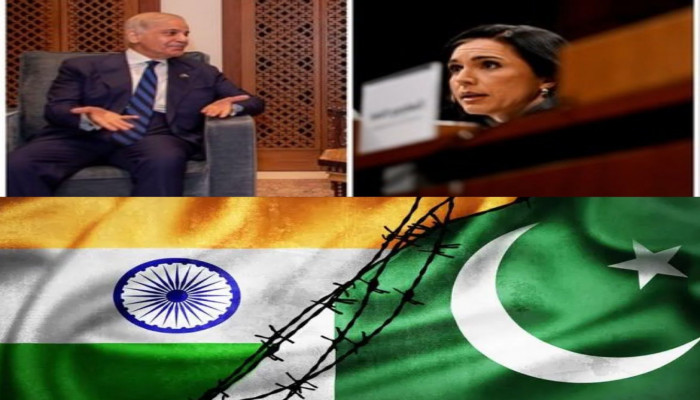
Tensions around missile capabilities and nuclear deterrence came into focus after remarks by Tulsi Gabbard, who warned that Pakistan could potentially develop long-range ballistic missiles capable of targeting the United States. Her statement, made during a testimony before the Senate Intelligence Committee, triggered a strong response from Islamabad, which rejected the claims and instead shifted attention towards India’s missile capabilities.
Pakistan’s foreign ministry issued a statement dismissing the US assessment and emphasised that its missile programme is purely defensive. It stated that its capabilities are “exclusively defensive in nature, aimed at safeguarding national sovereignty and maintaining peace and stability in South Asia.” The ministry further clarified that Pakistan’s missile range remains below intercontinental levels and is based on the principle of credible minimum deterrence in relation to India.
While defending its position, Pakistan once again brought India into the discussion. Foreign ministry spokesperson Tahir Andrabi highlighted concerns over India’s missile advancements. He said, “In contrast, India's development of missile capabilities exceeding 12,000 kilometres reflects a trajectory that extends beyond regional security considerations and is certainly a cause of concern for the neighbourhood and beyond.” This remark indicated Islamabad’s attempt to counter the criticism by pointing to what it sees as a larger regional imbalance.
India responded firmly to Pakistan’s comments. The Ministry of External Affairs criticised Pakistan’s track record on nuclear issues. It stated that Pakistan has a history of “clandestine nuclear nonproliferation, and statements like this again make it clear what kind of threat they pose to the world because of their clandestine nuclear operations.” This response reflected New Delhi’s long-standing concerns over Pakistan’s nuclear activities and transparency.
Meanwhile, Gabbard’s testimony highlighted broader global security concerns beyond South Asia. She told lawmakers that threats to the US homeland are expected to rise significantly in the coming years. According to her assessment, the number of missiles capable of posing a threat could increase from over 3,000 at present to more than 16,000 by 2035. This projection includes developments by several countries.
She stated, "The US secure nuclear deterrent continues to ensure safety in the Homeland against strategic threats. However, Russia, China, North Korea, Iran and Pakistan have been researching and developing an array of novel, advanced, or traditional missile delivery systems with nuclear and conventional payloads that put our Homeland within range." Her remarks placed Pakistan among a group of countries that the US sees as expanding their missile capabilities in ways that could challenge its security.
Gabbard also noted that both China and Russia are working on advanced systems designed to bypass US missile defences. She added that North Korea already has intercontinental ballistic missiles capable of reaching US territory and continues to expand its nuclear arsenal. These developments, she suggested, are contributing to a rapidly evolving global threat environment.
Specifically referring to Pakistan, she said, "Pakistan's long-range ballistic missile development potentially could include ICBMs with the range capable of striking the Homeland." This statement became the central point of concern and led to Pakistan’s strong rebuttal.
In response, Pakistan urged the United States to adopt a more balanced approach. The foreign ministry said it remains open to engagement with Washington but stressed that such discussions should be based on mutual respect and factual accuracy. It stated that Pakistan “remains committed to constructive engagement with the United States, anchored in mutual respect, non-discrimination, and factual accuracy.” At the same time, it called for a more thoughtful stance that takes into account the strategic realities of South Asia.
Pakistan also urged a “more measured and considered approach that aligns with South Asia's strategic imperatives and advances peace, security, and stability across the region.” This appeal underlined Islamabad’s effort to position itself as a responsible actor while challenging the US narrative.
The exchange highlights ongoing tensions and mistrust in global and regional security discussions. It also reflects how missile development and nuclear capabilities continue to shape diplomatic relations, not just between Pakistan and the US, but also involving India and other major powers.



 Loading...please wait
Comments