




US-Iran Geneva peace talks called off, prolonging uncertainty over truce
- In Reports
- 02:05 PM, Jun 19, 2026
- Myind Staff
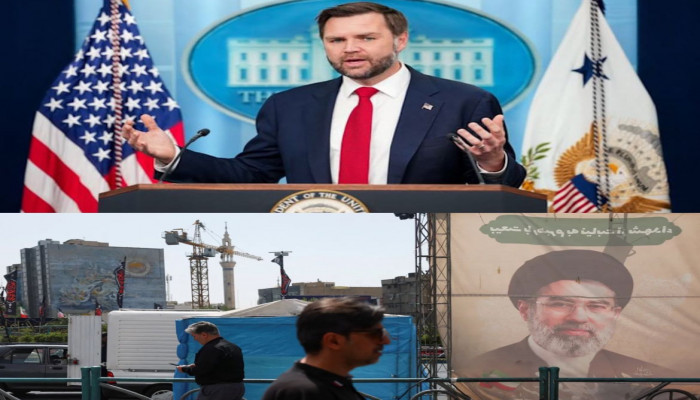
The planned peace talks between the United States and Iran in Geneva have been called off, creating fresh uncertainty over efforts to secure a lasting end to the Middle East conflict. Switzerland confirmed that the negotiations, which were scheduled to take place at the mountain resort of Burgenstock on Friday, would no longer be held.
The cancellation came after US Vice-President JD Vance abandoned plans to travel to Geneva. The White House said preparations for the talks had been underway, but final arrangements were never completed. A White House spokesperson stated, “The logistics of these negotiations have never been simple or predictable.”
Switzerland’s foreign ministry confirmed that the meeting would not take place but did not provide any additional explanation. Iran did not immediately comment on the development. Earlier, Tehran had expressed readiness to begin technical discussions following the signing of a 14-point agreement on Wednesday. The accord extended a fragile ceasefire by at least 60 days.
Before the cancellation, Iran had indicated that its negotiators wanted to see evidence that the United States was implementing the interim agreement. The semi-official Tasnim news agency reported that there was still no confirmation that the Iranian delegation would travel to Geneva.
US officials had also planned a formal signing ceremony for the agreement in Switzerland. However, Iran’s foreign ministry questioned the need for such an event, arguing that both countries’ presidents had already signed the pact.
The conflict began on February 28 when the United States and Israel launched air strikes against Iran. Since then, the war has claimed at least 7,000 lives. It has also driven up energy prices and caused significant disruptions in global financial markets.
Despite the agreement between Washington and Tehran, fighting has continued elsewhere in the region. Israel, which was not involved in the peace negotiations, has kept up military operations against the Iran-backed Hizbollah group in Lebanon. These continued attacks have raised concerns about whether the broader agreement can remain effective.
Political criticism has also emerged in the United States. Several Republican lawmakers questioned whether President Donald Trump had made too many concessions in exchange for ending a war that had become increasingly unpopular among American voters ahead of the November midterm elections.
Trump had previously promised to end the conflict only through Iran’s “UNCONDITIONAL SURRENDER.” However, the agreement ultimately signed provides major economic benefits to Tehran. It includes relief from sanctions, the release of frozen assets worth tens of billions of dollars, and immediate waivers allowing Iranian oil exports.
Iran’s Supreme Leader Ayatollah Mojtaba Khamenei reacted sharply to the deal. He said Trump had signed the agreement “out of desperation” and warned that future discussions on Iran’s nuclear programme would be difficult.
“If the American side wants to be too demanding, we will not accept it,” he said in a message.
Under the agreement, both sides have 60 days to negotiate a long-term arrangement regarding Iran’s nuclear programme. The deadline can be extended if both parties agree. The deal also establishes a US$300 billion reconstruction fund for Iran and includes additional financial incentives.
Vance said the United States would continue efforts to limit Iran’s long-range missile capabilities. At the same time, the financial burden of the conflict is becoming clearer. According to a report by The Wall Street Journal, the US Defence Department has informed lawmakers that it requires US$80 billion to cover war-related expenses and other costs.
When the war began nearly four months ago, Trump said his objectives included destroying Iran’s nuclear capabilities, preventing it from developing nuclear weapons, stopping attacks on neighbouring countries, ending support for anti-Israel militant groups, and creating conditions that could lead to political change inside Iran.
Many observers note that these goals were not achieved before the agreement was signed. Iran continues to insist that it has no intention of obtaining nuclear weapons, a position it has maintained for decades despite repeated doubts from successive US administrations.
As part of the deal, Iran agreed to allow the onsite “down-blending” of its highly enriched uranium stockpile. It also accepted inspections by the International Atomic Energy Agency under its obligations as a member of the Nuclear Non-Proliferation Treaty. However, Tehran rejected Trump’s demand that the uranium be removed from the country.
US officials remain optimistic that future negotiations could produce a stronger nuclear agreement than the one reached in 2015 between Iran and several world powers. Trump withdrew from that accord during his first term as president.
Critics argue that Iran now holds a stronger position than before the war. They point to Tehran’s ability to withstand military attacks, maintain influence over the Strait of Hormuz, and secure significant sanctions relief through the new agreement.
Iran has said it will continue managing the Strait of Hormuz alongside neighbouring Oman. Tehran also plans to charge ships fees for services introduced after the conflict. However, Iranian officials stated that no such fees would be collected during the 60-day negotiation period.
Oil prices fell on Friday as shipping activity resumed through the Strait of Hormuz. Before the conflict, the waterway handled nearly one-fifth of global crude oil and liquefied natural gas supplies. The reopening has improved expectations of stable energy supplies.
Meanwhile, violence continued in Lebanon. The state news agency NNA reported that fresh Israeli strikes killed at least 15 people on Friday. Israel said the attacks targeted Hizbollah positions.
The ongoing military action has raised questions about how strongly Trump will pressure Israel to halt operations. The agreement calls for the “permanent termination” of the war in Lebanon and for the country’s “territorial integrity and sovereignty” to be ensured.
Trump has increasingly criticised Israel’s military campaign in Lebanon. His comments have exposed one of the most serious disagreements between Washington and its longtime ally in decades. As peace talks remain stalled and fighting continues, uncertainty over the future of the agreement continues to grow.



 Loading...please wait
Comments