




US indicts four Chinese manufacturing giants for restricting global container availability
- In Reports
- 04:09 PM, May 22, 2026
- Myind Staff
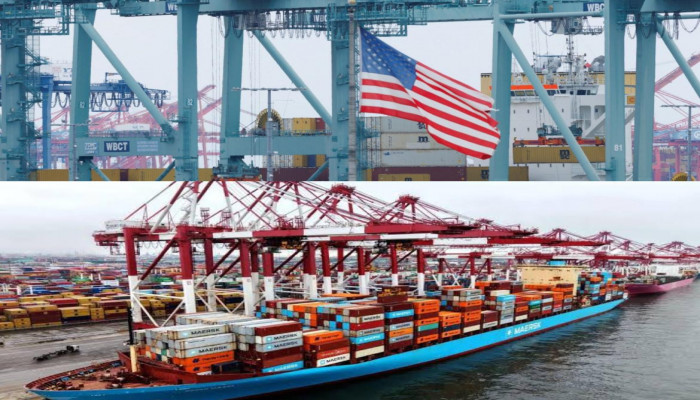
The United States Department of Justice (DOJ) has charged four of the world’s biggest shipping container manufacturing companies and seven Chinese executives for allegedly running a global conspiracy to limit production and increase prices of shipping containers during the COVID-19 pandemic and the worldwide supply chain crisis.
According to the DOJ, the alleged conspiracy lasted from November 2019 to January 2024 and involved nearly all standard unrefrigerated shipping containers, also known as dry containers, used across the global shipping industry. US authorities claimed the companies worked together to restrict output and manipulate prices at a time when global demand for containers was extremely high.
The DOJ said the alleged scheme caused shipping container prices to almost double between 2019 and 2021. The department also stated that the companies involved earned massive profits during this period because of the inflated prices.
One of the accused executives, Vick Nam Hing Ma, also known as Vick Ma, was arrested in France on April 14, 2026. He is currently waiting for extradition to the United States. The DOJ said the remaining six executives are still at large.
The superseding indictment was unsealed by the US District Court for the Northern District of California. It named 11 defendants, including executives and major container manufacturing firms based in China and Hong Kong.
The companies charged in the case are Singamas Container Holdings Ltd., China International Marine Containers (Group) Co., Ltd. (CIMC), Shanghai Universal Logistics Equipment Co., Ltd., which operates under the Dong Fang brand, and CXIC Group Containers Co. Ltd.
Apart from Vick Nam Hing Ma, the executives named in the indictment are Siong Seng Teo, Boliang Mai, Tianhua Huang, Yongbo Wan, Qianmin Li and Yuqiang Zhang.
US authorities alleged that the companies coordinated with each other to reduce manufacturing capacity and control container prices during a period when demand for shipping equipment was rising sharply across global markets.
The DOJ said the conspiracy began with a meeting held in Shenzhen in November 2019. According to the indictment, executives from the companies agreed on several measures to reduce output. These included cutting production shifts, limiting operating hours at factories, stopping the construction of new manufacturing facilities and installing surveillance systems to make sure companies followed the agreed production restrictions.
The indictment further claimed that the companies later imposed limits on the number of containers produced for major customers. These customers reportedly included US-based shipping companies, logistics businesses and container leasing firms.
The department stated that the alleged conspiracy led to a huge jump in profits for some of the companies involved. According to US officials, CIMC’s container manufacturing profits increased from around USD 19.8 million in 2019 to nearly USD 1.75 billion in 2021. Singamas also reportedly moved from losses in 2019 to recording major profits by 2021.
“Cheaters never prosper,” said Associate Attorney General Stanley Woodward. “This Department of Justice is ensuring that when American pocketbooks are pilfered, accountability will follow. And yet the last administration saw fit to prioritise the weaponisation of the Department through novel criminal prosecution theories rather than focus on criminal actors most responsible for manipulating markets to profit from a global pandemic. Thankfully, this Department has righted that wrong, eliminating the weaponisation of Government and prioritising ensuring affordability for all Americans.”
The investigation into the alleged conspiracy involved multiple US agencies. The FBI assisted in the case along with the US Postal Service Office of Inspector General and the US General Services Administration Office of Inspector General.
The defendants have been charged under Section 1 of the Sherman Antitrust Act. Under US law, the charge carries a maximum prison sentence of 10 years for individuals. The law also allows fines of up to USD 1 million for individuals and up to USD 100 million for corporations.
The case is being viewed as one of the biggest antitrust actions linked to the global supply chain disruptions seen during the COVID-19 pandemic. US authorities believe the alleged actions by the container manufacturers had a major impact on international trade and shipping costs during a period when businesses and consumers worldwide were already struggling with rising prices and shortages.



 Loading...please wait
Comments