




US House panel flags China’s access to Western Aerospace Technology, seeks stricter export controls
- In Reports
- 05:05 PM, Nov 20, 2026
- Myind Staff
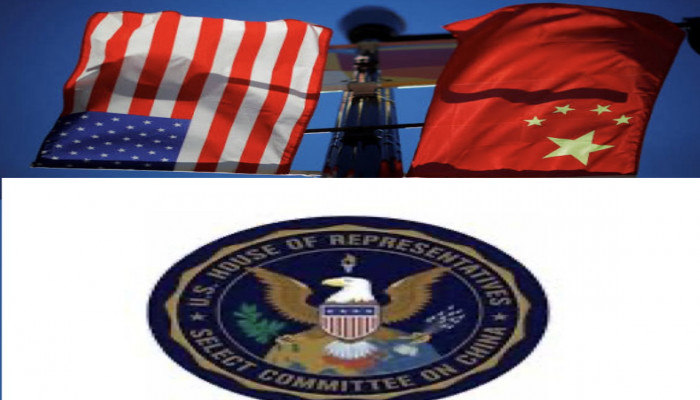
US House Select Committee on the Chinese Communist Party Chairman John Moolenaar has released a report warning that partnerships between Western aerospace companies and Chinese firms may have strengthened China's military capabilities. The report raises concerns over the transfer of advanced technology, technical expertise and industrial knowledge through commercial agreements.
According to a press release issued by the committee, Western aerospace contractors entered into commercial arrangements with Chinese aerospace companies, potentially giving China's military access to sensitive technologies. The investigation alleges that these collaborations inadvertently supported China's military-civil fusion strategy, which allows the Chinese Communist Party to use civilian technologies and commercial capabilities for military development.
Moolenaar said Western companies had transferred technologies to China that could be used against American military personnel. He warned that China's military-civil fusion framework allows the People's Liberation Army (PLA) to exploit civilian companies to advance its military ambitions. He called on the US and its allies to strengthen export controls and tighten investment restrictions in the aerospace sector.
The investigation specifically raised concerns over Honeywell, GE Aerospace and Collins. According to the report, these companies repeatedly sought and obtained licences for controlled technology transfers involving Chinese military end users and other military-linked entities through commercial aerospace platforms.
The committee also questioned the effectiveness of existing export controls. It highlighted the system's reliance on corporate due diligence, despite commercial incentives to maintain business ties and previously identified compliance weaknesses.
The report further warned that joint ventures based in China could enable sensitive technologies and capabilities to move offshore, beyond the primary oversight framework of the Committee on Foreign Investment in the United States (CFIUS). It also cautioned that unilateral US restrictions could put American companies at a disadvantage while allowing companies from allied countries to capture their business opportunities.
The committee proposed seven policy recommendations to address these concerns. These include ending taxpayer funding for companies supporting adversarial military capabilities, restricting outbound investments in China's aerospace sector and preventing the Federal Aviation Administration (FAA) from certifying aircraft manufactured in China.
It urged Congress to pass the Aerospace Transparency Act (H.R. 11047), which would require aerospace contractors working with the US Department of Defense to disclose their relationships with designated Chinese military companies.
Other proposals include revising aerospace technology export licences, improving beneficial ownership transparency, blocking dual-use exports accessible to Chinese military companies and imposing stricter penalties for violations.
The committee also called for the passage of the Geospatial Intelligence Transparency and Security Act (H.R. 11048). The legislation would direct the National Geospatial-Intelligence Agency to assess commercial geospatial artificial intelligence capabilities that could pose national security risks.
Additionally, it recommended closer scrutiny of French companies seeking to acquire American aerospace firms. The committee proposed a presumption of denial until such companies sever their links with China's civil-military ecosystem.



 Loading...please wait
Comments