




US hits Iranian military facility near Hormuz amid rising ceasefire tensions
- In Reports
- 12:42 PM, May 28, 2026
- MyIndMakers
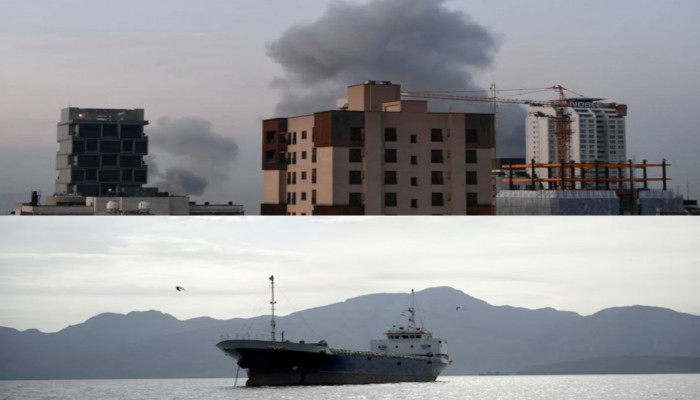
The United States has carried out fresh military strikes inside Iran, targeting a military site near the Strait of Hormuz that Washington believed posed a threat to American forces and commercial shipping in the region. According to a Reuters report published on Wednesday, the strikes were aimed at preventing possible attacks near one of the world’s most important maritime routes.
A US official, speaking on condition of anonymity, said the operation focused on an Iranian ground control facility in Bandar Abbas. The site was reportedly preparing to launch another drone at the time of the strike. US forces also intercepted and shot down several Iranian drones that were allegedly threatening American personnel and vessels operating close to the strategic waterway.
The official told Reuters that the target of the strike was an Iranian ground control facility in Bandar Abbas that was reportedly preparing to launch a fifth drone. “These actions were measured, purely defensive, and intended to maintain the ceasefire,” the official said.
The latest military action came after explosions were reported near the Iranian port city of Bandar Abbas early Thursday morning. Iranian media outlets said at least three blasts were heard east of the city around 1:30 a.m. local time. Following the explosions, Iranian air defence systems were activated for several minutes in the area.
The strikes had not been publicly reported earlier and came at a time when efforts are underway to end a three-month conflict between Iran, the United States, and Israel. The conflict has resulted in thousands of deaths and caused major concerns in global energy markets since it began on February 28 after US and Israeli attacks.
This new escalation follows similar strikes conducted earlier this week by the US military in southern Iran. At that time, US Central Command described the operation as “self-defence strikes.” The targets reportedly included missile launch sites and Iranian vessels that were allegedly attempting to place naval mines near the Strait of Hormuz.
Iran later accused the United States of violating a ceasefire that had been in place for nearly seven weeks. Tehran claimed that repeated American military operations near the Strait of Hormuz were undermining ongoing peace efforts and increasing tensions in the region.
The ceasefire now appears increasingly fragile as Iran has warned of retaliation against the US over what Washington continues to describe as defensive military operations. Despite several rounds of talks, negotiations between Tehran and Washington have not yet produced a formal agreement. Both sides have continued to send mixed signals regarding a possible framework for reducing tensions.
On Wednesday, Iranian state television aired details of what it called a draft understanding aimed at easing tensions around the Strait of Hormuz. According to the reported proposal, commercial shipping through the strategic route would gradually return to normal levels within a month. In return, the United States would reduce its military presence near Iran and remove what Tehran has described as a naval blockade.
However, the White House quickly rejected the claims. Washington dismissed the reported memorandum within hours and called it false. In a post on X, the White House said, “This report from Iranian-controlled media is not true and the MOU they "released" is a complete fabrication. Nobody should believe what the Iranian state media is putting out. FACTS MATTER.”
The US President also denied reports from Iranian state media that claimed Iran and Oman would jointly manage shipping lanes in the Strait of Hormuz under a new peace agreement. Trump insisted that the key waterway would remain open and under no such arrangement.
The Strait of Hormuz remains one of the most strategically important maritime routes in the world, carrying a major share of global oil shipments. Any escalation in the area has the potential to affect international trade and energy prices. The latest military actions and growing distrust between both sides have once again raised concerns over whether the ceasefire can survive in the coming weeks.



 Loading...please wait
Comments